Admit rate has ranged 55%–65% over the last 5 years — notably volatile. Source: IPEDS via Urban Institute.
Acceptance & SAT from Common Data Set / IPEDS; net price, earnings & graduation from the U.S. Dept. of Education College Scorecard. Figures lag ~1–2 years — verify with the school.
Clark Atlanta University (CAU) is a historically Black university in Atlanta that has become a powerhouse of aspiration, attracting a record-breaking 46,414 applicants for the Class of 2028. It blends a legacy of culture and service with a practical, career-focused curriculum, offering a vibrant, tradition-rich campus life that defines the classic HBCU experience. While its graduation rates and post-graduate earnings face challenges, its role as an engine of access and opportunity for Black students is undeniable and deeply woven into the fabric of Atlanta.
Admission requirements
Test-optional — scores considered if submitted
Required
High school transcript
Grade point average
Letters of recommendation
College-prep program
TOEFL (non-native English)
Considered (not required)
Test scores (SAT/ACT)
Source: IPEDS Admissions survey (2022) via Urban Institute. Covers formal factors only — it does not reflect essays, extracurriculars, or other holistic criteria.
More details
Undergrad enrollment
3,603
In-state tuition
$28,310
Out-of-state tuition
$28,310
Graduation Rate
49%
First-Year Retention
71%
Median Earnings (10yr)
$42,712
Outcomes & value
Outcomes & value
Median earnings (10 yr)
$42,712
Value (earnings ÷ net price)
1.1×
Median debt at graduation
$27,000
Graduation rate
49%
First-year retention
71%
Reducing loan balance (3 yr)
31%
Pell (lower-income) share
70%
First-gen share (among federal-aid recipients)
32%
Financial health
2.9 / 3.0Meets the federal financial-responsibility standard
U.S. Dept. of Education Financial Responsibility Composite Score (FY2022-23). Scale −1.0 to 3.0; ≥1.5 meets the standard. Reported for private nonprofit & for-profit institutions only — public universities are state-backed and not scored, so this is a stability signal, not a ranking.
Top-earning majors
Median earnings by field of study (highest credential), ~2 years after completion.
Business Administration, Management and Operations$40,068
Accounting and Related Services$38,289
Teacher Education and Professional Development, Specific Levels and Methods$36,941
Biology, General$25,405
Radio, Television, and Digital Communication$24,730
Fine and Studio Arts
Campus & location
Campus safety
On-campus violent crimes (2024)
4
Per 1,000 students
0.94
On-campus criminal offenses classed as violent (murder/non-negligent manslaughter, rape, robbery, aggravated assault) for the most recent reported year. Source: U.S. Dept. of Education Campus Safety and Security (Clery Act). Counts reflect what’s reported to the school, and urban campuses often report more partly due to non-student incidents nearby — read alongside campus size and setting, not as a standalone safety verdict.
Climate
Pleasant days / yr
101
Summer high
86°F
Winter low
39°F
Annual rain
65.3"
Annual snow
0.7"
Natural-hazard risk
Relatively High
Pleasant days counts days per year with a mean temperature of 55–75°F, a high at or below 90°F, a low at or above 45°F, and little precipitation — a transparent comfort measure, not a weighting we invented. Computed from Open-Meteo ERA5 daily history (2019–2023). Natural-hazard risk is the county’s composite rating from the FEMA National Risk Index.
Deep dive — research, future-scholar output & economic mobility▾
Research output
Institutional h-index
250
Scholarly works
4,240
Institutional research volume and impact from OpenAlex. The h-index reflects large research universities and will be low for teaching-focused liberal-arts colleges — not a measure of undergraduate quality.
Economic mobility
Mobility rate
3.3%
Bottom → top quintile
19%
From bottom quintile
18%
Mobility rate = the share of students who both start in the bottom household-income quintile and reach the top quintile; bottom → top is that chance conditional on starting at the bottom. Source: Opportunity Insights Mobility Report Cards (Chetty, Friedman, Saez, Turner & Yagan). Reflects 1980–82 birth cohorts, so it’s directional, not current.
Quick answers
What is the acceptance rate at Clark Atlanta University?
Clark Atlanta University's acceptance rate is approximately 64% (Atlanta, GA), based on the most recent figures we compiled from public and primary sources.
How much does Clark Atlanta University cost?
At Clark Atlanta University, the average net price (after aid) is about $37,702 per year. Actual cost varies with financial aid and residency.
How many undergraduates attend Clark Atlanta University?
Clark Atlanta University enrolls approximately 3,603 undergraduate students.
Where is Clark Atlanta University located?
Clark Atlanta University is located in Atlanta, GA.
Admissions
Clark Atlanta University operates with a moderately selective admissions process, but its popularity is surging. For the Class of 2028, the university received a record-breaking 46,414 applications, signaling its rising status as a top-choice HBCU. The is 64%, meaning it admits a clear majority of applicants. The process is ; students are not required to submit SAT or ACT scores, though a preferred minimum weighted high school GPA of 3.0 or higher on a 4.0 scale is a stated benchmark. One notable data point suggests an Early Decision acceptance rate of 100%, a stark contrast to the overall rate, indicating that applying ED could be a significant advantage for committed students. The rate—the percentage of admitted students who enroll—appears low relative to the high number of admits, with one source noting 1,069 enrolled from 17,884 admitted, suggesting many students use CAU as one option among several.
Earnings = median of students working ~10 years after entry; debt = median of graduates. Value divides 10-yr earnings by one year’s net price — read it as earnings per dollar of annual cost, not a full lifetime ROI; it favors lower-cost schools. Source: U.S. Dept. of Education College Scorecard. Figures lag ~2 years and reflect all students, not your intended major.
$24,421
Criminal Justice and Corrections$23,649
Psychology, General$23,166
Source: U.S. Dept. of Education College Scorecard (field-of-study earnings). Figures cover graduates who received federal aid and lag ~2 years; not all programs report data.
CAU's academic approach is explicitly geared toward blending "academic excellence with real-world application." The curriculum spans business, STEM, the arts, humanities, and social sciences through a comprehensive list of undergraduate programs, including Accounting, Advertising Design, Computer Science, and Mathematics. The university emphasizes structured undergraduate experiences, with reported 100% participation in first-year experiences and writing in the disciplines. It also highlights service learning, senior capstone projects, and undergraduate research as key components. The academic structure is organized into schools, such as the School of Arts & Sciences, which promises to help students "unlock your full potential in both your career and personal life." This practical, career-oriented focus is a central theme in its academic identity.
Life at CAU is defined by a powerful sense of community, school spirit, and historic tradition, hallmarks of the HBCU experience. The campus is described as "lively and welcoming" with a "strong sense of community." Student life is rich and varied, offering a wide range of activities including clubs and organizations, a prominent Greek life scene, intramural sports, and cultural events. The university's motto, "Culture for Service," is actively promoted as "more than a mantra; it's a lifestyle," with service to others framed as essential to a life of purpose. From residence halls and dining to the social atmosphere, the environment is designed to be engaging and supportive, placing the university "at the heart of Atlanta" as a center for student life and development.
Student outcomes at Clark Atlanta present a mixed picture, with notable challenges in graduation rates and early-career earnings alongside its mission of access. The four-year graduation rate is reported at 37%, and the six-year rate is around 43%. Post-graduation, a significant portion of students (36.3%) pursue continuing education. For those entering the workforce, early salary data is modest; one source reports a median salary six years after graduation of $28,097, while another notes a mean salary of $232,607 yearly—a figure likely skewed by high earners, with a more representative median of $41,600 yearly. The university's own factbook indicates a focus on tracking outcomes for Pell Grant recipients, including their retention and graduation rates. The first-year retention rate is 71%.
The net cost of attending Clark Atlanta University is significant, with an average after aid of $37,702. Financial aid packages typically include a mix of grants and loans. The average aid package is reported to be $12,281, composed of federal grant aid (averaging $6,560), state grant aid ($4,042), and institutional grant aid ($11,400). The average Pell Grant award is $6,339. The university offers scholarships and flexible payment plans, and it directs students to use the FAFSA and its own net price calculator for accurate estimates. Notably, the university's financial aid policy is not described as meeting full need or having a "no-loan" policy for low-income students; one external analysis suggests the policy may be "relatively weak, and grants aren't enough to cover total cost."
Clark Atlanta University stands out first and foremost as a cultural and educational beacon within the HBCU landscape and the city of Atlanta. Its explosive growth in applications—to over 46,000—demonstrates its powerful draw as a university of choice for Black students seeking a classic, immersive HBCU experience. It distinguishes itself through its deep commitment to the "Culture for Service" ethos, weaving community engagement directly into student life. Academically, it balances a broad liberal arts and sciences foundation with a deliberate, practical focus on real-world application and career preparation. While it faces measurable challenges in graduation and earnings outcomes, its core identity is rooted in providing access, fostering leadership, and cultivating a vibrant, supportive community that celebrates Black excellence in the heart of a major city. It is less an ivory tower and more a dynamic launchpad.
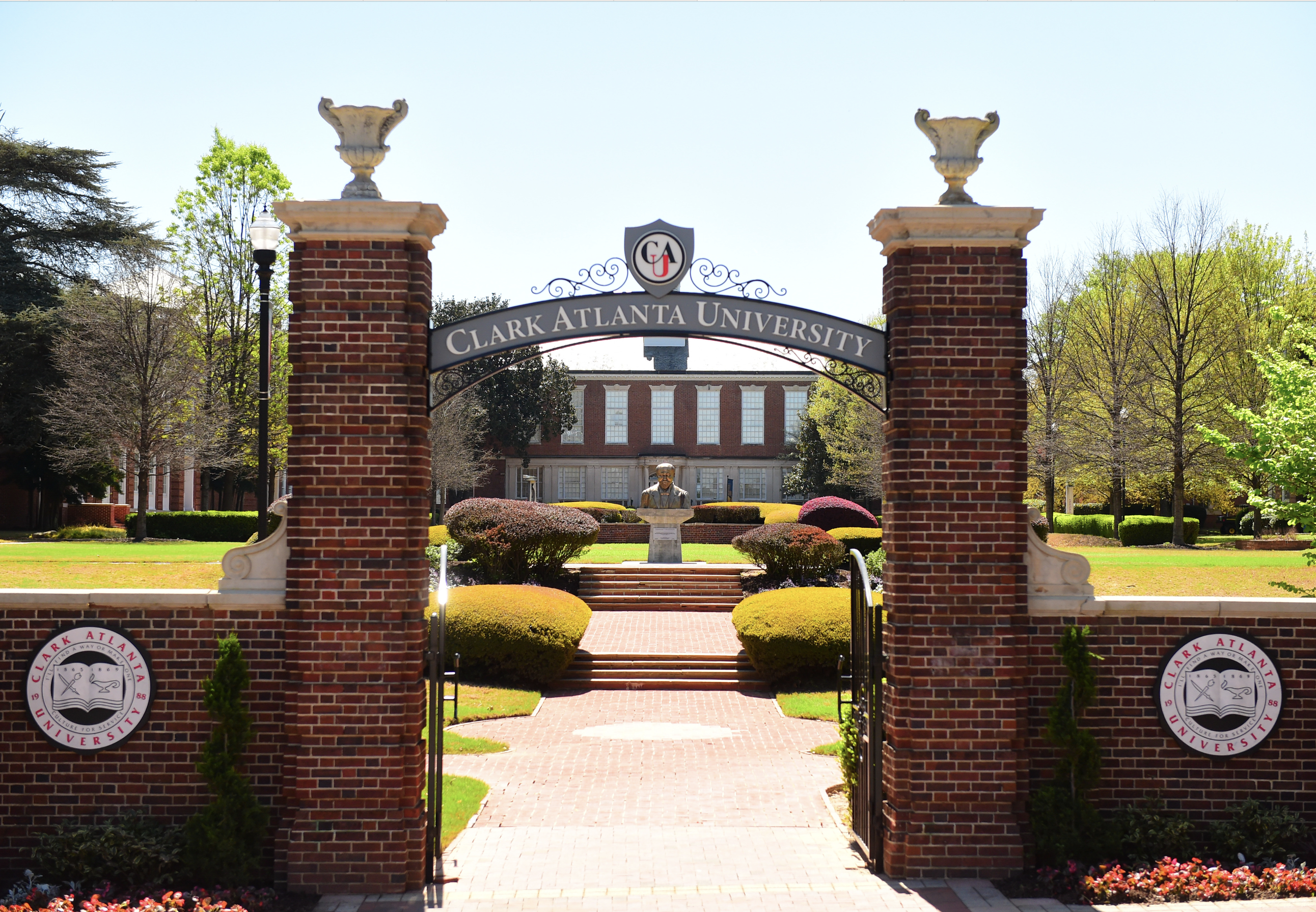
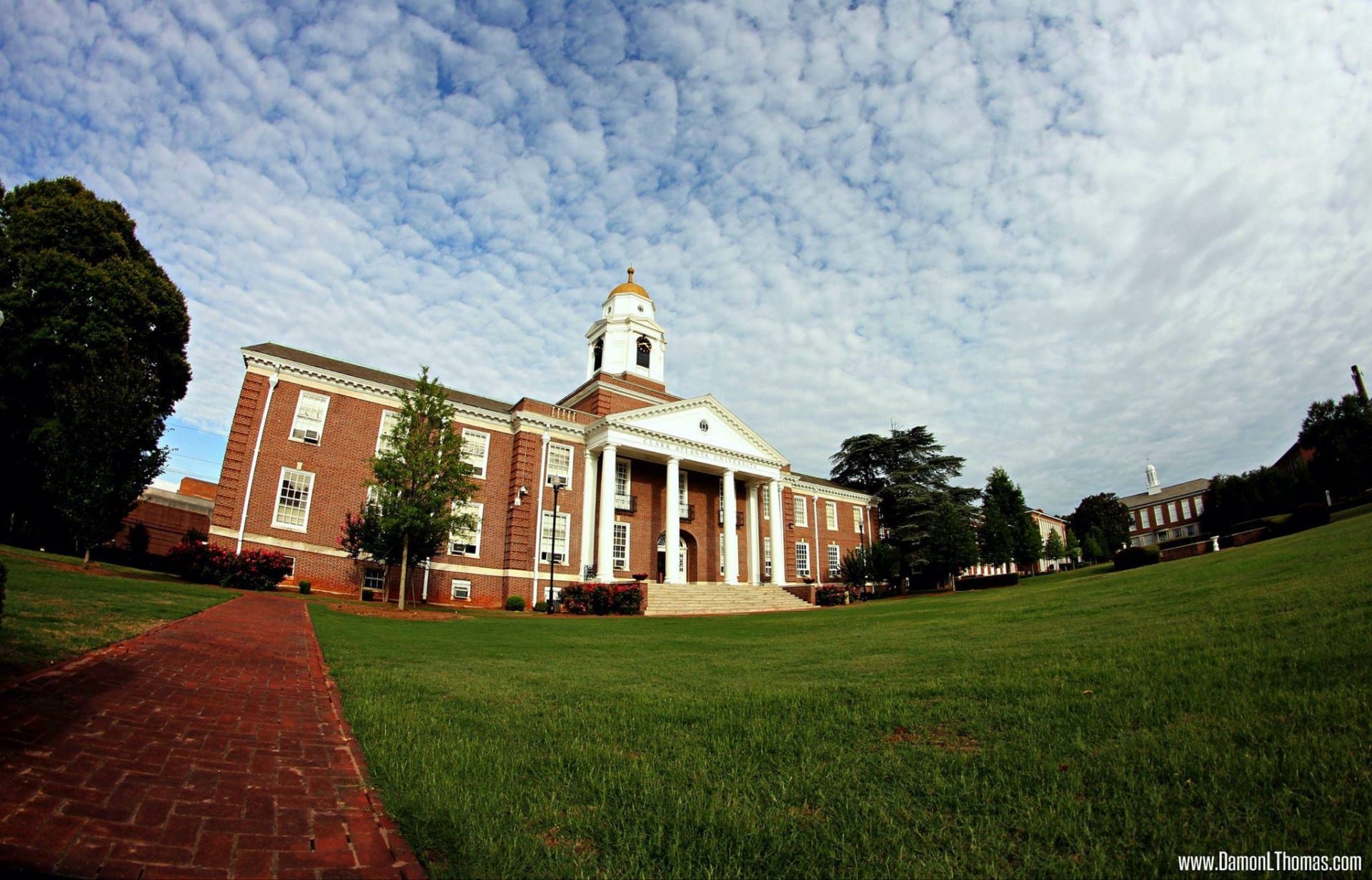
Clark Atlanta University seal · sourceAbout Clark Atlanta | Clark Atlanta University · sourceClark Atlanta University - UNCF · sourceExplore Clark Atlanta University's Campus — Google Arts & Culture · source
.jpg?width=1600)