Admit rate has ranged 33%–38% over the last 5 years, though the latest figure above (47%) falls outside that window. Source: IPEDS via Urban Institute.
Acceptance & SAT from Common Data Set / IPEDS; net price, earnings & graduation from the U.S. Dept. of Education College Scorecard. Figures lag ~1–2 years — verify with the school.
The Cleveland Institute of Music is a conservatory of intense, singular focus, where the professional musician's life begins in earnest. Nestled in Cleveland's cultural hub, University Circle, CIM offers a curriculum finely tuned to transform raw talent into disciplined artistry, backed by a faculty of working professionals. It's a place where the audition is everything, the practice room is a second home, and the goal is not just a degree, but a career.
Admission requirements
Test-optional — scores considered if submitted
Required
High school transcript
Letters of recommendation
Demonstrated competencies
TOEFL (non-native English)
Considered (not required)
Grade point average
Test scores (SAT/ACT)
College-prep program
Source: IPEDS Admissions survey (2022) via Urban Institute. Covers formal factors only — it does not reflect essays, extracurriculars, or other holistic criteria.
More details
Undergrad enrollment
159
In-state tuition
$52,880
Out-of-state tuition
$52,880
No-Loan Policy
Not indicated
Graduation Rate
72%
Meets Full Need
No guarantee
Early Decision Plan
Not offered
Median Earnings (10yr)
$32,641
Financial Aid Philosophy
Merit-based, need-informed
Outcomes & value
Outcomes & value
Median earnings (10 yr)
$32,641
Value (earnings ÷ net price)
1.2×
Median debt at graduation
$24,968
Graduation rate
72%
First-year retention
90%
Reducing loan balance (3 yr)
64%
Pell (lower-income) share
14%
Endowment / student
$198,893
Earnings = median of students working ~10 years after entry; debt = median of graduates. Value divides 10-yr earnings by net price — read it as earnings per dollar of annual cost, not a full lifetime ROI; it favors lower-cost schools. Source: U.S. Dept. of Education College Scorecard. Figures lag ~2 years and reflect all students, not your intended major.
Campus & location
Campus safety
On-campus violent crimes (2024)
0
Per 1,000 students
0.00
On-campus criminal offenses classed as violent (murder/non-negligent manslaughter, rape, robbery, aggravated assault) for the most recent reported year. Source: U.S. Dept. of Education Campus Safety and Security (Clery Act). Counts reflect what’s reported to the school, and urban campuses often report more partly due to non-student incidents nearby — read alongside campus size and setting, not as a standalone safety verdict.
Climate
Pleasant days / yr
96
Summer high
78°F
Winter low
26°F
Annual rain
49.3"
Annual snow
40.7"
Natural-hazard risk
Relatively High
Pleasant days counts days per year with a mean temperature of 55–75°F, a high at or below 90°F, a low at or above 45°F, and little precipitation — a transparent comfort measure, not a weighting we invented. Computed from Open-Meteo ERA5 daily history (2019–2023). Natural-hazard risk is the county’s composite rating from the FEMA National Risk Index.
Deep dive — research, future-scholar output & economic mobility▾
Research output
Institutional h-index
15
Scholarly works
114
Institutional research volume and impact from OpenAlex. The h-index reflects large research universities and will be low for teaching-focused liberal-arts colleges — not a measure of undergraduate quality.
Quick answers
What is the acceptance rate at Cleveland Institute of Music?
Cleveland Institute of Music's acceptance rate is approximately 47% (Cleveland, OH), based on the most recent figures we compiled from public and primary sources.
How much does Cleveland Institute of Music cost?
At Cleveland Institute of Music, the average net price (after aid) is about $28,226 per year. Actual cost varies with financial aid and residency.
How many undergraduates attend Cleveland Institute of Music?
Cleveland Institute of Music enrolls approximately 159 undergraduate students.
Where is Cleveland Institute of Music located?
Cleveland Institute of Music is located in Cleveland, OH.
Admissions
Admission to CIM is a high-stakes performance, judged almost entirely on a live audition before a faculty panel. The process is fundamentally different from that of a liberal arts college; standardized test scores are not a primary factor, and the decision hinges on demonstrated ability in the applicant's area of study. While the fluctuates year-to-year—sources cite figures ranging from 29% to 47%—the school's selectivity is underscored by years like 2022-23, when only 12 percent of more than 1,000 applicants were admitted. The admitted cohort is small and highly committed; one source notes a 42% yield rate from a recent class, indicating that those who are accepted are often eager to enroll. The school does not offer an Early Decision plan, leveling the timeline for all applicants. Demonstrated interest, a common factor at many colleges, is not explicitly detailed in the provided sources for CIM, placing the full weight of the decision on the applicant's artistic presentation.
CIM's academic life is a rigorous, immersive dive into the craft of music. The curriculum is built on a core of studies in music theory, eurhythmics, music history, and literature, all tightly integrated with relentless training in one's major performance area. This is not a school for dabblers; the undergraduate focus is the Bachelor of Music, with graduate options extending through the Doctor of Musical Arts (DMA) in composition, collaborative piano, or performance. The program is described as "finely tuned" to balance deep specialization with the broader context and professional skills a working musician needs. Discussion among prospective students on forums like College Confidential highlights CIM's strong reputation, particularly for those aiming for orchestral careers, placing it in conversation with other top-tier conservatories. The faculty are presumably working artists, and the environment is one of total commitment, where academic requirements are described as "demanding" and every course revolves around the central pursuit of musical excellence.
Life at CIM is intensely focused but not isolated. The school's greatest asset may be its location in University Circle, Cleveland's dense cultural hub, which places students within walking distance of world-class museums, art galleries, and parks, and adjacent to the Case Western Reserve University campus. This provides a crucial counterbalance to the hours spent in practice rooms and rehearsal halls. The undergraduate student body is intimate, with roughly 194 students (as of fall 2023), fostering a close-knit community of dedicated peers. Social life is shaped by this shared, all-consuming passion. The school maintains strict policies, including a prohibition on alcohol possession or consumption on CIM property or at official off-campus events, reflecting a serious, professional atmosphere. The Instagram presence showcases interactive theory demonstrations, classes, and rehearsals, offering a window into the dynamic, hands-on learning environment.
CIM measures success in artistry and placement, but the financial reality for musicians, especially early in their careers, is reflected in the data. The graduation rate is a point of institutional strength. While sources vary, it is consistently reported in a range that indicates strong student persistence, from 57% for a four-year rate to 72% for a broader measure. Post-graduation earnings data tells a story familiar to the arts: median salaries reported in the years after graduation are modest, with figures like $15,625 one year out and $20,170 six years out. A key metric for families, the median earnings ten years after entry, is reported as $32,641. These numbers underscore that a CIM education is an investment in a vocation, not a conventional path to high immediate income. The high retention and graduation rates suggest that students who choose this path are highly committed and see it through.
A CIM education is a significant financial undertaking, but the school works to offset the cost for most students. Nearly all CIM students receive some level of financial aid. The philosophy is merit-based and need-informed; scholarships are awarded primarily for artistic talent, with need playing a secondary role in packaging. The school is transparent that it cannot guarantee to meet the full financial need of every student. Aid packages are typically a combination of scholarships/grants, work-based awards, and loans. The average aid package is substantial, with figures cited around $24,598 or $31,191 per year, which brings the down considerably. The net price—the average cost after grants and scholarships—is reported as $36,001 by one source. For federal loan recipients, the net price is listed separately. Importantly, there is no indication in the provided sources of a "no-loan" policy or a guarantee to meet full need without loans; the financial aid guide states that if federal need is met, packages may include loans, work-study, and grants.
CIM stands out as a pure conservatory experience, undistracted by the sprawling offerings of a university. Its power lies in its concentration: a tiny, hyper-focused student body, a faculty of professional artists, and a curriculum that exists solely to forge musicians. Unlike programs embedded within larger universities, CIM's entire ecosystem—from its policies to its location in University Circle—is designed to support the singular goal of professional artistic development. The audition-based admission creates a cohort of pre-vetted, serious talents, and the 42% rate suggests those admitted recognize the unique fit. While the financial outcomes may not compete with engineering or business schools, the high graduation rates indicate that students who embark on this path are fully invested. For the student who lives for the practice room and envisions a life on stage or in the pit, CIM offers a direct, unadulterated, and professionally connected pipeline into the world of music.
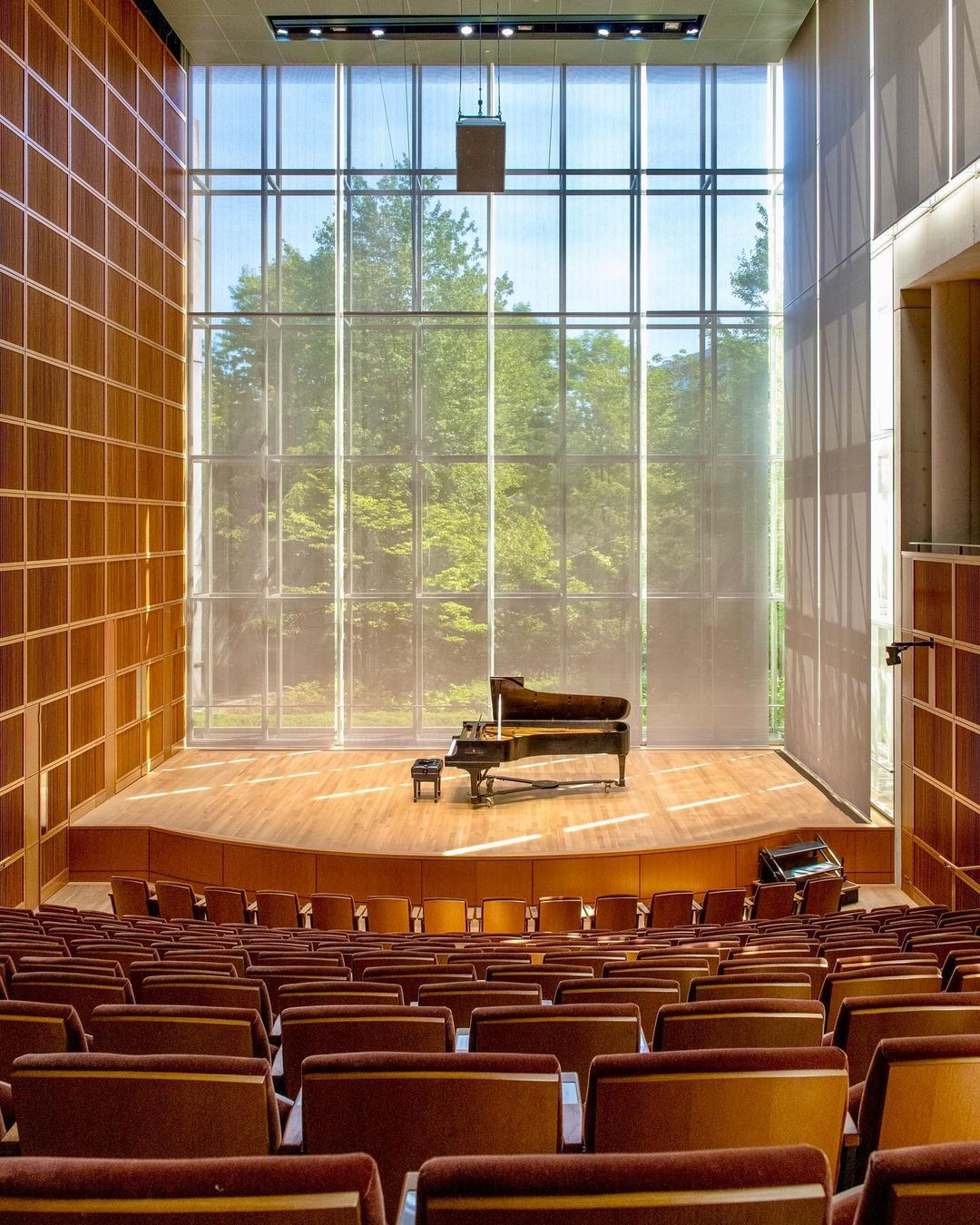
Cleveland Institute of Music seal · sourceCleveland Institute of Music - Wikipedia · sourceCleveland Institute of Music Kulas Hall · sourceCleveland Institute of Music | Accidentally Wes Anderson · source