Admit rate has ranged 27%–33% over the last 5 years. Source: IPEDS via Urban Institute.
Acceptance & SAT from Common Data Set / IPEDS; net price, earnings & graduation from the U.S. Dept. of Education College Scorecard. Figures lag ~1–2 years — verify with the school.
Clinton Essex Warren Washington BOCES is not a traditional university but a regional public educational service agency, operating under the name Champlain Valley Educational Services. It serves a distinct, non-traditional student body primarily through career and technical education (CV-TEC) programs for adults and alternative education for K-12 students across a four-county region. With a microscopic undergraduate enrollment and a 100% yield rate, it represents a highly focused, practical pathway for a specific local population seeking workforce credentials.
Admission requirements
Test-blind — scores not considered
Required
High school transcript
Grade point average
Letters of recommendation
Source: IPEDS Admissions survey (2022) via Urban Institute. Covers formal factors only — it does not reflect essays, extracurriculars, or other holistic criteria.
More details
Undergrad enrollment
31
Student Body (Gender)
83% Female, 17% Male
Student-Teacher Ratio (K-12)
4 to 1
Outcomes & value
Outcomes & value
Reducing loan balance (3 yr)
60%
Pell (lower-income) share
43%
First-gen share (among federal-aid recipients)
44%
Earnings = median of students working ~10 years after entry; debt = median of graduates. Value divides 10-yr earnings by one year’s net price — read it as earnings per dollar of annual cost, not a full lifetime ROI; it favors lower-cost schools. Source: U.S. Dept. of Education College Scorecard. Figures lag ~2 years and reflect all students, not your intended major.
Campus & location
Campus safety
On-campus violent crimes (2024)
0
On-campus criminal offenses classed as violent (murder/non-negligent manslaughter, rape, robbery, aggravated assault) for the most recent reported year. Source: U.S. Dept. of Education Campus Safety and Security (Clery Act). Counts reflect what’s reported to the school, and urban campuses often report more partly due to non-student incidents nearby — read alongside campus size and setting, not as a standalone safety verdict.
Climate
Pleasant days / yr
91
Summer high
78°F
Winter low
16°F
Annual rain
42.1"
Annual snow
48.4"
Natural-hazard risk
Relatively Low
Pleasant days counts days per year with a mean temperature of 55–75°F, a high at or below 90°F, a low at or above 45°F, and little precipitation — a transparent comfort measure, not a weighting we invented. Computed from Open-Meteo ERA5 daily history (2019–2023). Natural-hazard risk is the county’s composite rating from the FEMA National Risk Index.
Quick answers
What is the acceptance rate at Clinton Essex Warren Washington BOCES?
Clinton Essex Warren Washington BOCES's acceptance rate is approximately 31% (Plattsburgh, NY), based on the most recent figures we compiled from public and primary sources.
How much does Clinton Essex Warren Washington BOCES cost?
At Clinton Essex Warren Washington BOCES, the average net price (after aid) is about $14,384 per year. Actual cost varies with financial aid and residency.
How many undergraduates attend Clinton Essex Warren Washington BOCES?
Clinton Essex Warren Washington BOCES enrolls approximately 31 undergraduate students.
Where is Clinton Essex Warren Washington BOCES located?
Clinton Essex Warren Washington BOCES is located in Plattsburgh, NY.
Admissions
Admissions at Clinton Essex Warren Washington BOCES (CEWW BOCES) operate on a completely different paradigm than a four-year college. The institution reports an of 31%, based on 28 admissions from 90 applications in 2024. However, this statistic is somewhat misleading in a traditional sense, as the applicant pool is inherently self-selecting for specific vocational programs. The most staggering figure is the admission , which stands at 100%—meaning every single student who is admitted enrolls. This places it in the 100th percentile for yield relative to peers and underscores the highly intentional nature of its applicants. The undergraduate enrollment is very small, totaling 35 students, with a dramatic gender skew: the student body is 83% female and 17% male. Standardized test scores (SAT/ACT) are not required for admission, and the institution has seen a 54% decline in undergraduate enrollment since 2016, even as admissions grew by 16.7% in 2024. This suggests a fluid, program-driven enrollment model focused on adult career training rather than a sequential freshman class.
Academics are exclusively centered on career and technical education (CTE) and alternative learning programs. The institution functions as a Board of Cooperative Educational Services (BOCES), a New York State public entity that provides shared services, including specialized instruction, to component school districts. Its core offering for post-secondary students is through CV-TEC (Champlain Valley Technical Education Center), which provides accredited programs for adults. The BOCES also runs alternative education programs for students in grades 5 through 8 and high school, as detailed in its annual report card. There is no mention of traditional liberal arts majors, graduate degrees, or a residential campus experience. The educational model is practical, hands-on, and directly tied to local workforce needs in the Clinton, Essex, Warren, and Washington county region.
There is no conventional 'campus life' in the collegiate sense. The entity serves two primary groups: K-12 students from component districts in alternative education settings, and adults in career training programs. For the K-12 population, the BOCES reports a total of 237 students in grades K-12 with an exceptionally low student-teacher ratio of 4 to 1, indicating a highly supportive, alternative learning environment. A high percentage (92.1%) of teachers are licensed. The physical address for Champlain Valley Educational Services is 149 US Oval, Plattsburgh, NY 12903. The environment is likely utilitarian and focused on program delivery rather than extracurricular activities, dormitories, or athletic teams typical of a college.
Outcome data for this institution is not presented in the standard framework of six-year graduation rates or median earnings for bachelor's degree recipients, as it does not primarily confer traditional degrees. The available sources focus on K-12 alternative education outcomes and program completion for adults. The BOCES Report Card includes data on outcomes for students in its alternative programs. For adult students in CV-TEC programs, the goal is credential attainment and workforce entry. The institution emphasizes that many adults in its accredited programs qualify for federal Title IV financial aid, which is typically tied to program completion and gainful employment metrics.
The average after aid is $14,384. Other sources cite similar figures, such as $14,221. A significant majority (71%) of full-time beginning undergraduates receive grant or scholarship aid. On average, students receive about $5,010 in grants and scholarships. About 23% of students take out loans, with an average loan amount of $7,955. The institution provides a net price calculator on its website for prospective students to estimate costs. It is important to note that, as a public BOCES providing career training, it does not have a 'no-loan' financial aid policy or a policy of meeting 100% of demonstrated financial need in the way that some elite private universities do. Its aid is primarily driven by federal Title IV programs for which qualifying adult students apply.
Clinton Essex Warren Washington BOCES stands out precisely because it is not a university. It is a vital piece of New York's public education infrastructure, filling niches that traditional schools cannot. Its singularity lies in its dual mission: providing a last-chance, high-support alternative education for K-12 students (with a 4:1 student-teacher ratio) and delivering pragmatic, career-focused technical training for adults. The 100% admission is a powerful testament to its role—students who apply are overwhelmingly those with a clear, immediate need for its specific programs. It operates with zero pretense; there are no dorms, football teams, or liberal arts core requirements. It is a direct pipeline to the workforce for its region, funded and structured to serve local districts and adult learners. In an educational landscape obsessed with rankings and selectivity, CEWW BOCES represents the unglamorous, essential work of practical skill-building and educational remediation.
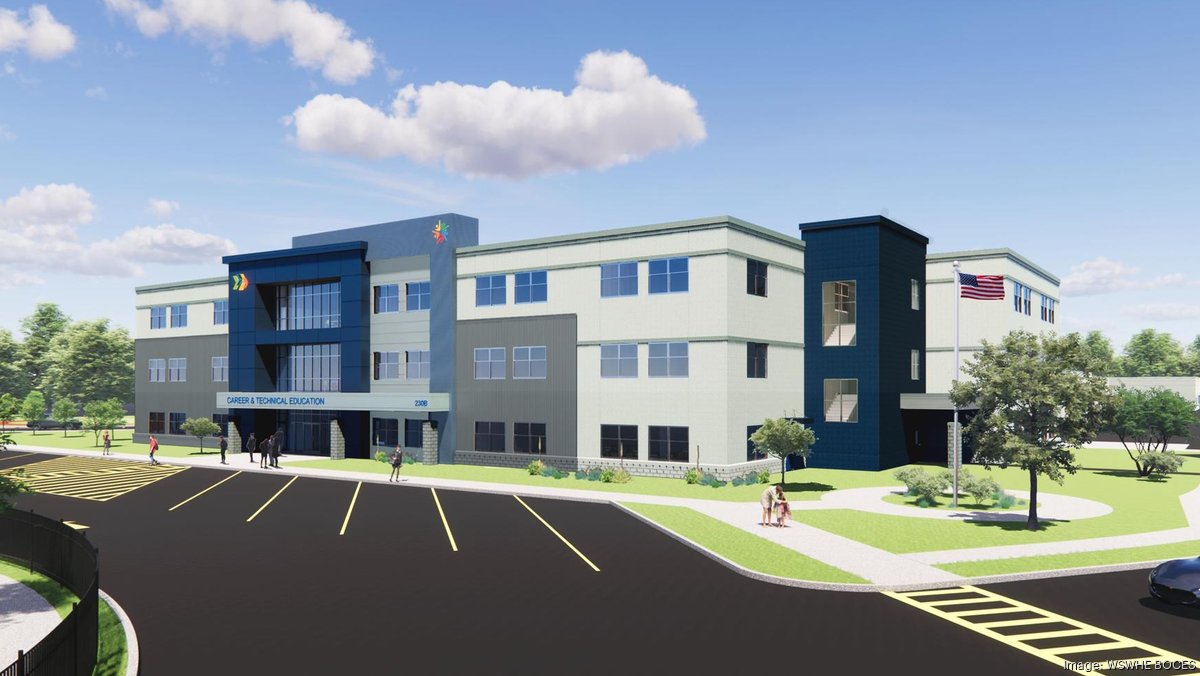
Clinton Essex Warren Washington BOCES seal · sourceConstruction on new WSWHE BOCES campus to start this fall - Albany Business Review · sourceCVES BOCES Announces $59 Million New State-of-the-Art Career and Technical Education Center in Plattsburgh | The Peru Gazette · sourceBOCES program breaks ground on new educational facilities in Wilton · source