Loading…
← All schools
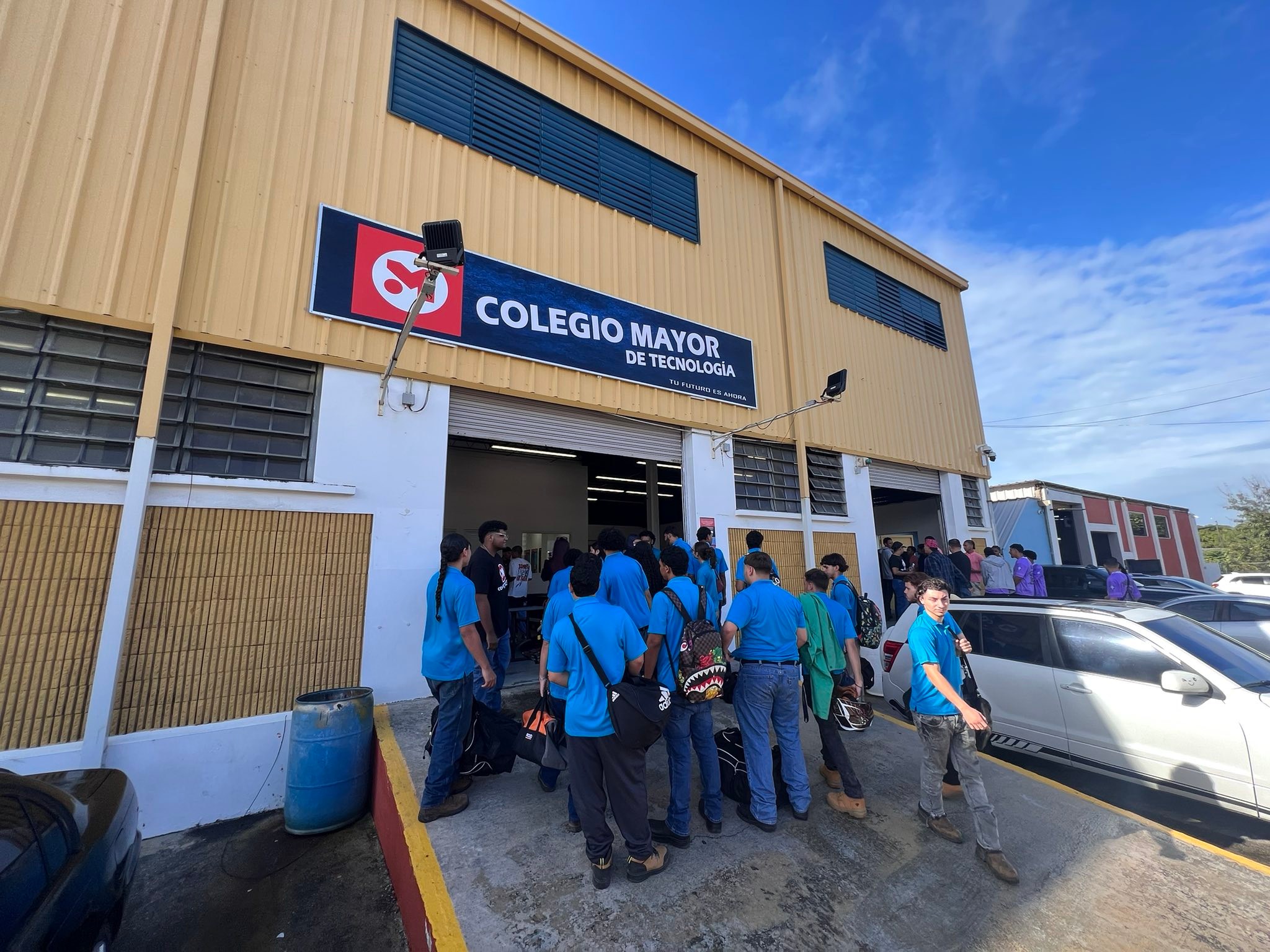
Colegio Mayor de Tecnologia Inc
Arroyo, PRprivate forprofitwww.cmtarroyo.com/
Avg net price
$5,809
Earnings (10 yr)
$24,591
Acceptance & SAT from Common Data Set / IPEDS; net price, earnings & graduation from the U.S. Dept. of Education College Scorecard. Figures lag ~1–2 years — verify with the school.
Colegio Mayor de Tecnología Inc is a tiny, hyper-focused vocational school in Arroyo, Puerto Rico, that operates on a radically open-access model. With an enrollment hovering around 106 students—overwhelmingly Hispanic men—it functions less like a traditional college and more like a direct pipeline to technical certification, offering a low-cost, no-frills path into the workforce. Its identity is defined by its mission to channel student interests into specific professions, a process it describes as 'identifying and initially channeling your study interests and needs.'
More details
- Undergrad enrollment
- 56
- Location
- Arroyo, PR (Small Suburb)
- Institution Type
- Private, Vocational/Career School
- Student Demographics
- 93.4% Hispanic/Latino, 98% Male
- Median Earnings (10yr)
- $24,591
- Financial Aid Recipients
- 98% of undergraduates
Outcomes & value
Outcomes & value
- Median earnings (10 yr)
- $24,591
- Value (earnings ÷ net price)
- 4.2×
- Pell (lower-income) share
- 98%
- First-gen share (among federal-aid recipients)
- 58%
Earnings = median of students working ~10 years after entry; debt = median of graduates. Value divides 10-yr earnings by one year’s net price — read it as earnings per dollar of annual cost, not a full lifetime ROI; it favors lower-cost schools. Source: U.S. Dept. of Education College Scorecard. Figures lag ~2 years and reflect all students, not your intended major.
Campus & location
Campus safety
- On-campus violent crimes (2024)
- 0
On-campus criminal offenses classed as violent (murder/non-negligent manslaughter, rape, robbery, aggravated assault) for the most recent reported year. Source: U.S. Dept. of Education Campus Safety and Security (Clery Act). Counts reflect what’s reported to the school, and urban campuses often report more partly due to non-student incidents nearby — read alongside campus size and setting, not as a standalone safety verdict.
Climate
- Pleasant days / yr
- 1
- Summer high
- 87°F
- Winter low
- 73°F
- Annual rain
- 28"
Pleasant days counts days per year with a mean temperature of 55–75°F, a high at or below 90°F, a low at or above 45°F, and little precipitation — a transparent comfort measure, not a weighting we invented. Computed from Open-Meteo ERA5 daily history (2019–2023).
Quick answers
- How much does Colegio Mayor de Tecnologia Inc cost?
- At Colegio Mayor de Tecnologia Inc, the average net price (after aid) is about $5,809 per year. Actual cost varies with financial aid and residency.
- How many undergraduates attend Colegio Mayor de Tecnologia Inc?
- Colegio Mayor de Tecnologia Inc enrolls approximately 56 undergraduate students.
- Where is Colegio Mayor de Tecnologia Inc located?
- Colegio Mayor de Tecnologia Inc is located in Arroyo, PR.
Admissions
Admissions at Colegio Mayor de Tecnología Inc are best described as open-access, with published ranging from 79% to 100%. This reflects a mission-driven focus on providing educational entry points rather than engaging in selective screening. The institution does not appear to publish specific SAT/ACT ranges or early decision policies, suggesting a straightforward, requirements-based application process. The student body is exceptionally homogeneous: data shows 93.4% of full-time undergraduates are Hispanic or Latino, and the gender distribution is starkly skewed, with 98% male and 2% female students out of a total enrollment of 106. This demographic profile underscores the school's role as a highly localized, niche technical institute serving a specific community in Puerto Rico.
Academics
The academic model is purely vocational and career-focused. The school is accredited by the Accrediting Commission of Career Schools and Colleges, and its stated purpose is to help students 'identify and channel initially your study interests and needs' while receiving 'information related to the profession of your choice.' It offers certificates as its primary degree level. With a total enrollment of just 106 students, the environment is intensely small-scale; one source lists a student-to-faculty ratio of 25 to 1, while another suggests an even more intimate 1:1 ratio. There is no mention of traditional liberal arts majors, graduate programs, or extensive general education requirements—the curriculum appears tightly aligned with specific technical skill development for immediate workforce entry.
Compare Colegio Mayor de Tecnologia Inc
vs Inter American University of Puerto Rico-Fajardovs EDP University of Puerto Rico Inc-San Juanvs Inter American University of Puerto Rico-Guayamavs Inter American University of Puerto Rico-Arecibo
See colleges similar to Colegio Mayor de Tecnologia Inc →Sources
- Colegio Mayor de Tecnologia Inc - College Scorecard
- Colegio Mayor de Tecnologia Inc Admissions, Costs & ...
- Colegio Mayor de Tecnologia Inc
- Colegio Mayor de Tecnologia Inc - Sallie
- Common Data Set: Home
- Common Data Set 2024-2025 - Office of Institutional Analytics
- Colegio Mayor de Tecnologia
- Colegio Mayor de Tecnologia Inc Admissions Statistics
- Colegio Mayor de Tecnologia Inc - Arroyo, PR
- Colegio Mayor de Tecnologia Inc – Colleges & Degrees