Loading…
← All schools
Colegio Tecnico de Electricidad Galloza
Aguada, PRprivate forprofitwww.ctegpr.com/
Avg net price
$12,558
Earnings (10 yr)
$22,859
Acceptance & SAT from Common Data Set / IPEDS; net price, earnings & graduation from the U.S. Dept. of Education College Scorecard. Figures lag ~1–2 years — verify with the school.
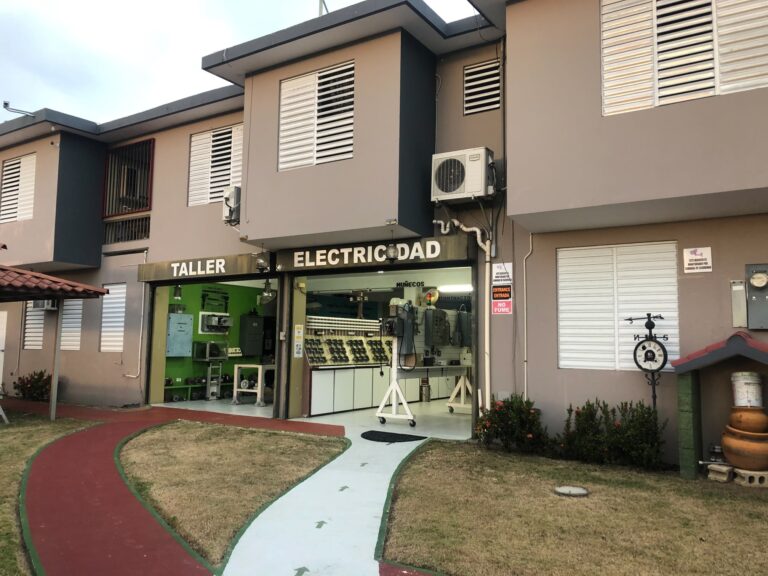
Colegio Técnico de Electricidad Galloza is a tiny, hyper-focused trade school in Aguada, Puerto Rico, built for one thing: turning out skilled electricians and HVAC technicians. With an open admissions policy and a total undergraduate enrollment of just seven students, it operates more like an intensive apprenticeship program than a traditional college, offering direct, practical training for immediate entry into the trades. Its outcomes are measured not in prestige or campus life, but in the specific, hands-on competency its graduates carry into the local workforce.
More details
- Undergrad enrollment
- 7
- Popular Majors
- Electrician, HVAC and Refrigeration Engineering Technician
- Institution Type
- Private for-profit, Postsecondary non-university
- Median Earnings (10yr)
- $22,859
Outcomes & value
Outcomes & value
- Median earnings (10 yr)
- $22,859
- Value (earnings ÷ net price)
- 1.8×
- Pell (lower-income) share
- 89%
Earnings = median of students working ~10 years after entry; debt = median of graduates. Value divides 10-yr earnings by one year’s net price — read it as earnings per dollar of annual cost, not a full lifetime ROI; it favors lower-cost schools. Source: U.S. Dept. of Education College Scorecard. Figures lag ~2 years and reflect all students, not your intended major.
Financial health
3.0 / 3.0Meets the federal financial-responsibility standard
U.S. Dept. of Education Financial Responsibility Composite Score (FY2022-23). Scale −1.0 to 3.0; ≥1.5 meets the standard. Reported for private nonprofit & for-profit institutions only — public universities are state-backed and not scored, so this is a stability signal, not a ranking.
Campus & location
Campus safety
- On-campus violent crimes (2024)
- 0
On-campus criminal offenses classed as violent (murder/non-negligent manslaughter, rape, robbery, aggravated assault) for the most recent reported year. Source: U.S. Dept. of Education Campus Safety and Security (Clery Act). Counts reflect what’s reported to the school, and urban campuses often report more partly due to non-student incidents nearby — read alongside campus size and setting, not as a standalone safety verdict.
Climate
- Pleasant days / yr
- 5
- Summer high
- 88°F
- Winter low
- 72°F
- Annual rain
- 36"
Pleasant days counts days per year with a mean temperature of 55–75°F, a high at or below 90°F, a low at or above 45°F, and little precipitation — a transparent comfort measure, not a weighting we invented. Computed from Open-Meteo ERA5 daily history (2019–2023).
Quick answers
- How much does Colegio Tecnico de Electricidad Galloza cost?
- At Colegio Tecnico de Electricidad Galloza, the average net price (after aid) is about $12,558 per year. Actual cost varies with financial aid and residency.
- How many undergraduates attend Colegio Tecnico de Electricidad Galloza?
- Colegio Tecnico de Electricidad Galloza enrolls approximately 7 undergraduate students.
- Where is Colegio Tecnico de Electricidad Galloza located?
- Colegio Tecnico de Electricidad Galloza is located in Aguada, PR.
Admissions
Admissions at Colegio Técnico de Electricidad Galloza are defined by accessibility, not selectivity. The institution reports a 100% , indicating an open admissions policy where the primary barrier to entry is likely a student's commitment to the technical track rather than competitive academic metrics. The process appears straightforward, with prospective students directed to contact the school via phone for information and registration. With an undergraduate enrollment of only seven students, the cohort is exceptionally small, creating an intimate, workshop-like environment from day one. There is no mention of standardized test requirements, early decision plans, or a complex application review; the focus is squarely on preparing for vocational training.
Academics
The academic model is singular and unambiguous: practical, hands-on training in specific skilled trades. The school's official designation is a "Postsecundario De Carácter No Universitario," meaning it offers post-secondary, non-university level education. The curriculum is built around direct career preparation, with popular majors including Electrician and HVAC and Refrigeration Engineering Technician. Student reviews highlight the "excellent hands-on electrical training" and note that "the labs are well-equipped, and the instructors are highly knowledgeable." The program is structured with a clear completion benchmark, requiring students to pass their study hours within 150% of the normal program time as established by the Federal Department of Education. This is a school for those who learn by doing, with academics entirely in service of building a concrete, marketable skill set.
Compare Colegio Tecnico de Electricidad Galloza
vs Inter American University of Puerto Rico-Fajardovs EDP University of Puerto Rico Inc-San Juanvs Inter American University of Puerto Rico-Guayamavs Livingstone College
See colleges similar to Colegio Tecnico de Electricidad Galloza →Sources
- Colegio Tecnico de Electricidad Galloza - Sallie
- Colegio Tecnico de Electricidad Galloza - College Scorecard
- Colegio Tecnico de Electricidad Galloza
- Colegio Tecnico de Electricidad Galloza | College Toolkit ...
- Colegio Tecnico de Electricidad Galloza
- Colegio Tecnico de Electricidad Galloza (off-campus)
- Colegio Técnico De Electricidad Galloza – Aguada, Puerto Rico
- Escuela Tecnica de Electricidad
- Colegio Técnico de Electricidad Galloza ...
- Escuela Técnica de Electricidad | San Juan, Ponce y Fajardo
- Colegio Técnico De Electricidad Galloza