Loading…
← All schools
College of Micronesia-FSM
Pohnpei, FMpublicwww.comfsm.fm/
Acceptance
87%
Avg net price
$6,789
Earnings (10 yr)
$24,651
Graduation rate
34%
Admit rate has ranged 77%–83% over the last 5 years, though the latest figure above (87%) falls outside that window. Source: IPEDS via Urban Institute.
Acceptance & SAT from Common Data Set / IPEDS; net price, earnings & graduation from the U.S. Dept. of Education College Scorecard. Figures lag ~1–2 years — verify with the school.
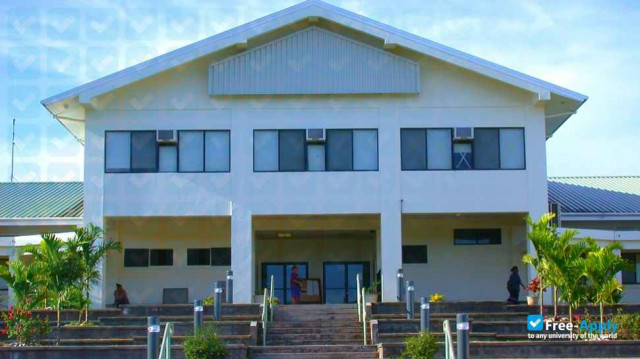
The College of Micronesia-FSM is the national public college of the Federated States of Micronesia, a practical, open-access institution rooted in its Pacific Island home. With a mission centered on workforce development and community service, it functions as the primary engine for higher education and skilled training across the nation's scattered islands. Its character is defined by a deep connection to Micronesian culture, a focus on associate degrees and certificates, and a commitment to serving a student body for whom this is often the first and only step into postsecondary education.
Admission requirements
Test-optional — scores considered if submitted
Required
- Grade point average
Considered (not required)
- Test scores (SAT/ACT)
- TOEFL (non-native English)
Source: IPEDS Admissions survey (2022) via Urban Institute. Covers formal factors only — it does not reflect essays, extracurriculars, or other holistic criteria.
More details
- Undergrad enrollment
- 1,729
- In-state tuition
- $5,050
- Out-of-state tuition
- $5,050
- Graduation Rate
- 34%
- Median Earnings (10yr)
- $24,651
- Students Receiving Grant Aid
- 98%
Outcomes & value
Outcomes & value
- Median earnings (10 yr)
- $24,651
- Value (earnings ÷ net price)
- 3.6×
- Graduation rate
- 34%
- First-year retention
- 40%
- Pell (lower-income) share
- 79%
- First-gen share (among federal-aid recipients)
- 47%
Earnings = median of students working ~10 years after entry; debt = median of graduates. Value divides 10-yr earnings by one year’s net price — read it as earnings per dollar of annual cost, not a full lifetime ROI; it favors lower-cost schools. Source: U.S. Dept. of Education College Scorecard. Figures lag ~2 years and reflect all students, not your intended major.
Campus & location
Campus safety
- On-campus violent crimes (2024)
- 1
On-campus criminal offenses classed as violent (murder/non-negligent manslaughter, rape, robbery, aggravated assault) for the most recent reported year. Source: U.S. Dept. of Education Campus Safety and Security (Clery Act). Counts reflect what’s reported to the school, and urban campuses often report more partly due to non-student incidents nearby — read alongside campus size and setting, not as a standalone safety verdict.
Climate
- Pleasant days / yr
- 0
- Summer high
- 83°F
- Winter low
- 77°F
- Annual rain
- 113.1"
Pleasant days counts days per year with a mean temperature of 55–75°F, a high at or below 90°F, a low at or above 45°F, and little precipitation — a transparent comfort measure, not a weighting we invented. Computed from Open-Meteo ERA5 daily history (2019–2023).
Quick answers
- What is the acceptance rate at College of Micronesia-FSM?
- College of Micronesia-FSM's acceptance rate is approximately 87% (Pohnpei, FM), based on the most recent figures we compiled from public and primary sources.
- How much does College of Micronesia-FSM cost?
- At College of Micronesia-FSM, the average net price (after aid) is about $6,789 per year. Actual cost varies with financial aid and residency.
- How many undergraduates attend College of Micronesia-FSM?
- College of Micronesia-FSM enrolls approximately 1,729 undergraduate students.
- Where is College of Micronesia-FSM located?
- College of Micronesia-FSM is located in Pohnpei, FM.
Admissions
Admissions at the College of Micronesia-FSM are best described as open-access, with a focus on providing educational opportunity to the citizens of the FSM. The process is moderately selective in name but highly accessible in practice. For the most recent cycle, the was 87%, meaning the vast majority of applicants who meet the basic requirements are admitted. Out of 1,322 applicants, 1,151 were accepted, and 1,729 students were enrolled. The enrollment figure being higher than the number accepted suggests many students may enter through open enrollment or non-degree pathways after admission. The institution does not appear to heavily weigh standardized test scores like the SAT or ACT in admissions decisions; sources note the middle 50% ranges are not applicable (N/A), indicating a or test-blind policy. The admissions factors are not detailed in the provided snippets for this specific college, but the high acceptance rate implies a baseline review of academic preparedness rather than a highly competitive, holistic evaluation.
Compare College of Micronesia-FSM
vs Abraham Baldwin Agricultural Collegevs University of Puerto Rico-Carolinavs University of Puerto Rico-Humacaovs Florida Polytechnic University
See colleges similar to College of Micronesia-FSM →Sources
- Common Data Set: Home
- [PDF] Common Data Set 202
- How To Use a Common Data Set - The College Solution
- College of Micronesia-FSM - Data USA
- Common Data Set - GradGPT
- [PDF] Using High School Data to Explore Early College Success on ...
- College of Micronesia--FSM Admissions - U.S. News & World Report
- College of Micronesia-FSM - Tuition and Acceptance Rate - Peterson's
- College of Micronesia-FSM Admission Requirements and Statistics
- Rankings | Federated States of Micronesia (FM) - College Raptor