Loading…
← All schools
College of the Marshall Islands
Majuro, MHpubliccmi.edu
Avg net price
$9,996
Graduation rate
18%
Acceptance & SAT from Common Data Set / IPEDS; net price, earnings & graduation from the U.S. Dept. of Education College Scorecard. Figures lag ~1–2 years — verify with the school.
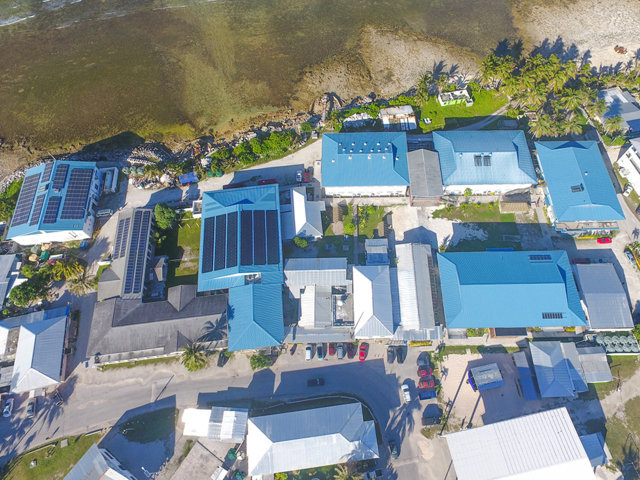
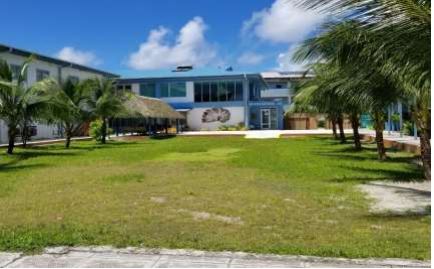
The College of the Marshall Islands (CMI) is not just a college; it is the singular, vital engine of higher education and cultural preservation for the Republic of the Marshall Islands. Located on the Majuro Atoll, this public community college operates with an open-access mission, serving a tight-knit student body almost entirely from the islands. Its identity is inextricably linked to the nation's needs, focusing on marine science, teacher education, and Marshallese culture, while grappling with the significant challenges of student preparedness and graduation rates that reflect its unique, high-stakes role.
More details
- Undergrad enrollment
- 1,009
- In-state tuition
- $6,840
- Out-of-state tuition
- $7,480
- Average Grant Award
- $2,752
- Early Decision Plan
- No indication in sources
- First-Year Retention
- Not Reported in Sources
- Demonstrated Interest
- Not applicable (open access)
- Graduation Rate (150%)
- 15%
- Graduation Rate (200%)
- 20%
- Median Earnings (10yr)
- Not Reported in Sources
- Students Receiving Grant Aid
- 89%
- Federal Pell Grant Recipients
Outcomes & value
Outcomes & value
- Graduation rate
- 18%
- Pell (lower-income) share
- 89%
- First-gen share (among federal-aid recipients)
- 59%
Earnings = median of students working ~10 years after entry; debt = median of graduates. Value divides 10-yr earnings by one year’s net price — read it as earnings per dollar of annual cost, not a full lifetime ROI; it favors lower-cost schools. Source: U.S. Dept. of Education College Scorecard. Figures lag ~2 years and reflect all students, not your intended major.
Campus & location
Campus safety
- On-campus violent crimes (2024)
- 0
On-campus criminal offenses classed as violent (murder/non-negligent manslaughter, rape, robbery, aggravated assault) for the most recent reported year. Source: U.S. Dept. of Education Campus Safety and Security (Clery Act). Counts reflect what’s reported to the school, and urban campuses often report more partly due to non-student incidents nearby — read alongside campus size and setting, not as a standalone safety verdict.
Climate
- Pleasant days / yr
- 0
- Summer high
- 83°F
- Winter low
- 80°F
- Annual rain
- 114"
Pleasant days counts days per year with a mean temperature of 55–75°F, a high at or below 90°F, a low at or above 45°F, and little precipitation — a transparent comfort measure, not a weighting we invented. Computed from Open-Meteo ERA5 daily history (2019–2023).
Quick answers
- How much does College of the Marshall Islands cost?
- At College of the Marshall Islands, the average net price (after aid) is about $9,996 per year. Actual cost varies with financial aid and residency.
- How many undergraduates attend College of the Marshall Islands?
- College of the Marshall Islands enrolls approximately 1,009 undergraduate students.
- Where is College of the Marshall Islands located?
- College of the Marshall Islands is located in Majuro, MH.
Admissions
The College of the Marshall Islands operates on an open-access, non-selective admissions model, a stark contrast to the competitive processes of U.S. mainland institutions. Published sources consistently report a 100% , reflecting its mission to serve the educational needs of the Marshallese population. There is no indication of an early decision or early action plan; the provided snippets reference such policies in the context of other universities but offer no data specific to CMI. The admissions process appears to be centered on access rather than selection, with a focus on enrolling students from the local high schools and community. Standardized test scores like the SAT or ACT are not reported as factors, aligning with the college's community-focused, open-door philosophy.
Academics
CMI's academic offerings are deeply pragmatic, designed to meet the specific human resource and cultural needs of the Marshall Islands. As an independent post-secondary education agency serving the Republic, its programs are anchored in local relevance. The college sets a high standard for research, with major commitments to , , and . This focus is critical for a nation comprised of atolls and islands. However, the college faces significant academic preparedness challenges. A descriptive study found that under a prior system, only 22% of enrolling students were placed into credit-bearing English courses, highlighting the need for developmental support. New student orientation reinforces academic success by emphasizing strict class attendance and course performance expectations. The academic experience is thus defined by a dual mission: providing career-ready and university-transfer pathways while building the foundational skills necessary for students to succeed.
Compare College of the Marshall Islands
vs West Virginia University Institute of Technologyvs Northwestern Oklahoma State Universityvs University of Science and Arts of Oklahomavs University of Virginia's College at Wise
See colleges similar to College of the Marshall Islands →Sources
- [PDF] 2023-2024 Common Data Set Template - Marshall University
- [PDF] Common Data Set 2024-2025 - Cal State LA
- Common Data Set: Home
- How To Use a Common Data Set - The College Solution
- The Common Data Set: What It Is & How to Use It In College ...
- Where to find Common Data Set (CDS) for college admission statistics
- College of the Marshall Islands Acceptance Rate - CollegeData
- College of the Marshall Islands - Profile, Rankings and Data
- College of the Marshall Islands - Tuition and Acceptance Rate
- College of the Marshall Islands — Acceptance Rate, Costs & More