Loading…
← All schools
Colorado Media School
Denver, COprivate forprofitbeonair.com/
Avg net price
$30,514
Earnings (10 yr)
$37,423
Acceptance & SAT from Common Data Set / IPEDS; net price, earnings & graduation from the U.S. Dept. of Education College Scorecard. Figures lag ~1–2 years — verify with the school.
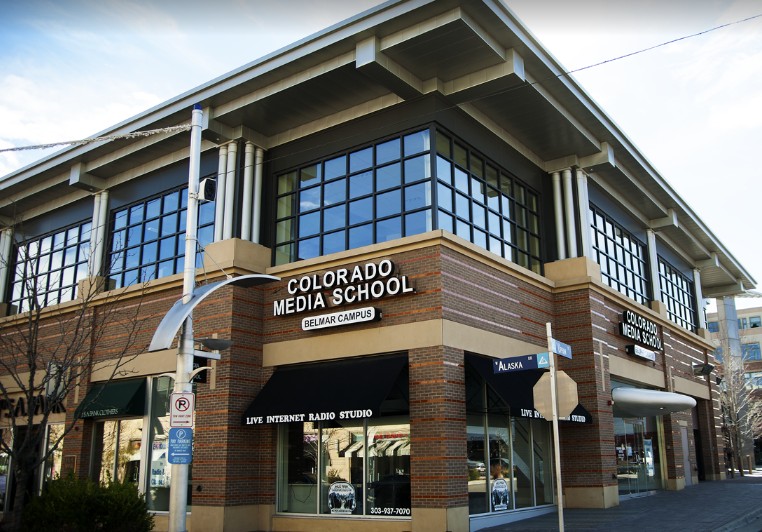
Colorado Media School is a tiny, hyper-focused trade school in Denver that operates with the intensity of a bootcamp and the ethos of a local radio station. With an open admissions policy and a 100% acceptance rate, it's a direct pipeline into Colorado's media industry, training a small cohort of students in the practical, hands-on skills of broadcasting, audio/video production, and web development. The experience is defined by its urban, no-frills environment and a singular mission: to get graduates on-air and into production roles as quickly as possible.
More details
- Undergrad enrollment
- 38
- Setting
- Urban
- Retention Rate
- 55%
- Special Recognition
- Best of Mile High Specialty School, 4 years running
- Median Earnings (10yr)
- $37,423
Outcomes & value
Outcomes & value
- Median earnings (10 yr)
- $37,423
- Value (earnings ÷ net price)
- 1.2×
- Median debt at graduation
- $9,500
- Reducing loan balance (3 yr)
- 29%
- Pell (lower-income) share
- 53%
- First-gen share (among federal-aid recipients)
- 42%
Earnings = median of students working ~10 years after entry; debt = median of graduates. Value divides 10-yr earnings by one year’s net price — read it as earnings per dollar of annual cost, not a full lifetime ROI; it favors lower-cost schools. Source: U.S. Dept. of Education College Scorecard. Figures lag ~2 years and reflect all students, not your intended major.
Campus & location
Campus safety
- On-campus violent crimes (2024)
- 0
On-campus criminal offenses classed as violent (murder/non-negligent manslaughter, rape, robbery, aggravated assault) for the most recent reported year. Source: U.S. Dept. of Education Campus Safety and Security (Clery Act). Counts reflect what’s reported to the school, and urban campuses often report more partly due to non-student incidents nearby — read alongside campus size and setting, not as a standalone safety verdict.
Climate
- Pleasant days / yr
- 78
- Summer high
- 86°F
- Winter low
- 19°F
- Annual rain
- 18.7"
- Annual snow
- 46.8"
- Natural-hazard risk
- Relatively High
Pleasant days counts days per year with a mean temperature of 55–75°F, a high at or below 90°F, a low at or above 45°F, and little precipitation — a transparent comfort measure, not a weighting we invented. Computed from Open-Meteo ERA5 daily history (2019–2023). Natural-hazard risk is the county’s composite rating from the FEMA National Risk Index.
Quick answers
- How much does Colorado Media School cost?
- At Colorado Media School, the average net price (after aid) is about $30,514 per year. Actual cost varies with financial aid and residency.
- How many undergraduates attend Colorado Media School?
- Colorado Media School enrolls approximately 38 undergraduate students.
- Where is Colorado Media School located?
- Colorado Media School is located in Denver, CO.
Admissions
Admissions at Colorado Media School is defined by accessibility, not selectivity. The school maintains an open admission policy, with a reported acceptance rate of 100%. This means the barrier to entry is low, focusing on providing access to media education rather than constructing a competitive applicant pool. The school's yield rate—the percentage of admitted students who enroll—is a substantial 78.6%, indicating that those who are admitted are highly committed to attending. Standardized test scores like the SAT or ACT are not defining factors for admission here; sources indicate typical score ranges are either not available or not a primary consideration. The admissions process is straightforward, designed to identify candidates ready for an intensive, career-focused program rather than to filter based on traditional academic metrics.
Academics
Academics are laser-focused on practical, industry-ready skills. Colorado Media School is a specialty school that has been recognized as the and has also received a 2022–2023 ACCSC award. The curriculum is designed to prepare students for immediate careers in . The school emphasizes hands-on training from day one, operating more like a professional studio than a traditional liberal arts college. It has been committed to this mission since 2001. The program structure allows for some acceleration; for instance, , highlighting a flexible, competency-based approach to moving students through the curriculum efficiently.
Compare Colorado Media School
vs Northwest Nazarene Universityvs Dean Collegevs United States Coast Guard Academyvs The College of Idaho
See colleges similar to Colorado Media School →Sources
- Common Data Set: Home
- Common Data Set - Colorado College
- [PDF] Common Data Set 2021-2022 - Colorado Department of Education
- Common Data Set | Colorado Mesa University
- Researching Colleges With the Common Data Set
- Common Data Set - Institutional Research | Strategic Analytics
- Colorado Media School - Niche
- Colorado Media School Statistics | Overgrad
- Colorado Media School Admission, Acceptance Rate, SAT, ACT ...
- Colorado Media School - Sallie
- Colorado Media School Admissions - BigFuture College Search