Loading…
← All schools
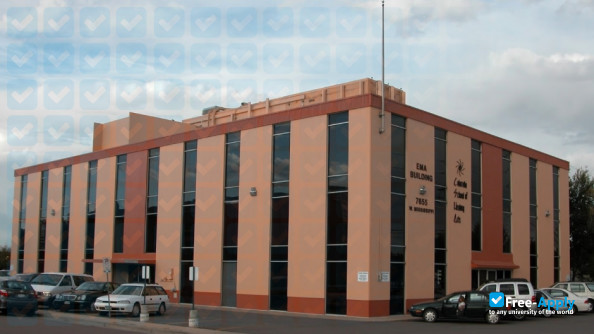
Colorado School of Healing Arts
Lakewood, COprivate forprofitwww.csha.net/
The Colorado School of Healing Arts is a singularly focused, career-driven institution in Lakewood that operates less like a traditional college and more like a direct pipeline into the wellness industry. With an open-door admissions policy, it attracts a diverse cohort of adult learners seeking a fast, practical path to becoming licensed massage therapists and holistic health practitioners. The school's identity is built on its high licensure exam pass rates, a supportive, 'calming' campus atmosphere, and a curriculum deeply embedded in current industry practices.
More details
- Undergrad enrollment
- 52
- In-state tuition
- $11,764
- Out-of-state tuition
- $11,764
- Location
- Lakewood, CO
- Program Focus
- Massage Therapy & Holistic Health
- MBLEx Pass Rate
- 91%
- Student Body Size
- ~52 students
- Median Earnings (10yr)
- $33,444
- Employment Rate (9-month program)
- 100%
- Graduation Rate (9-month program)
- 88%
Outcomes & value
Outcomes & value
- Median earnings (10 yr)
- $33,444
- Median debt at graduation
- $7,600
- Reducing loan balance (3 yr)
- 55%
- Pell (lower-income) share
- 47%
Earnings = median of students working ~10 years after entry; debt = median of graduates. Value divides 10-yr earnings by one year’s net price — read it as earnings per dollar of annual cost, not a full lifetime ROI; it favors lower-cost schools. Source: U.S. Dept. of Education College Scorecard. Figures lag ~2 years and reflect all students, not your intended major.
Financial health
1.8 / 3.0Meets the federal financial-responsibility standard
U.S. Dept. of Education Financial Responsibility Composite Score (FY2022-23). Scale −1.0 to 3.0; ≥1.5 meets the standard. Reported for private nonprofit & for-profit institutions only — public universities are state-backed and not scored, so this is a stability signal, not a ranking.
Campus & location
Campus safety
- On-campus violent crimes (2024)
- 0
On-campus criminal offenses classed as violent (murder/non-negligent manslaughter, rape, robbery, aggravated assault) for the most recent reported year. Source: U.S. Dept. of Education Campus Safety and Security (Clery Act). Counts reflect what’s reported to the school, and urban campuses often report more partly due to non-student incidents nearby — read alongside campus size and setting, not as a standalone safety verdict.
Climate
- Pleasant days / yr
- 79
- Summer high
- 85°F
- Winter low
- 18°F
- Annual rain
- 19.4"
- Annual snow
- 56.2"
- Natural-hazard risk
- Relatively High
Pleasant days counts days per year with a mean temperature of 55–75°F, a high at or below 90°F, a low at or above 45°F, and little precipitation — a transparent comfort measure, not a weighting we invented. Computed from Open-Meteo ERA5 daily history (2019–2023). Natural-hazard risk is the county’s composite rating from the FEMA National Risk Index.
Quick answers
- How many undergraduates attend Colorado School of Healing Arts?
- Colorado School of Healing Arts enrolls approximately 52 undergraduate students.
- Where is Colorado School of Healing Arts located?
- Colorado School of Healing Arts is located in Lakewood, CO.
Admissions
CSHA operates on an open admission policy, meaning the barrier to entry is intentionally low and designed for accessibility. The primary requirements are straightforward: applicants must have a high school diploma or GED and be at least 18 years old. This policy is explicitly stated across multiple sources, including the school's own prospective student page and third-party college guides, which classify it as an institution where "virtually all secondary school graduates or students with GED equivalency diplomas are admitted." As a result, are reported at or near 100%. The process is devoid of the competitive trappings of selective colleges; there are no mentions of SAT/ACT requirements, GPA thresholds, or a need to demonstrate extracurricular interest. The admissions philosophy is purely functional: if you meet the basic educational prerequisites and are ready to begin, you're in.
- Policy: Open admission.
- Requirements: High school diploma/GED, minimum age of 18.
- Selectivity: Broadly accessible, with reported acceptance rates of 100% or 91%.
Compare Colorado School of Healing Arts
vs Livingstone Collegevs The College of Idahovs University of Alaska Southeastvs United States Coast Guard Academy
See colleges similar to Colorado School of Healing Arts →Sources
- Common Data Set
- Common Data Set - Institutional Research | Strategic Analytics
- Common Data Set 2024-2025
- Common Data Set 2024-2025
- Prospective Student Resources
- Colorado State University Common Data Set FY2026
- Colorado School of Healing Arts
- Colorado School of Healing Arts Admissions - BigFuture
- Colorado School Of Healing Arts Acceptance Rate, SAT ...
- Colorado School of Healing Arts
- Tuition