Admit rate has ranged 72%–94% over the last 5 years — notably volatile, though the latest figure above (68%) falls outside that window. Source: IPEDS via Urban Institute.
Acceptance & SAT from Common Data Set / IPEDS; net price, earnings & graduation from the U.S. Dept. of Education College Scorecard. Figures lag ~1–2 years — verify with the school.
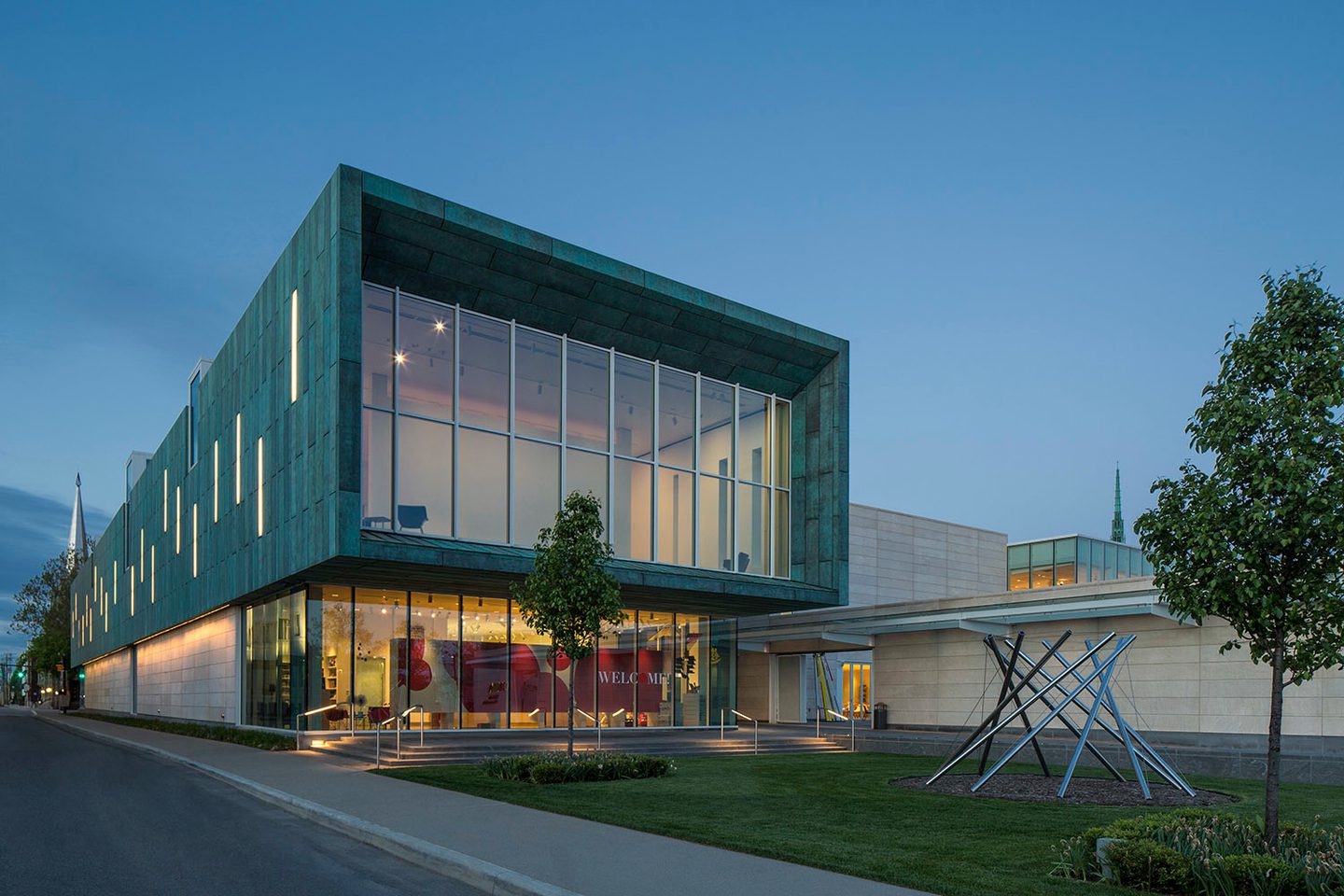
Columbus College of Art & Design is a specialized, urban art school that trades the broad liberal arts experience for an immersive, studio-centric education from day one. Its identity is rooted in a pragmatic, career-focused approach to the creative industries, leveraging its location in Ohio's capital to connect students with a vibrant arts scene and professional opportunities. The vibe is less about ivy-covered quads and more about the energy of a working studio, where small classes and dedicated faculty aim to turn artistic passion into a viable profession, albeit with financial and academic outcomes that demand careful consideration.
Admission requirements
Test-blind — scores not considered
Required
Grade point average
Demonstrated competencies
TOEFL (non-native English)
Considered (not required)
Letters of recommendation
Source: IPEDS Admissions survey (2022) via Urban Institute. Covers formal factors only — it does not reflect essays, extracurriculars, or other holistic criteria.
More details
Undergrad enrollment
882
In-state tuition
$40,825
Out-of-state tuition
$40,825
Setting
Urban, Downtown Columbus
Student Body
91% full-time
Graduation Rate
56%
Popular Programs
Illustration, Animation, Fashion Design
Median Earnings (10yr)
$40,664
Outcomes & value
Outcomes & value
Median earnings (10 yr)
$40,664
Value (earnings ÷ net price)
1.4×
Median debt at graduation
$27,000
Graduation rate
56%
First-year retention
80%
Reducing loan balance (3 yr)
59%
Pell (lower-income) share
39%
First-gen share (among federal-aid recipients)
25%
Financial health
3.0 / 3.0Meets the federal financial-responsibility standard
U.S. Dept. of Education Financial Responsibility Composite Score (FY2022-23). Scale −1.0 to 3.0; ≥1.5 meets the standard. Reported for private nonprofit & for-profit institutions only — public universities are state-backed and not scored, so this is a stability signal, not a ranking.
Top-earning majors
Median earnings by field of study (highest credential), ~2 years after completion.
Fine and Studio Arts$26,353
Design and Applied Arts$25,936
Film/Video and Photographic Arts$25,525
Graphic Communications$20,140
Source: U.S. Dept. of Education College Scorecard (field-of-study earnings). Figures cover graduates who received federal aid and lag ~2 years; not all programs report data.
On-campus criminal offenses classed as violent (murder/non-negligent manslaughter, rape, robbery, aggravated assault) for the most recent reported year. Source: U.S. Dept. of Education Campus Safety and Security (Clery Act). Counts reflect what’s reported to the school, and urban campuses often report more partly due to non-student incidents nearby — read alongside campus size and setting, not as a standalone safety verdict.
Climate
Pleasant days / yr
87
Summer high
83°F
Winter low
26°F
Annual rain
45.9"
Annual snow
19.3"
Natural-hazard risk
Relatively High
Pleasant days counts days per year with a mean temperature of 55–75°F, a high at or below 90°F, a low at or above 45°F, and little precipitation — a transparent comfort measure, not a weighting we invented. Computed from Open-Meteo ERA5 daily history (2019–2023). Natural-hazard risk is the county’s composite rating from the FEMA National Risk Index.
Deep dive — research, future-scholar output & economic mobility▾
Research output
Institutional h-index
8
Scholarly works
70
Institutional research volume and impact from OpenAlex. The h-index reflects large research universities and will be low for teaching-focused liberal-arts colleges — not a measure of undergraduate quality.
Economic mobility
Mobility rate
1.6%
Bottom → top quintile
26%
From bottom quintile
6%
Mobility rate = the share of students who both start in the bottom household-income quintile and reach the top quintile; bottom → top is that chance conditional on starting at the bottom. Source: Opportunity Insights Mobility Report Cards (Chetty, Friedman, Saez, Turner & Yagan). Reflects 1980–82 birth cohorts, so it’s directional, not current.
Quick answers
What is the acceptance rate at Columbus College of Art & Design?
Columbus College of Art & Design's acceptance rate is approximately 68% (Columbus, OH), based on the most recent figures we compiled from public and primary sources.
How much does Columbus College of Art & Design cost?
At Columbus College of Art & Design, the average net price (after aid) is about $29,439 per year. Actual cost varies with financial aid and residency.
How many undergraduates attend Columbus College of Art & Design?
Columbus College of Art & Design enrolls approximately 882 undergraduate students.
Where is Columbus College of Art & Design located?
Columbus College of Art & Design is located in Columbus, OH.
Admissions
Gaining admission to CCAD is more about demonstrating creative potential than achieving stratospheric test scores. The process is selective but accessible, with a focus on the portfolio as the central component of an application. While the school reports a wide range of acceptance figures from various sources—from as high as 91.72% to as low as 67.7%—our canonical is 68%. Admitted students typically present SAT scores between 950 and 1190, or ACT scores between 18 and 24. Academic preparation varies; among admitted students, GPAs of 3.75 or higher are represented, but so are grades in the 3.25–3.49 range, suggesting the academic record is evaluated in the context of artistic talent. The rate—the percentage of admitted students who choose to enroll—was reported at 32.05% for one recent cycle. The admissions office offers an Early Decision option, a binding commitment that typically carries a higher acceptance rate at many institutions, though CCAD's specific ED rate is not detailed in the provided sources. Demonstrated interest—such as campus visits or contact with admissions—is a factor colleges can consider, but its specific importance at CCAD is not defined in the available references.
Earnings = median of students working ~10 years after entry; debt = median of graduates. Value divides 10-yr earnings by one year’s net price — read it as earnings per dollar of annual cost, not a full lifetime ROI; it favors lower-cost schools. Source: U.S. Dept. of Education College Scorecard. Figures lag ~2 years and reflect all students, not your intended major.
CCAD's curriculum is an all-in, professionally oriented dive into art and design. The school offers 11 Bachelor of Fine Arts programs, which are the core of the undergraduate experience, alongside two specialized Master of Professional Studies degrees in Retail Design and User Experience Design, and a Master of Fine Arts. The academic model is intensely studio-based, emphasizing hands-on making and technical skill development from the first year. Small class sizes are a frequently noted strength, fostering a personalized learning environment and close mentorship from faculty who are often practicing artists and designers. While the institution promotes academic excellence broadly, it specifically highlights its Illustration, Animation, and Fashion Design programs as being ranked among the nation's best. This is not a liberal arts college with an art major; it's a conservatory-style training ground where general education requirements exist but the overwhelming focus is on building a professional portfolio.
Life at CCAD is inextricably linked to its urban setting in downtown Columbus. The campus isn't a secluded enclave but an integrated part of the city's creative fabric. Student life revolves around the studio culture, with dedicated workspaces being a second home. The school fosters community through student organizations and wellness services, and is developing a renovated 'Center for Creative Collaboration' to serve as a hub for interdisciplinary work. Organized excursions for students intentionally connect them to Columbus's vibrant arts scene, including destinations like the Franklinton Arts District, Otherworld, and the Scioto Mile. The energy of downtown Columbus—its galleries, museums, and creative businesses—is presented as an extension of the classroom. Housing is provided, but the overall experience is one of immersion in a professional, urban creative community rather than a traditional, insular campus life.
Outcomes for CCAD graduates reflect the challenging economic landscape for early-career artists and designers, as well as the institution's graduation rate. The six-year graduation rate is reported at various levels, with our canonical figure set at 56%; other sources note a four-year rate of 55% and a six-year rate hovering around 60-61%, with women graduating at a slightly higher rate than men. Early-career salary data is modest, with one source citing a median of $26,716 and another noting an average around $30,000, which is characterized as being about $5,000 worse than might be expected for college graduates. The canonical figure for median earnings ten years after entry is $40,664. One projection suggests a 20-year career earnings total of nearly $1.2 million. These figures underscore a central reality: a CCAD degree is an investment in a creative career path where financial returns may take time to materialize and are highly dependent on individual talent, hustle, and specialization.
Attending CCAD requires a significant financial commitment, though institutional aid plays a substantial role in reducing the sticker price. Full-time tuition for 12-18 credit hours is listed at $43,300 per year ($21,650 per semester). The average financial aid package is reported to be $21,829. This aid brings the —the actual average cost after grants and scholarships—down considerably. Various sources calculate this net price between $29,238 and $30,900 per year; our canonical average net price is $29,439. One source notes that the average institutional grant is $25,004. The school utilizes a combination of scholarships, grants, and loans to form its aid packages. The provided sources do not indicate that CCAD has a 'no-loan' policy for low-income students or that it commits to meeting 100% of demonstrated financial need without loans. Prospective students should plan for a net cost in the high $20,000s and carefully evaluate their aid offers, which are likely to include a loan component.
CCAD stands out for its unapologetic, single-minded focus on professional art and design education within a real-world urban context. It’s not for the undecided or the student seeking a broad-based college experience; it’s for the individual who is ready to live and breathe their craft from day one. The school’s distinctiveness lies in several concrete factors:
Immediate Studio Immersion: Unlike art programs within larger universities, CCAD students are in their major studios from the start, surrounded by peers and faculty equally dedicated to visual creativity.
Urban Integration as Pedagogy: The campus is deliberately woven into downtown Columbus, turning the city’s galleries, design firms, and arts districts into a living lab for inspiration and professional connection.
Career-Oriented Specialization: With graduate programs in pragmatic fields like Retail Design and User Experience Design, the school signals a commitment to aligning art education with tangible industry pathways beyond the fine arts gallery.
A Defined Creative Community: It offers the camaraderie and intense focus of an art school ‘bubble,’ but one that is permeable to the professional world just outside its doors. The trade-off is clear: you sacrifice the expansive quad and football team for 24/7 studio access and a direct line into a creative city’s heartbeat.