Loading…
← All schools
Commercial Divers International
Goodyear, AZprivate forprofitcommercialdiversinternational.edu/
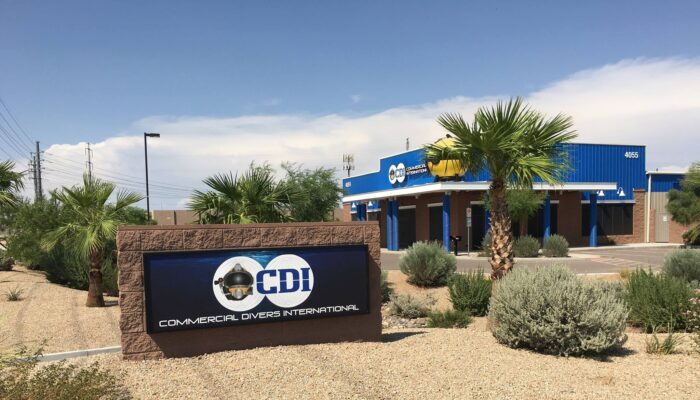
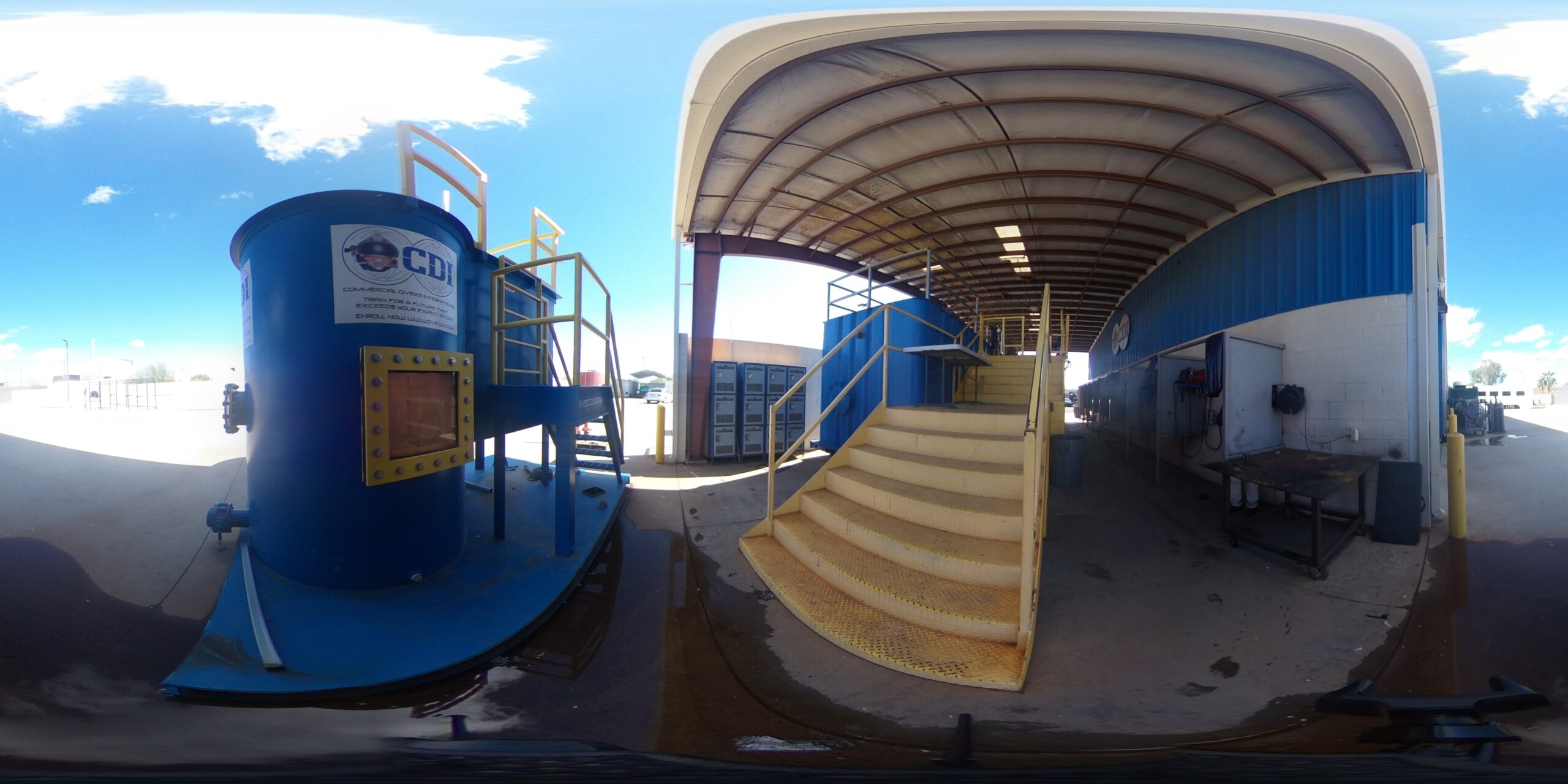
Commercial Divers International (CDI) isn't your typical college—it's a high-stakes, high-reward trade school where the classroom is a dive tank and the degree is a ticket to a rugged, well-paid profession. Nestled in Goodyear, Arizona, CDI offers a brutally pragmatic, 4.5-month bootcamp for aspiring commercial divers, compressing a career's worth of underwater welding, rigging, and surface-supplied diving skills into an intense, hands-on program. This is a place for those who want to trade a lecture hall for a hyperbaric chamber, where the faculty's collective century of industry experience matters far more than any SAT score.
More details
- Undergrad enrollment
- 71
- Program Duration
- ~4.5 months
- Key Training Areas
- Surface-supplied diving, underwater welding, rigging
- Median Annual Wage (Industry)
- $67,570
Outcomes & value
Outcomes & value
- Pell (lower-income) share
- 38%
Earnings = median of students working ~10 years after entry; debt = median of graduates. Value divides 10-yr earnings by one year’s net price — read it as earnings per dollar of annual cost, not a full lifetime ROI; it favors lower-cost schools. Source: U.S. Dept. of Education College Scorecard. Figures lag ~2 years and reflect all students, not your intended major.
Financial health
2.4 / 3.0Meets the federal financial-responsibility standard
U.S. Dept. of Education Financial Responsibility Composite Score (FY2022-23). Scale −1.0 to 3.0; ≥1.5 meets the standard. Reported for private nonprofit & for-profit institutions only — public universities are state-backed and not scored, so this is a stability signal, not a ranking.
Campus & location
Campus safety
- On-campus violent crimes (2024)
- 0
On-campus criminal offenses classed as violent (murder/non-negligent manslaughter, rape, robbery, aggravated assault) for the most recent reported year. Source: U.S. Dept. of Education Campus Safety and Security (Clery Act). Counts reflect what’s reported to the school, and urban campuses often report more partly due to non-student incidents nearby — read alongside campus size and setting, not as a standalone safety verdict.
Climate
- Pleasant days / yr
- 100
- Summer high
- 106°F
- Winter low
- 43°F
- Annual rain
- 8.4"
- Natural-hazard risk
- Very High
Pleasant days counts days per year with a mean temperature of 55–75°F, a high at or below 90°F, a low at or above 45°F, and little precipitation — a transparent comfort measure, not a weighting we invented. Computed from Open-Meteo ERA5 daily history (2019–2023). Natural-hazard risk is the county’s composite rating from the FEMA National Risk Index.
Quick answers
- How much does Commercial Divers International cost?
- At Commercial Divers International, the average net price (after aid) is about $36,757 per year. Actual cost varies with financial aid and residency.
- How many undergraduates attend Commercial Divers International?
- Commercial Divers International enrolls approximately 71 undergraduate students.
- Where is Commercial Divers International located?
- Commercial Divers International is located in Goodyear, AZ.
Admissions
Forget , demonstrated interest, or crafting the perfect personal essay. Admission to Commercial Divers International operates on a straightforward, open-door policy. The basic requirements are minimal: applicants must be at least 18 years old and possess a high school diploma, GED, or equivalent. Sources indicate the school has a 100% , reflecting its mission to provide vocational training to all who meet these baseline qualifications. There is no mention of standardized test scores being required or considered. The process is designed for simplicity, allowing anyone with the foundational credentials to enroll and begin training. This is a stark contrast to the selective, multi-factor admissions processes detailed in s for traditional colleges, placing CDI firmly in the category of specialized trade and technical schools.
Academics
The academic model at CDI is pure vocational immersion. The entire program is condensed into approximately 4.5 months, a timeline typical for commercial diving schools. The curriculum is singularly focused on producing job-ready divers, not well-rounded graduates. Training emphasizes a demanding blend of physical skill and mental acuity. As noted in industry discussions, commercial diving "is not just about being a good diver, it's about being competent in a range of skills like welding, rigging, and first aid." The program includes critical, real-world competencies like surface-supplied diving and underwater welding. Students must also master the mental math required for dive planning and safety, such as calculating remaining air supply. CDI promotes itself as a top international school based on its faculty experience and facilities, with a reported 88% of students completing their program within the expected 'normal time'—which, in this accelerated context, means finishing the intensive course on schedule.
Compare Commercial Divers International
See colleges similar to Commercial Divers International →Sources
- Common Data Set: Home
- Common Data Set
- Common Data Set 2024-2025 - Registrar's Office
- The Common Data Set: What It Is & How to Use It In ...
- Demystifying the Common Data Set
- International Students - Admissions
- Admissions | Commercial Divers International
- Class of 2029 Profile - Bryn Mawr College
- Commercial Divers International - Niche
- Commercial Divers International - Admissions - MeetYourClass
- The Class of 2029 | Office of Admission - Haverford College