Loading…
← All schools
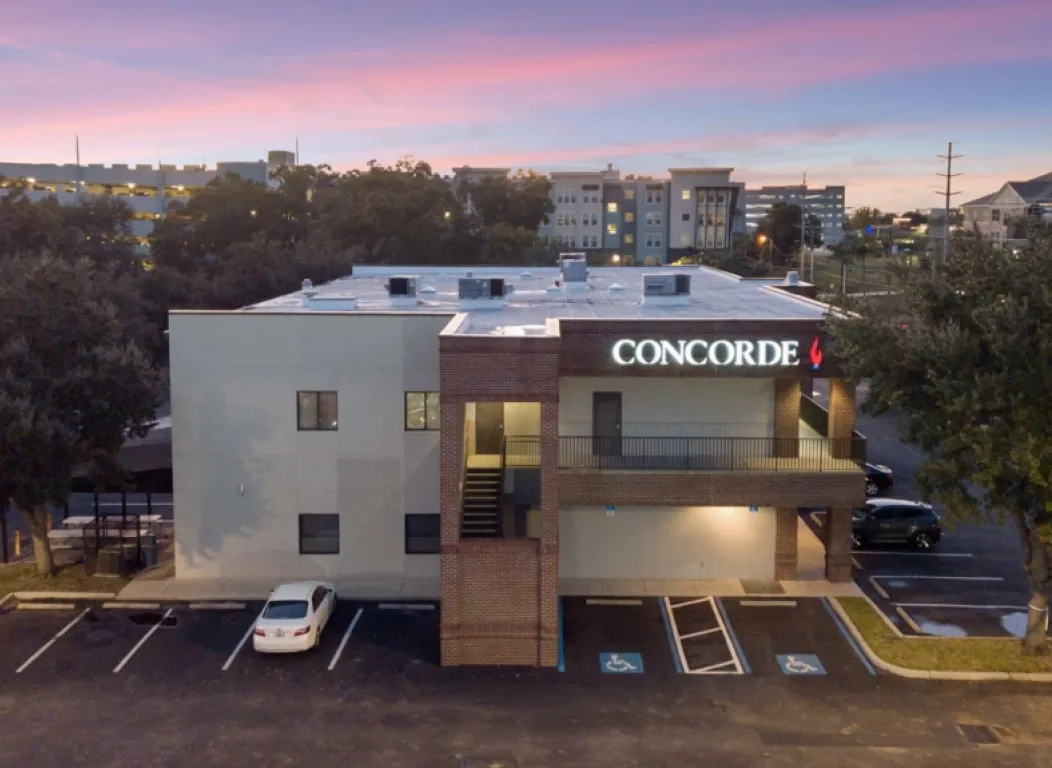
Concorde Career Institute-Tampa
Tampa, FLprivate forprofitconcorde.edu
Acceptance
96%
Avg net price
$26,077
Earnings (10 yr)
$36,288
Admit rate has ranged 92%–99% over the last 5 years. Source: IPEDS via Urban Institute.
Acceptance & SAT from Common Data Set / IPEDS; net price, earnings & graduation from the U.S. Dept. of Education College Scorecard. Figures lag ~1–2 years — verify with the school.
Concorde Career Institute-Tampa is a hyper-focused, no-frills trade school where the mission is singular: fast-track students into specific, in-demand healthcare support roles. With an admissions process that is almost entirely open-access, it operates more like a vocational training center than a traditional college, prioritizing hands-on skill acquisition over general education. Its identity is defined by a pragmatic, career-first ethos, a tight-knit campus community centered on shared professional goals, and a curriculum laser-targeted on allied health certificates and diplomas.
Admission requirements
Test-blind — scores not considered
Required
- High school transcript
Source: IPEDS Admissions survey (2022) via Urban Institute. Covers formal factors only — it does not reflect essays, extracurriculars, or other holistic criteria.
More details
- Undergrad enrollment
- 158
- Top Major
- Dental Hygiene/Hygienist
- Retention Rate
- 55%
- Graduation Rate
- 73%
- Student-Faculty Ratio
- 31:1
- Median Earnings (10yr)
- $36,288
- Students Receiving Aid
- 74%
Outcomes & value
Outcomes & value
- Median earnings (10 yr)
- $36,288
- Value (earnings ÷ net price)
- 1.4×
- Median debt at graduation
- $9,500
- Reducing loan balance (3 yr)
- 34%
- Pell (lower-income) share
- 65%
- First-gen share (among federal-aid recipients)
- 60%
Earnings = median of students working ~10 years after entry; debt = median of graduates. Value divides 10-yr earnings by one year’s net price — read it as earnings per dollar of annual cost, not a full lifetime ROI; it favors lower-cost schools. Source: U.S. Dept. of Education College Scorecard. Figures lag ~2 years and reflect all students, not your intended major.
Campus & location
Campus safety
- On-campus violent crimes (2024)
- 0
On-campus criminal offenses classed as violent (murder/non-negligent manslaughter, rape, robbery, aggravated assault) for the most recent reported year. Source: U.S. Dept. of Education Campus Safety and Security (Clery Act). Counts reflect what’s reported to the school, and urban campuses often report more partly due to non-student incidents nearby — read alongside campus size and setting, not as a standalone safety verdict.
Climate
- Pleasant days / yr
- 131
- Summer high
- 88°F
- Winter low
- 56°F
- Annual rain
- 57.1"
- Natural-hazard risk
- Relatively High
Pleasant days counts days per year with a mean temperature of 55–75°F, a high at or below 90°F, a low at or above 45°F, and little precipitation — a transparent comfort measure, not a weighting we invented. Computed from Open-Meteo ERA5 daily history (2019–2023). Natural-hazard risk is the county’s composite rating from the FEMA National Risk Index.
Quick answers
- What is the acceptance rate at Concorde Career Institute-Tampa?
- Concorde Career Institute-Tampa's acceptance rate is approximately 96% (Tampa, FL), based on the most recent figures we compiled from public and primary sources.
- How much does Concorde Career Institute-Tampa cost?
- At Concorde Career Institute-Tampa, the average net price (after aid) is about $26,077 per year. Actual cost varies with financial aid and residency.
- How many undergraduates attend Concorde Career Institute-Tampa?
- Concorde Career Institute-Tampa enrolls approximately 158 undergraduate students.
- Where is Concorde Career Institute-Tampa located?
- Concorde Career Institute-Tampa is located in Tampa, FL.
Admissions
The admissions process at Concorde Career Institute-Tampa is designed for accessibility, not selectivity. With an of 96%, the institute is categorically non-competitive, a fact underscored by sources that describe it as "not selective" and where the primary barrier to entry is likely completing the application and consultation process, not academic credentials. The process typically involves submitting an application and speaking with an admissions adviser. Notably, the school does not report or emphasize standardized test scores like the SAT or ACT for admissions decisions. While some sources mention an average GPA of 2.80 for admitted students, the overwhelming narrative is one of open access, aimed at removing traditional academic hurdles for career-focused learners. The institute does not publish a , the standardized report used by most traditional colleges to detail admissions statistics and policies, which aligns with its identity as a specialized career college rather than a degree-granting university.
Compare Concorde Career Institute-Tampa
See colleges similar to Concorde Career Institute-Tampa →Sources
- Common Data Set: Home
- Where Is the Common Data Set? #commondataset ... - Facebook
- Tampa - Concorde Career College
- Concorde Career Institute-Tampa | Data USA
- What are the common data points for each college? - Facebook
- [PDF] Common Data Set 2018-2019 - University of Florida
- Concorde Career Institute Tampa Admissions - BigFuture
- Concorde Career Institute Tampa Admission, Acceptance Rate, SAT ...
- Concorde Career Institute-Tampa Acceptance Rate and SAT/ACT ...
- Concorde Career Institute - Tampa - Niche