Loading…
← All schools
Crestpoint University
Phoenix, AZprivate forprofitcrestpoint.edu
Avg net price
$15,670
Earnings (10 yr)
$42,269
Graduation rate
33%
Acceptance & SAT from Common Data Set / IPEDS; net price, earnings & graduation from the U.S. Dept. of Education College Scorecard. Figures lag ~1–2 years — verify with the school.
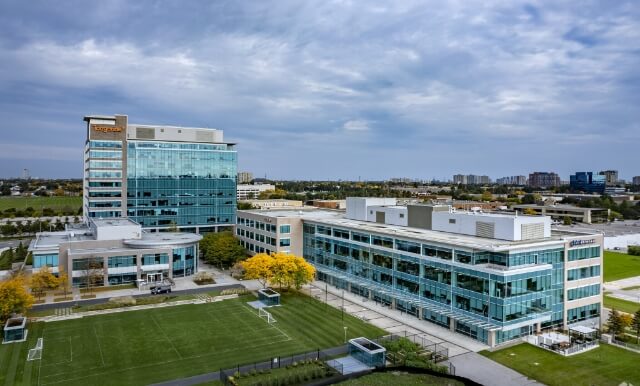
Crestpoint University is a small, for-profit institution in Phoenix that has carved out a niche as an online-first educator focused on career enhancement. Since 2003, it has served a diverse, non-traditional student body primarily through programs in business and legal studies. Its profile is defined by a starkly pragmatic, commuter-campus model, with outcomes that reflect the challenges and opportunities of its mission.
More details
- Undergrad enrollment
- 385
- In-state tuition
- $7,995
- Out-of-state tuition
- $7,995
- Control
- For-profit
- Academic Focus
- Online, career-oriented
- Campus Setting
- Urban, commuter campus
- Graduation Rate
- 33%
- Student Body Size
- 388 undergraduates
- Median Earnings (10yr)
- $42,269
- Student-to-Faculty Ratio
- 31:1
- First-Year Retention Rate
- 17%
Outcomes & value
Outcomes & value
- Median earnings (10 yr)
- $42,269
- Value (earnings ÷ net price)
- 2.7×
- Median debt at graduation
- $24,853
- Graduation rate
- 33%
- First-year retention
- 25%
- Reducing loan balance (3 yr)
- 29%
- Pell (lower-income) share
- 50%
- First-gen share (among federal-aid recipients)
- 47%
Financial health
2.6 / 3.0Meets the federal financial-responsibility standard
U.S. Dept. of Education Financial Responsibility Composite Score (FY2022-23). Scale −1.0 to 3.0; ≥1.5 meets the standard. Reported for private nonprofit & for-profit institutions only — public universities are state-backed and not scored, so this is a stability signal, not a ranking.
Top-earning majors
Median earnings by field of study (highest credential), ~2 years after completion.
- Non-Professional Legal Studies$35,701
- Legal Research and Advanced Professional Studies$32,467
Source: U.S. Dept. of Education College Scorecard (field-of-study earnings). Figures cover graduates who received federal aid and lag ~2 years; not all programs report data.
Campus & location
Climate
- Pleasant days / yr
- 101
- Summer high
- 105°F
- Winter low
- 43°F
- Annual rain
- 13.7"
- Natural-hazard risk
- Very High
Pleasant days counts days per year with a mean temperature of 55–75°F, a high at or below 90°F, a low at or above 45°F, and little precipitation — a transparent comfort measure, not a weighting we invented. Computed from Open-Meteo ERA5 daily history (2019–2023). Natural-hazard risk is the county’s composite rating from the FEMA National Risk Index.
Quick answers
- How much does Crestpoint University cost?
- At Crestpoint University, the average net price (after aid) is about $15,670 per year. Actual cost varies with financial aid and residency.
- How many undergraduates attend Crestpoint University?
- Crestpoint University enrolls approximately 385 undergraduate students.
- Where is Crestpoint University located?
- Crestpoint University is located in Phoenix, AZ.
Admissions
Admissions data for Crestpoint University is notably scarce in the public domain, a characteristic that sets it apart from traditional four-year colleges. The initiative, a standard source for admissions statistics, is referenced by many institutions, but a specific CDS for Crestpoint is not provided among the sources. College Board's BigFuture page for the university explicitly states that " information is not available for this college." This lack of published selectivity metrics—such as acceptance rates, SAT/ACT score ranges, or GPA profiles—suggests an admissions process that may be more focused on program eligibility and less on competitive screening. The university's mission emphasizes accessibility for students with "diverse backgrounds and life circumstances," which aligns with an open or minimally selective admissions posture rather than the highly competitive processes detailed for schools like West Point or Purdue.
Academics
Crestpoint's academic offerings are tightly focused and professionally oriented. The university provides undergraduate and graduate programs, with a particular emphasis on fields like business administration, legal studies, psychology, and compliance law. According to one source, it offers only six majors, with the primary ones being Legal Studies, General, and Business Administration and Management, General. The academic model is built around online education, a format in which Crestpoint has been a leader since 2003. This is not a residential liberal arts experience; it's a platform for "career enhancement and professional" advancement. The student-to-faculty ratio is reported at 31:1, and the university has a policy that for all undergraduate degrees, students must take at least 25% of their program credits at Crestpoint, with special rules applying to legal studies programs. The retention rate—a measure of students returning after their first year—is a low 17%, which contextualizes the graduation rate.
Compare Crestpoint University
vs University of Alaska Southeastvs Huston-Tillotson Universityvs Johnson C Smith Universityvs The College of Idaho
See colleges similar to Crestpoint University →Sources
- Common Data Set | The Office of Institutional Research
- Decoding the Common Data Set What You Need to Know for Your ...
- How To Use a Common Data Set
- Common Data Set Explorer 2026: Compare 100 Colleges
- Common Data Set | Office of Institutional Research
- Common Data Set 2022-2023
- Purdue University Class Profile - Admissions and Statistics
- West Point SAT Scores and GPA
- Crestpoint University Admissions - BigFuture College Search
- United States Military Academy at West Point Admissions
- SAT Scores and Acceptance Rates at Selected Colleges