Admit rate has ranged 47%–67% over the last 5 years — notably volatile, though the latest figure above (23%) falls outside that window. Source: IPEDS via Urban Institute.
Acceptance & SAT from Common Data Set / IPEDS; net price, earnings & graduation from the U.S. Dept. of Education College Scorecard. Figures lag ~1–2 years — verify with the school.
Crown College in Saint Bonifacius, Minnesota, is a small, faith-based institution where a rigorous pursuit of academic truth is intentionally woven into a tight-knit, spiritually formative community. Its identity is defined by a practical, hands-on approach to fields like business, education, and health sciences, all framed within a Christian worldview. While its graduation rates present a strategic challenge, the college offers a distinctly personal, supportive environment for students seeking an education that integrates faith, learning, and life.
Admission requirements
Test-blind — scores not considered
Required
High school transcript
Grade point average
TOEFL (non-native English)
Source: IPEDS Admissions survey (2022) via Urban Institute. Covers formal factors only — it does not reflect essays, extracurriculars, or other holistic criteria.
More details
Undergrad enrollment
796
In-state tuition
$31,410
Out-of-state tuition
$31,410
Graduation Rate
45%
On-Campus Housing
60%
Student-Faculty Ratio
24:1
Median Earnings (10yr)
$48,057
First-Year Retention Rate
69%
Outcomes & value
Outcomes & value
Median earnings (10 yr)
$48,057
Value (earnings ÷ net price)
1.8×
Median debt at graduation
$22,500
Graduation rate
45%
First-year retention
70%
Reducing loan balance (3 yr)
63%
Pell (lower-income) share
24%
First-gen share (among federal-aid recipients)
27%
Financial health
1.9 / 3.0Meets the federal financial-responsibility standard
U.S. Dept. of Education Financial Responsibility Composite Score (FY2022-23). Scale −1.0 to 3.0; ≥1.5 meets the standard. Reported for private nonprofit & for-profit institutions only — public universities are state-backed and not scored, so this is a stability signal, not a ranking.
Top-earning majors
Median earnings by field of study (highest credential), ~2 years after completion.
Registered Nursing, Nursing Administration, Nursing Research and Clinical Nursing$63,005
Communication and Media Studies$36,134
Teacher Education and Professional Development, Specific Levels and Methods$35,276
Business Administration, Management and Operations$34,847
Bible/Biblical Studies$34,650
Pastoral Counseling and Specialized Ministries
Campus & location
Campus safety
On-campus violent crimes (2024)
0
Per 1,000 students
0.00
On-campus criminal offenses classed as violent (murder/non-negligent manslaughter, rape, robbery, aggravated assault) for the most recent reported year. Source: U.S. Dept. of Education Campus Safety and Security (Clery Act). Counts reflect what’s reported to the school, and urban campuses often report more partly due to non-student incidents nearby — read alongside campus size and setting, not as a standalone safety verdict.
Climate
Pleasant days / yr
91
Summer high
81°F
Winter low
11°F
Annual rain
33.8"
Annual snow
42.6"
Natural-hazard risk
Relatively Low
Pleasant days counts days per year with a mean temperature of 55–75°F, a high at or below 90°F, a low at or above 45°F, and little precipitation — a transparent comfort measure, not a weighting we invented. Computed from Open-Meteo ERA5 daily history (2019–2023). Natural-hazard risk is the county’s composite rating from the FEMA National Risk Index.
Deep dive — research, future-scholar output & economic mobility▾
Research output
Institutional h-index
60
Scholarly works
903
Institutional research volume and impact from OpenAlex. The h-index reflects large research universities and will be low for teaching-focused liberal-arts colleges — not a measure of undergraduate quality.
Economic mobility
Mobility rate
1.1%
Bottom → top quintile
14%
From bottom quintile
8%
Mobility rate = the share of students who both start in the bottom household-income quintile and reach the top quintile; bottom → top is that chance conditional on starting at the bottom. Source: Opportunity Insights Mobility Report Cards (Chetty, Friedman, Saez, Turner & Yagan). Reflects 1980–82 birth cohorts, so it’s directional, not current.
Quick answers
What is the acceptance rate at Crown College?
Crown College's acceptance rate is approximately 23% (Saint Bonifacius, MN), based on the most recent figures we compiled from public and primary sources.
How much does Crown College cost?
At Crown College, the average net price (after aid) is about $26,672 per year. Actual cost varies with financial aid and residency.
How many undergraduates attend Crown College?
Crown College enrolls approximately 796 undergraduate students.
Where is Crown College located?
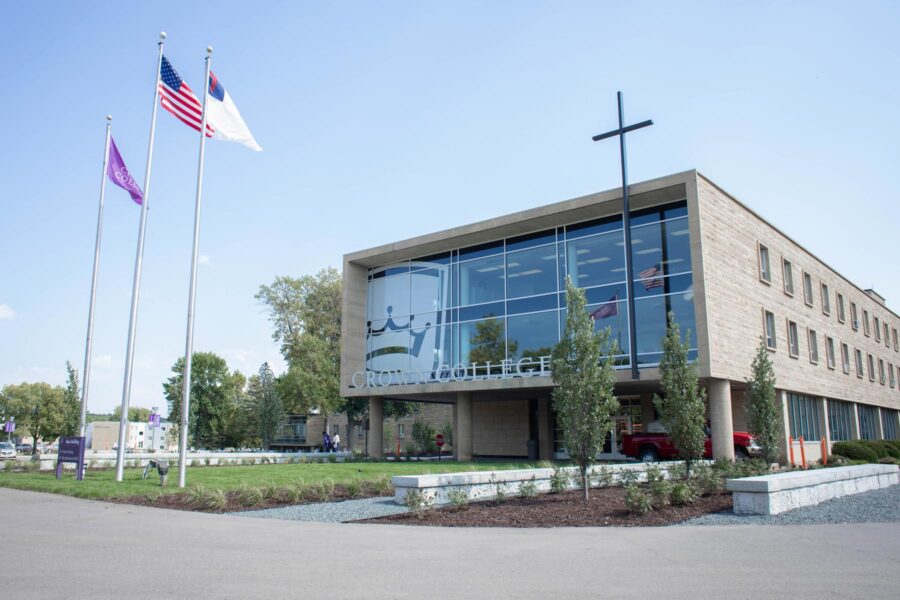
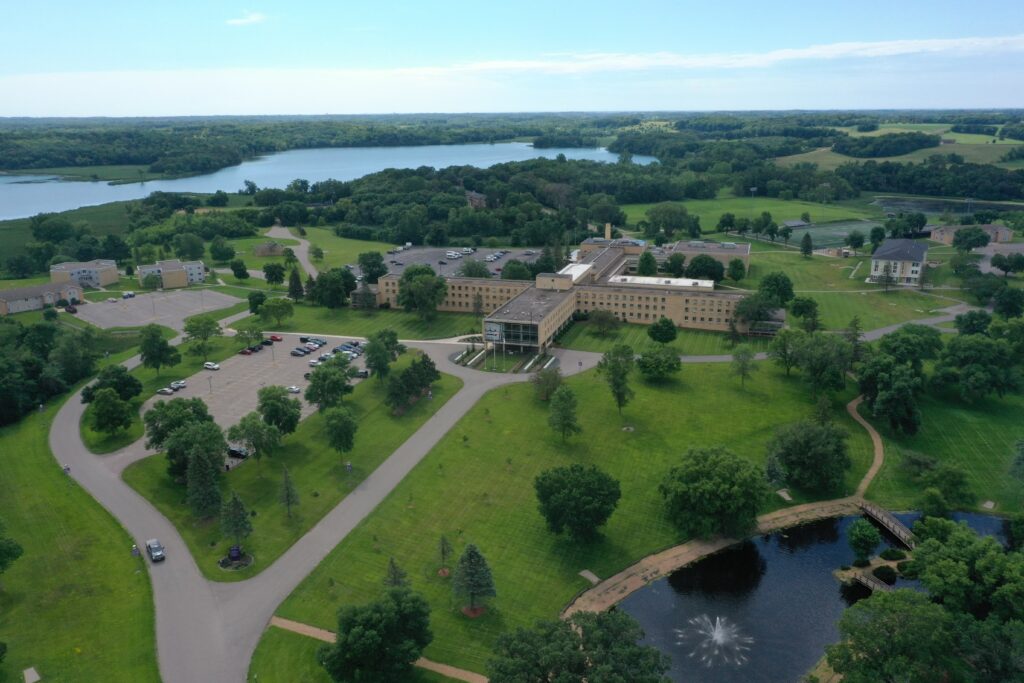
Crown College is located in Saint Bonifacius, MN.
Admissions
Getting into Crown College is a selective process, with the institution reporting an of 23%. The admissions landscape is characterized by a significant range in reported statistics from various publishers, with other sources citing rates as high as 62% or 66.58%, highlighting the importance of referring to official institutional data. For the admitted class, middle-50% SAT scores typically range from 960 to 1150, with a composite average around 940 to 1160, while the average ACT score is 22. The average high school GPA of incoming students is 3.22, with 20% of enrollees having a GPA between 3.50 and 3.74. The college's own strategic documents and consumer information pages serve as the primary guides for its admissions policies and data disclosure.
Earnings = median of students working ~10 years after entry; debt = median of graduates. Value divides 10-yr earnings by one year’s net price — read it as earnings per dollar of annual cost, not a full lifetime ROI; it favors lower-cost schools. Source: U.S. Dept. of Education College Scorecard. Figures lag ~2 years and reflect all students, not your intended major.
$33,382
Religious Education$29,141
Source: U.S. Dept. of Education College Scorecard (field-of-study earnings). Figures cover graduates who received federal aid and lag ~2 years; not all programs report data.
Crown's academic mission is described as a "rigorous pursuit of truth and wisdom," anchored in a Christian worldview and delivered through a practical, career-oriented curriculum. The college emphasizes academic excellence within an "authentic community." Its faculty is a point of pride, with nearly 90 percent holding the highest degrees in their fields. The student-faculty ratio is 24:1, which supports a more personalized classroom experience. Academics are organized into several key areas: Biblical & Theological Studies; Intercultural Studies; Business, Leadership & Sport Management; Communication, English & Media Arts; Criminal Justice & History; Teacher Education; and Health & Science. The college recognizes high-achieving students through Dean's List honors, awarded to those who earn a semester GPA of 3.5 or higher.
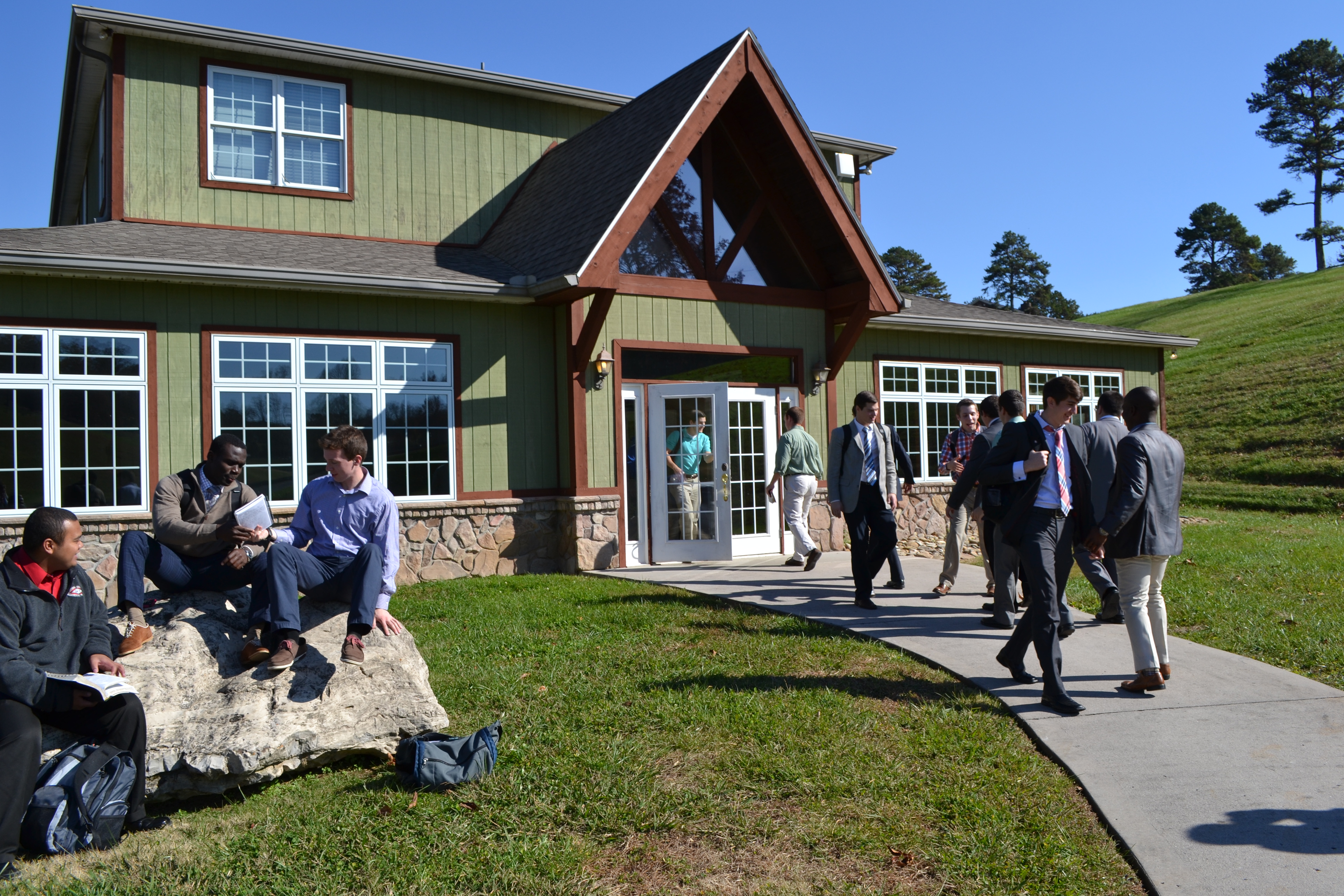
Life at Crown is defined by its intentionally close-knit, supportive atmosphere. The college states that from the moment a student steps on campus, they are greeted by faculty, staff, and peers, fostering an immediate sense of belonging. This community is actively built to be "safe, supportive, and inclusive." Spiritual life is not an extracurricular add-on but a central rhythm, with personal devotional times, chapel services, and special prayer times described as vital for maintaining a "vibrant walk with God" amidst academic demands. On-campus housing is the norm for a majority of students, with 60% living in college-owned or -affiliated housing and 40% living off-campus. The campus itself features state-of-the-art classrooms and educational facilities, with filtered Wi-Fi available throughout the campus and residence halls. Student life extends beyond academics and spirituality to include clubs, athletics, and activities that engage the whole person.
Student outcomes are a clear focus of Crown's institutional strategy, with specific, measurable goals outlined in its strategic plan. The college aims for a 10% increase in its six-year graduation rate by Spring 2028, with a parallel goal to increase the graduation rate for students of color by 10% by May 2027. Current data shows a six-year graduation rate of 58%, with a four-year rate of 50%. The first-year retention rate, a key indicator of student satisfaction and initial success, is 69%. For earnings, the median income for graduates 10 years after entry is $48,057. Earlier career earnings are reported at $35,840 one year after graduation and $46,129 five years after graduation.
Crown College is proactive in offering financial assistance to make education accessible. The average after grants and scholarships is $26,672, with other sources reporting similar figures around $25,504 to $27,196. A substantial 98% of undergraduate students receive some form of financial aid. The college offers a structured series of institutional scholarships, which do not require repayment, including the Trustee's Scholarship ($15,000), President's Scholarship ($14,000), Dean's Scholarship ($13,000), Admissions Scholarship ($10,000), and Promise Grant ($8,000). To be eligible for all institutional scholarships, students must complete the FAFSA, be accepted, enroll full-time, and demonstrate financial need. The financial aid package for the average student totals $15,664. It is important to note that federal student loans may be part of a financial aid offer and might not cover the entire cost, indicating the college does not have a universal "no-loan" policy for all students.
Crown College stands out for its unwavering commitment to integrating faith and learning within an intensely relational environment. This isn't a university where spirituality is confined to a chapel elective; it's woven into the daily fabric of campus life, from structured chapel services to the expectation of personal devotion, creating a holistic educational experience for students seeking that alignment. Its strength lies in its scale—a 24:1 student-faculty ratio and a community described as "tight-knit" and "authentic" allow for meaningful mentorship and support that can be elusive at larger institutions. Furthermore, Crown distinguishes itself through its candid, goal-oriented approach to institutional improvement. Publicly setting specific, measurable targets to boost graduation rates, particularly for students of color, demonstrates a level of transparency and commitment to student success that goes beyond mere marketing. It’s a college for students who want a practical degree in fields like business, education, or health sciences, delivered within a supportive, values-explicit community that actively participates in their personal and spiritual development.
Crown College seal · sourceCrown College: Top-Ranked Christian College in Minnesota · sourceCrown College: Top-Ranked Christian College in Minnesota · sourceResources - Crown College · source