Admit rate has ranged 54%–67% over the last 5 years — notably volatile. Source: IPEDS via Urban Institute.
Acceptance & SAT from Common Data Set / IPEDS; net price, earnings & graduation from the U.S. Dept. of Education College Scorecard. Figures lag ~1–2 years — verify with the school.
Cumberland University is a private liberal arts institution in Lebanon, Tennessee, that operates with the pragmatic energy of a regional powerhouse rather than the rarefied air of an elite college. Its identity is split between a traditional residential core—where about a quarter of students live on a campus buzzing with over 55 clubs and Greek life—and a sprawling commuter and online population drawn to its career-oriented programs in nursing, business, and criminal justice. With an admissions process that is accessible and a focus on expanding practical STEM offerings, Cumberland serves as a critical engine of upward mobility for Middle Tennessee, though its graduation rate signals the very real challenges its diverse student body faces in crossing the finish line.
Admission requirements
Test-blind — scores not considered
Required
High school transcript
Grade point average
TOEFL (non-native English)
Considered (not required)
Class rank
Letters of recommendation
College-prep program
Demonstrated competencies
Source: IPEDS Admissions survey (2022) via Urban Institute. Covers formal factors only — it does not reflect essays, extracurriculars, or other holistic criteria.
More details
Undergrad enrollment
2,104
In-state tuition
$27,840
Out-of-state tuition
$27,840
Graduation Rate
46%
On-Campus Housing
28% of students
Student Organizations
Over 55
Median Earnings (10yr)
$57,687
Outcomes & value
Outcomes & value
Median earnings (10 yr)
$57,687
Value (earnings ÷ net price)
3.1×
Median debt at graduation
$17,952
Graduation rate
46%
First-year retention
59%
Reducing loan balance (3 yr)
63%
Pell (lower-income) share
30%
First-gen share (among federal-aid recipients)
41%
Financial health
3.0 / 3.0Meets the federal financial-responsibility standard
U.S. Dept. of Education Financial Responsibility Composite Score (FY2022-23). Scale −1.0 to 3.0; ≥1.5 meets the standard. Reported for private nonprofit & for-profit institutions only — public universities are state-backed and not scored, so this is a stability signal, not a ranking.
Top-earning majors
Median earnings by field of study (highest credential), ~2 years after completion.
Registered Nursing, Nursing Administration, Nursing Research and Clinical Nursing$56,415
Criminal Justice and Corrections$31,314
Biology, General$28,960
Teacher Education and Professional Development, Specific Subject Areas$28,598
Source: U.S. Dept. of Education College Scorecard (field-of-study earnings). Figures cover graduates who received federal aid and lag ~2 years; not all programs report data.
On-campus criminal offenses classed as violent (murder/non-negligent manslaughter, rape, robbery, aggravated assault) for the most recent reported year. Source: U.S. Dept. of Education Campus Safety and Security (Clery Act). Counts reflect what’s reported to the school, and urban campuses often report more partly due to non-student incidents nearby — read alongside campus size and setting, not as a standalone safety verdict.
Climate
Pleasant days / yr
87
Summer high
87°F
Winter low
35°F
Annual rain
74.2"
Annual snow
6"
Natural-hazard risk
Relatively Low
Pleasant days counts days per year with a mean temperature of 55–75°F, a high at or below 90°F, a low at or above 45°F, and little precipitation — a transparent comfort measure, not a weighting we invented. Computed from Open-Meteo ERA5 daily history (2019–2023). Natural-hazard risk is the county’s composite rating from the FEMA National Risk Index.
Deep dive — research, future-scholar output & economic mobility▾
Research output
Institutional h-index
31
Scholarly works
293
Institutional research volume and impact from OpenAlex. The h-index reflects large research universities and will be low for teaching-focused liberal-arts colleges — not a measure of undergraduate quality.
Economic mobility
Mobility rate
2.0%
Bottom → top quintile
15%
From bottom quintile
14%
Mobility rate = the share of students who both start in the bottom household-income quintile and reach the top quintile; bottom → top is that chance conditional on starting at the bottom. Source: Opportunity Insights Mobility Report Cards (Chetty, Friedman, Saez, Turner & Yagan). Reflects 1980–82 birth cohorts, so it’s directional, not current.
Quick answers
What is the acceptance rate at Cumberland University?
Cumberland University's acceptance rate is approximately 67% (Lebanon, TN), based on the most recent figures we compiled from public and primary sources.
How much does Cumberland University cost?
At Cumberland University, the average net price (after aid) is about $18,759 per year. Actual cost varies with financial aid and residency.
How many undergraduates attend Cumberland University?
Cumberland University enrolls approximately 2,104 undergraduate students.
Where is Cumberland University located?
Cumberland University is located in Lebanon, TN.
Admissions
Cumberland University's admissions process is characterized by its accessibility. The university is described as "somewhat selective" or "less selective," with a consistent around 67%. For the most recent cycle, 2,495 applicants resulted in 1,680 acceptances. The middle 50% of admitted students typically present SAT scores between 910-1100 (or 970-1140 according to another source) or ACT scores between 18-23. The average high school GPA for incoming students is roughly 3.3. The application opens annually on August 1, and the university states it sends admission decisions within two to three weeks after an application is complete. There is no available or explicit policy statement from the provided sources indicating that Cumberland considers or tracks demonstrated interest as a factor in admissions decisions.
Earnings = median of students working ~10 years after entry; debt = median of graduates. Value divides 10-yr earnings by one year’s net price — read it as earnings per dollar of annual cost, not a full lifetime ROI; it favors lower-cost schools. Source: U.S. Dept. of Education College Scorecard. Figures lag ~2 years and reflect all students, not your intended major.
Cumberland's academic approach blends a traditional liberal arts foundation with a strong emphasis on modern, practical preparation. The university boasts over 100 programs of study across its schools, which include the School of Science, Technology, & Business. A significant expansion began in Fall 2023 with the addition of 10 new bachelor's and master's level programs, signaling a renewed focus on STEM fields. The curriculum is designed to help students find their "unique passion."
The most popular majors reflect a career-oriented student body:
Registered Nursing/Registered Nurse
Business Administration and Management, General
Psychology, General
Criminal Justice/Law Enforcement Administration
Program pages list offerings from Accounting to Nursing, with many available in online formats. The university has internal goals for student achievement, including a course completion rate goal of 95% with a minimum threshold of 90%.
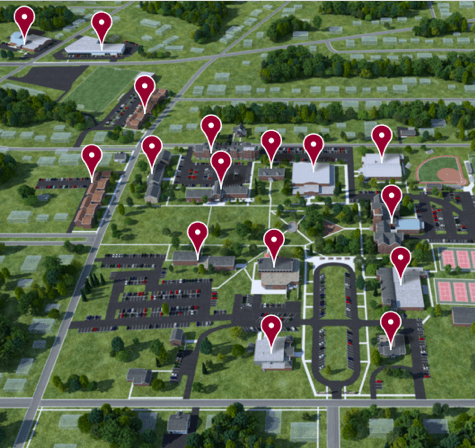
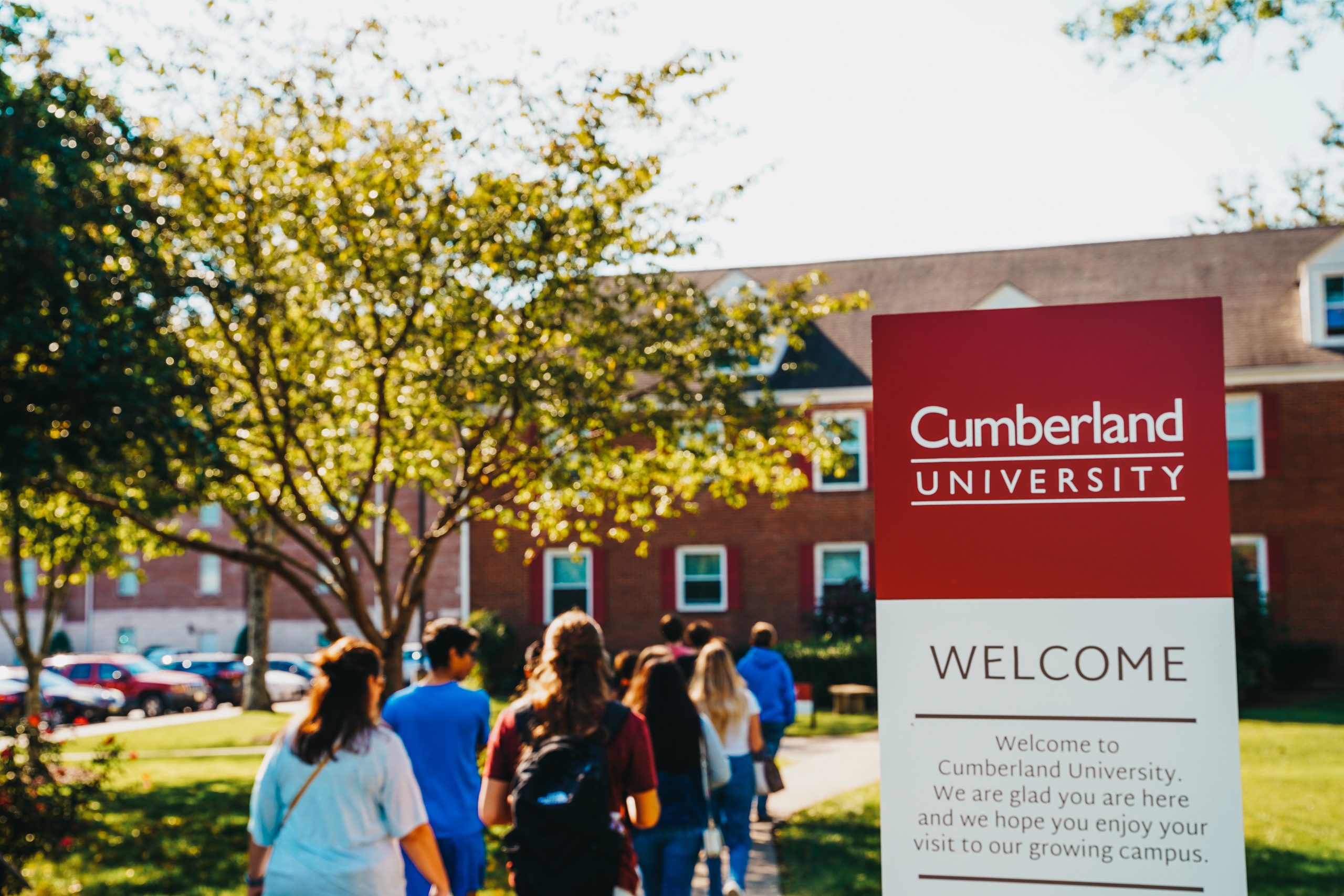
Life at Cumberland is a mix of traditional residential engagement and a strong commuter culture. Only 28% of students live in college-owned, -operated, or -affiliated housing, while 72% live off campus. For those on campus, the university promotes an active social environment with over 55 student organizations, honor societies, interest groups, intramural sports, and Greek life. The official line is that students can "customize" their experience to stay connected. However, student reviews hint at a more complex reality, noting a "lively" campus with various activities but also a perceived "divide with the local community" and an "overwhelming party scene" for some. This suggests a campus where finding your niche is key, and the social experience can vary dramatically depending on one's level of immersion in the residential community.
Outcomes data paints a picture of a university serving a population where persistence to graduation is a significant challenge, but financial payoff for those who complete their degrees is solid. The four-year graduation rate is low, with only 42% of students completing their degrees within 150% of normal time (six years). However, the median earnings ten years after entry are a robust $57,687, indicating that graduates who enter the workforce see strong returns. More immediate data shows average earnings one year after graduation around $45,973, jumping to approximately $69,575 after five years. The university's own internal reporting shows it tracks course completion rates, with a goal of 95% and a minimum threshold of 90%.
Cumberland University's sticker price for tuition and fees is $28,540, with a total (including room and board) of $39,400. However, the university emphasizes that "almost every student attending Cumberland receives some form of financial aid." The —the average cost after aid and scholarships—is a more critical figure for families. Estimates vary by source, but the canonical average net price is $18,759. Another source lists a net price of $17,669 after scholarships and grants, with an average aid package of $18,333. The university offers a Net Price Calculator for estimates and encourages all students to complete the FAFSA to determine need-based eligibility for federal grants and loans. Aid includes both need-based options and non-need-based merit scholarships. The university offers federal Direct Loans (both subsidized and unsubsidized), with eligibility for subsidized loans based on demonstrated financial need from the FAFSA.
Cumberland University stands out as a distinctly regional, pragmatic institution that has evolved beyond its liberal arts roots to meet the workforce demands of Middle Tennessee head-on. Its identity is dualistic: a small, engaged residential college life exists within a much larger commuter and online ecosystem. This isn't a place of ivory-tower abstraction; it's where you go to become a nurse, a business manager, or a criminal justice professional. The recent push to add 10 new STEM programs underscores this practical mission. Its 67% creates a wide gateway, offering opportunity to a broad range of students. The resulting challenge—and central drama of the Cumberland experience—is visible in the gap between its accessible admissions and its 46% graduation rate. For the nearly half who persist and graduate, the payoff is tangible, with median earnings exceeding $57,000 a decade out. Cumberland is, therefore, a high-stakes bet on upward mobility: it provides the access and relevant programs, but places a heavy onus on student resilience to navigate to completion and reap the considerable financial rewards.
Cumberland University seal · sourceLocation Matters - Cumberland University · sourceA Private Liberal Arts University Near Nashville, TN - Cumberland University · sourceA Private Liberal Arts University Near Nashville, TN - Cumberland University · source