Admit rate has ranged 82%–92% over the last 5 years — notably volatile, though the latest figure above (81%) falls outside that window. Source: IPEDS via Urban Institute.
Acceptance & SAT from Common Data Set / IPEDS; net price, earnings & graduation from the U.S. Dept. of Education College Scorecard. Figures lag ~1–2 years — verify with the school.
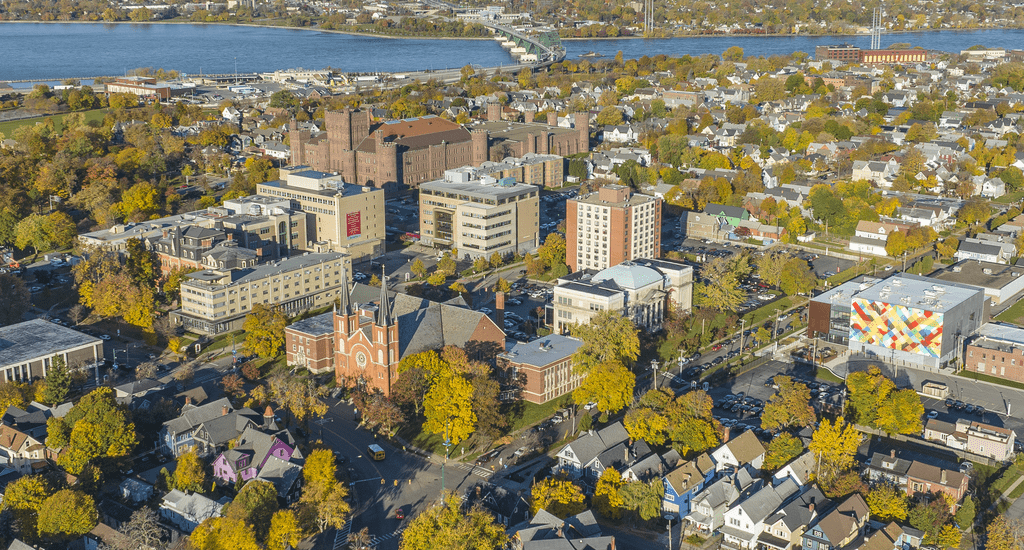
D'Youville University, a small private institution in Buffalo, has built its modern identity around a powerful, pragmatic engine: healthcare and professional education. It's a place where the mission is transparently career-focused, with a notable 81% acceptance rate reflecting an accessible gateway into high-demand fields like nursing and physician assistant studies. The vibe is unpretentious and community-oriented—a campus where students describe meaningful connections with professors and peers, and where outcomes, particularly in earnings and social mobility, are a point of institutional pride.
Admission requirements
Test-optional — scores considered if submitted
Required
High school transcript
Grade point average
College-prep program
TOEFL (non-native English)
Considered (not required)
Class rank
Letters of recommendation
Test scores (SAT/ACT)
Demonstrated competencies
Source: IPEDS Admissions survey (2022) via Urban Institute. Covers formal factors only — it does not reflect essays, extracurriculars, or other holistic criteria.
More details
Undergrad enrollment
1,258
In-state tuition
$34,940
Out-of-state tuition
$34,940
Graduation Rate
67%
On-Campus Housing
39% of students
Most Popular Majors
Registered Nursing, Physician Assistant, Business
Median Earnings (10yr)
$66,942
Student-to-Faculty Ratio
14:1
Annual Scholarship Awards
Over $16 million
Average Financial Aid Package
$18,096
Outcomes & value
Outcomes & value
Median earnings (10 yr)
$66,942
Value (earnings ÷ net price)
3.3×
Median debt at graduation
$25,000
Graduation rate
67%
First-year retention
73%
Reducing loan balance (3 yr)
63%
Pell (lower-income) share
39%
First-gen share (among federal-aid recipients)
27%
Financial health
2.5 / 3.0Meets the federal financial-responsibility standard
U.S. Dept. of Education Financial Responsibility Composite Score (FY2022-23). Scale −1.0 to 3.0; ≥1.5 meets the standard. Reported for private nonprofit & for-profit institutions only — public universities are state-backed and not scored, so this is a stability signal, not a ranking.
Top-earning majors
Median earnings by field of study (highest credential), ~2 years after completion.
Allied Health Diagnostic, Intervention, and Treatment Professions$92,277
Registered Nursing, Nursing Administration, Nursing Research and Clinical Nursing$66,897
Rehabilitation and Therapeutic Professions$56,641
Business Administration, Management and Operations$47,260
Dietetics and Clinical Nutrition Services$46,321
Psychology, General
Campus & location
Campus safety
On-campus violent crimes (2024)
0
Per 1,000 students
0.00
On-campus criminal offenses classed as violent (murder/non-negligent manslaughter, rape, robbery, aggravated assault) for the most recent reported year. Source: U.S. Dept. of Education Campus Safety and Security (Clery Act). Counts reflect what’s reported to the school, and urban campuses often report more partly due to non-student incidents nearby — read alongside campus size and setting, not as a standalone safety verdict.
Climate
Pleasant days / yr
99
Summer high
77°F
Winter low
25°F
Annual rain
45.3"
Annual snow
43.1"
Natural-hazard risk
Relatively High
Pleasant days counts days per year with a mean temperature of 55–75°F, a high at or below 90°F, a low at or above 45°F, and little precipitation — a transparent comfort measure, not a weighting we invented. Computed from Open-Meteo ERA5 daily history (2019–2023). Natural-hazard risk is the county’s composite rating from the FEMA National Risk Index.
Quick answers
What is the acceptance rate at D'Youville University?
D'Youville University's acceptance rate is approximately 81% (Buffalo, NY), based on the most recent figures we compiled from public and primary sources.
What SAT score do you need for D'Youville University?
Admitted students at D'Youville University typically score 995–1220 on the SAT (the middle-50% range). Scores outside this band are still admitted, especially with strong applications.
How much does D'Youville University cost?
At D'Youville University, the average net price (after aid) is about $20,433 per year. Actual cost varies with financial aid and residency.
How many undergraduates attend D'Youville University?
D'Youville University enrolls approximately 1,258 undergraduate students.
Where is D'Youville University located?
D'Youville University is located in Buffalo, NY.
Admissions
D'Youville's admissions process is notably accessible, characterized by a high and a straightforward application. First-year applicants can choose between the D'Youville University application and the Common Application, with no fee required for either platform. The university does not have an open admission policy, but its selectivity is categorized as "less selective." While the process is accessible, the university does offer an "Early Assurance" pathway for its pre-pharmacy program, where admission is based on specific criteria like an 85 high school grade point average. The importance of "demonstrated interest" in the admissions process is a factor determined by each institution and can be found in the , specifically in section C7, though D'Youville's specific rating is not detailed in the provided sources.
Key Application Details:
Application Options: D'Youville University Application or Common Application.
Application Fee: None.
Early Assurance: Available for pre-pharmacy based on specific admission criteria.
Demonstrated Interest: Its importance level can be found in the Common Data Set (C7).
Earnings = median of students working ~10 years after entry; debt = median of graduates. Value divides 10-yr earnings by one year’s net price — read it as earnings per dollar of annual cost, not a full lifetime ROI; it favors lower-cost schools. Source: U.S. Dept. of Education College Scorecard. Figures lag ~2 years and reflect all students, not your intended major.
$24,035
Source: U.S. Dept. of Education College Scorecard (field-of-study earnings). Figures cover graduates who received federal aid and lag ~2 years; not all programs report data.
The academic landscape at D'Youville is dominated by healthcare and professional studies, creating a sharply focused and pragmatic educational environment. The most popular majors are Registered Nursing/Registered Nurse, Physician Assistant, and Multi-/Interdisciplinary Studies. Business, Management, Marketing, and Related Support Services also constitute a significant portion of degrees awarded. The university offers 48 majors with a student-to-faculty ratio of 14:1, facilitating a more personalized learning experience. This career-oriented approach has earned D'Youville recognition; it was recently ranked #1 in Western New York in Newsweek's "Best Colleges for Women" list, cited for its expanding academic programs, strong healthcare and leadership education, and career-focused outcomes. The curriculum emphasizes a combination of first-rate academic programs, experiential learning, and community service opportunities.
Life at D'Youville revolves around a small, close-knit community where forming meaningful connections is a recurring theme in student descriptions. The university encourages on-campus living as "the best way to fully experience life," promoting activities like making new friends, joining study groups, and participating in campus events. Approximately 39% of students live in college-owned, -operated, or -affiliated housing, while 61% live off-campus. Student engagement is supported through a variety of clubs, groups, and organizations. A key feature of campus life is the Cultural Enrichment Center (CEC), which actively addresses racial and cultural issues impacting marginalized students, including Black, ethnic minorities, and LGBTQIA+ communities. Student-created content portrays a vibrant campus atmosphere encompassing both studies and social life.
D'Youville markets itself heavily on strong post-graduate outcomes, particularly in earnings and social mobility, which are central to its institutional narrative. The university has risen in national rankings for four consecutive years, boasting a #1 ranking as the top private university in Buffalo and a #14 national ranking for earnings above a high school diploma. It also ranks #101 nationally in Social Mobility. These figures underscore a mission of providing accessible, high-return education, especially for students from diverse economic backgrounds. While various sources report different graduation rates, the university's focus is clearly on the tangible value of its degrees in the workforce.
D'Youville awards over $16 million in scholarships annually, and a significant majority of students (nearly 70%) receive financial aid. The average financial aid package is reported to be around $18,096. The university offers grants, which are given based on demonstrated financial need from the FAFSA, as well as federal and private loans. There is no indication in the provided sources that D'Youville has a "no-loan" policy or that it meets 100% of demonstrated financial need without loans; such policies are described as commitments by some colleges to replace loans with grants for qualifying students. The —the cost after aid and scholarships—is a key figure for prospective families.
D'Youville University carves out a distinct niche by being unapologetically practical. It's not a liberal arts college searching for well-rounded philosophers; it's a professional launchpad focused on creating employable graduates, particularly in the high-stakes world of healthcare. This focus translates into a campus culture that values direct pathways to careers, supported by a close-knit community where students and faculty connections are emphasized. Its recent accolades—topping regional lists and ranking highly for post-graduate earnings and social mobility—are not just marketing points but validation of its core mission: to provide an accessible, high-value education that lifts students into stable, well-compensated professions. The presence of the Cultural Enrichment Center also signals an institutional awareness of and commitment to supporting its diverse student body, adding a layer of intentional community building to its career-first ethos.
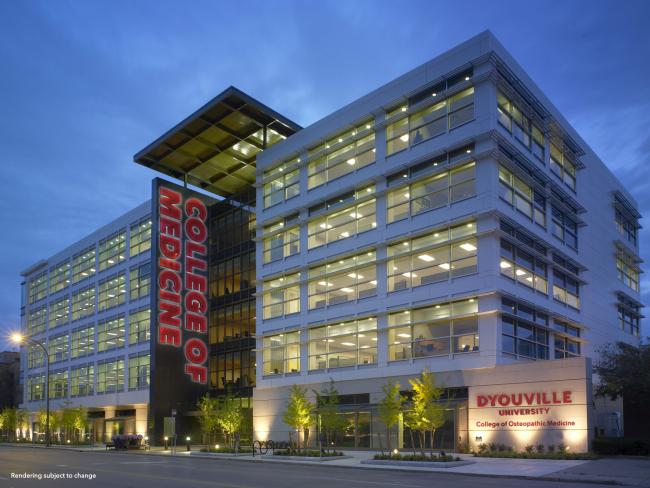
D'Youville University seal · sourceHome | DYouville · sourceD'Youville Athletics Visitor's Guide - D'Youville University · sourceD'Youville University College of Osteopathic Medicine | DYouville · source