Admit rate has ranged 62%–80% over the last 5 years — notably volatile. Source: IPEDS via Urban Institute.
Acceptance & SAT from Common Data Set / IPEDS; net price, earnings & graduation from the U.S. Dept. of Education College Scorecard. Figures lag ~1–2 years — verify with the school.
Daemen University carves out a distinct niche as a small, suburban Buffalo institution laser-focused on career preparation, particularly in the health sciences. Its identity is built on a pragmatic, hands-on education delivered in intimate classes, a campus life that leans heavily on its tight-knit community, and a clear-eyed mission to deliver solid professional outcomes for a largely regional student body. This isn't a place of abstract theory; it's a launchpad for nurses, therapists, business professionals, and educators.
Admission requirements
Test-blind — scores not considered
Required
High school transcript
Grade point average
Demonstrated competencies
TOEFL (non-native English)
Considered (not required)
Letters of recommendation
Source: IPEDS Admissions survey (2022) via Urban Institute. Covers formal factors only — it does not reflect essays, extracurriculars, or other holistic criteria.
More details
Undergrad enrollment
1,643
In-state tuition
$35,218
Out-of-state tuition
$35,218
Graduation Rate
59%
On-Campus Housing
36% of students
Student-Faculty Ratio
14:1
Median Earnings (10yr)
$61,808
Classes Under 20 Students
69.2%
First-Year Retention Rate
76%
Job/Grad School Placement Rate
93.4%
Mid-Career Avg. Salary (Bachelor's)
$83,000
Outcomes & value
Outcomes & value
Median earnings (10 yr)
$61,808
Value (earnings ÷ net price)
3.3×
Median debt at graduation
$22,091
Graduation rate
59%
First-year retention
76%
Reducing loan balance (3 yr)
67%
Pell (lower-income) share
46%
First-gen share (among federal-aid recipients)
29%
Financial health
2.4 / 3.0Meets the federal financial-responsibility standard
U.S. Dept. of Education Financial Responsibility Composite Score (FY2022-23). Scale −1.0 to 3.0; ≥1.5 meets the standard. Reported for private nonprofit & for-profit institutions only — public universities are state-backed and not scored, so this is a stability signal, not a ranking.
Top-earning majors
Median earnings by field of study (highest credential), ~2 years after completion.
Registered Nursing, Nursing Administration, Nursing Research and Clinical Nursing$68,869
Business Administration, Management and Operations$47,260
Health Services/Allied Health/Health Sciences, General$29,685
Liberal Arts and Sciences, General Studies and Humanities$28,236
Social Work$28,019
Fine and Studio Arts
Campus & location
Campus safety
On-campus violent crimes (2024)
0
Per 1,000 students
0.00
On-campus criminal offenses classed as violent (murder/non-negligent manslaughter, rape, robbery, aggravated assault) for the most recent reported year. Source: U.S. Dept. of Education Campus Safety and Security (Clery Act). Counts reflect what’s reported to the school, and urban campuses often report more partly due to non-student incidents nearby — read alongside campus size and setting, not as a standalone safety verdict.
Climate
Pleasant days / yr
92
Summer high
78°F
Winter low
23°F
Annual rain
45.8"
Annual snow
45.2"
Natural-hazard risk
Relatively High
Pleasant days counts days per year with a mean temperature of 55–75°F, a high at or below 90°F, a low at or above 45°F, and little precipitation — a transparent comfort measure, not a weighting we invented. Computed from Open-Meteo ERA5 daily history (2019–2023). Natural-hazard risk is the county’s composite rating from the FEMA National Risk Index.
Quick answers
What is the acceptance rate at Daemen University?
Daemen University's acceptance rate is approximately 68% (Amherst, NY), based on the most recent figures we compiled from public and primary sources.
How much does Daemen University cost?
At Daemen University, the average net price (after aid) is about $18,693 per year. Actual cost varies with financial aid and residency.
How many undergraduates attend Daemen University?
Daemen University enrolls approximately 1,643 undergraduate students.
Where is Daemen University located?
Daemen University is located in Amherst, NY.
Admissions
Daemen's admissions process is accessible and straightforward, reflecting its mission to serve a broad population. The university is test-optional, meaning applicants are not required to submit SAT or ACT scores. This policy is designed to reduce barriers to entry. While selectivity varies by source, the process is generally characterized as less selective. One source notes Daemen has positioned itself as "the most selective university in Western New York," though this claim is relative to its immediate regional peers. The admissions office does consider a student's academic record, but the emphasis is on creating an accessible pathway. The rate—the percentage of admitted students who enroll—is reported to be low, at around 12%, indicating that many admitted students choose other options. The university does not appear to have a binding Early Decision program, focusing instead on regular decision cycles.
The academic experience at Daemen is defined by its and a high proportion of small classes, with . This fosters a personalized, hands-on learning environment. The curriculum is built on a , providing a foundational breadth of knowledge upon which students build their specialized majors. The program mix is pragmatic and career-oriented. Popular majors are not explicitly listed in the provided sources, but the university offers a wide range, including Accounting, Biochemistry, Biology (with an Environmental Studies specialization), Business Administration, Education, English, Global & Local Sustainability, History & Political Science, Mathematics, Modern Languages, Natural Sciences, and Paralegal Studies. Reviews specifically highlight the , which are a significant draw. The university frames its academics as "agile" education designed to prepare students for professional and intellectual challenges.
Earnings = median of students working ~10 years after entry; debt = median of graduates. Value divides 10-yr earnings by one year’s net price — read it as earnings per dollar of annual cost, not a full lifetime ROI; it favors lower-cost schools. Source: U.S. Dept. of Education College Scorecard. Figures lag ~2 years and reflect all students, not your intended major.
$26,353
Source: U.S. Dept. of Education College Scorecard (field-of-study earnings). Figures cover graduates who received federal aid and lag ~2 years; not all programs report data.
Life at Daemen revolves around a small, residential campus in Amherst, New York, a suburb of Buffalo. The atmosphere is described as clean, easy to navigate, welcoming, and intimate, suiting both introverts and extroverts. Campus residency is not universal; only 36% of students live in college-owned, -operated, or -affiliated housing, while 64% live off-campus. For those who do live on campus, it provides direct access to clubs, student government, events, concerts, and athletics, with classrooms just a short walk away. Housing options vary to meet different student needs. The university fields athletic teams (competing in the NCAA), which contribute to campus spirit. However, the student body is not considered vastly diverse ethnically, racially, geographically, or in terms of gender, creating a community that is close-knit but homogenous. The overall vibe is one of a contained, supportive community where it's easy to get involved and know your peers.
Daemen's raison d'être is clear: getting graduates into careers or advanced study. The results are strong. A notable 93.4% of Daemen graduates are either employed or in graduate school within a relevant timeframe. Breaking that down, 24.5% are enrolled in graduate school, 60.93% are employed full-time, and 7.95% are employed part-time. The university also promotes impressive mid-career outcomes, reporting that its mid-career graduates with a bachelor's degree earn an average of $83,000, a figure it notes places them among the top in Upstate New York. Retention and graduation metrics show a first-year retention rate of 76%. The six-year graduation rate is reported as 69% by one source, while another cites a 64% rate. These figures, combined with the high job placement rate, paint a picture of an institution that effectively supports students through to completion and successful launch.
Daemen is a private institution with a sticker price that is offset by significant institutional aid for most students. The university reports that a majority of full-time undergraduate students receive financial assistance. The average financial aid package is substantial, though figures vary by source: one official page lists an average aid package worth $24,943, while another source cites an average aid package of $30,497. Scholarships are a key component, with awards ranging from $100 to $4,000 per year for certain programs, and merit-based scholarships that can range from $9,500 to $12,500 off tuition. The —what families pay after grants and scholarships—also varies in reporting, but the key takeaway is that most students do not pay the full published cost. The university provides a Net Price Calculator for families to get a personalized estimate. There is no indication in the provided sources of a "no-loan" policy or a commitment to meet 100% of demonstrated financial need without loans.
Daemen University stands out for its unapologetically practical orientation. It doesn't try to be an Ivy clone or a sprawling research university. Instead, it excels at being a high-touch, career-focused regional powerhouse. Its standout features are interconnected: the ultra-small class sizes ensure students aren't lost in the crowd and get direct access to faculty, which directly supports the exceptional 93.4% job placement rate. Its strength in health sciences and other professional programs is not just a catalog listing but a reviewed reality, known for rigor and relevance. The campus, while not diverse, offers a predictable, supportive, and intimate environment where students can easily build community and access resources. Finally, its strong mid-career earnings data (average $83,000) validates the long-term return on investment, proving that its model of agile, applied education delivers tangible economic mobility for its graduates, particularly within the Upstate New York region.
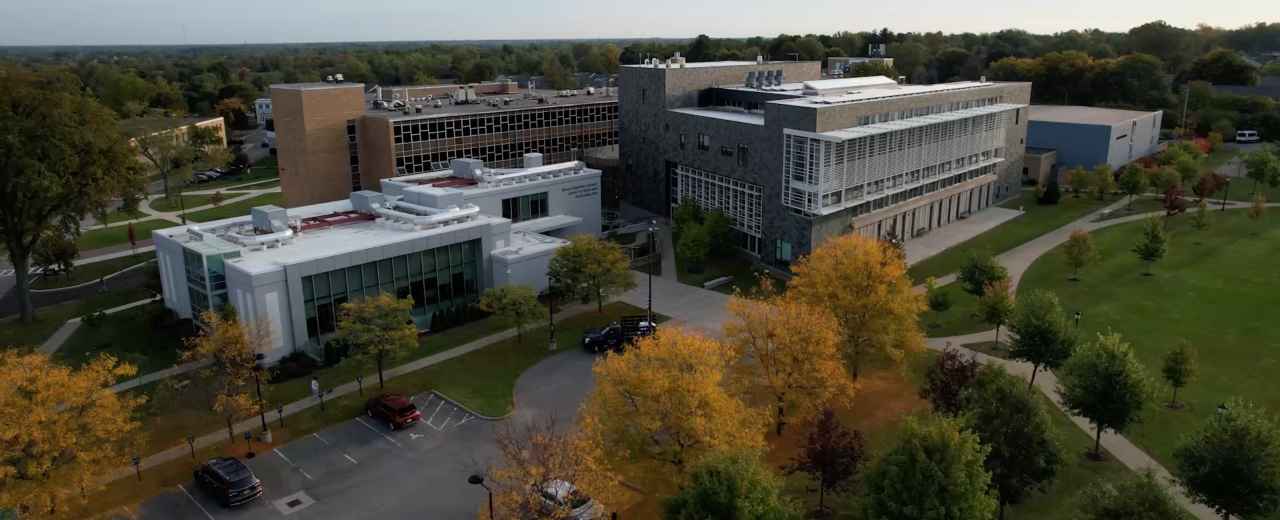
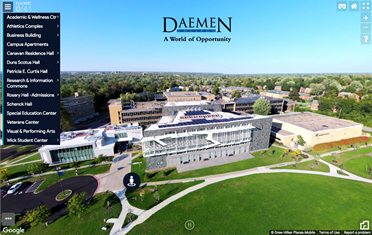
Daemen University seal · sourceVisit Us | Daemen University · sourceVirtual Campus Tour - Daemen University Athletics · sourceDaemen Launches New Google Virtual Tour | Daemen University · source