Admit rate has ranged 64%–76% over the last 5 years — notably volatile. Source: IPEDS via Urban Institute.
Acceptance & SAT from Common Data Set / IPEDS; net price, earnings & graduation from the U.S. Dept. of Education College Scorecard. Figures lag ~1–2 years — verify with the school.
Dakota Wesleyan University (DWU) is a small, private Methodist-affiliated liberal arts college in Mitchell, South Dakota, where nearly three-quarters of applicants get in—but those who stay find a tight-knit, hands-on education with surprisingly strong outcomes for nursing and business majors. With a 57% four-year graduation rate (well above the national average for similar institutions) and median alumni earnings of $53,728 within a decade, DWU punches above its weight by focusing on practical skills, faith-based service, and the kind of personalized attention that comes with a 12:1 student-faculty ratio.
Admission requirements
Test-optional — scores considered if submitted
Required
High school transcript
Grade point average
TOEFL (non-native English)
Considered (not required)
Class rank
Test scores (SAT/ACT)
Source: IPEDS Admissions survey (2022) via Urban Institute. Covers formal factors only — it does not reflect essays, extracurriculars, or other holistic criteria.
More details
Undergrad enrollment
670
In-state tuition
$33,790
Out-of-state tuition
$33,790
Location
Mitchell, SD
Top Majors
Nursing (27%), Business (9%), Education (8%)
Median Debt
$27,000
4-Year Grad Rate
57%
Student-Faculty Ratio
12:1
Median Earnings (10 Yrs)
$53,728
Outcomes & value
Outcomes & value
Median earnings (10 yr)
$53,728
Value (earnings ÷ net price)
2.7×
Median debt at graduation
$27,000
Graduation rate
48%
First-year retention
75%
Reducing loan balance (3 yr)
70%
Pell (lower-income) share
27%
First-gen share (among federal-aid recipients)
29%
Financial health
1.5 / 3.0Meets the federal financial-responsibility standard
U.S. Dept. of Education Financial Responsibility Composite Score (FY2022-23). Scale −1.0 to 3.0; ≥1.5 meets the standard. Reported for private nonprofit & for-profit institutions only — public universities are state-backed and not scored, so this is a stability signal, not a ranking.
Top-earning majors
Median earnings by field of study (highest credential), ~2 years after completion.
Registered Nursing, Nursing Administration, Nursing Research and Clinical Nursing$57,603
Teacher Education and Professional Development, Specific Levels and Methods$42,123
Criminal Justice and Corrections$39,369
Business Administration, Management and Operations$35,416
Human Services, General$34,526
Sports, Kinesiology, and Physical Education/Fitness
Campus & location
Campus safety
On-campus violent crimes (2024)
0
Per 1,000 students
0.00
On-campus criminal offenses classed as violent (murder/non-negligent manslaughter, rape, robbery, aggravated assault) for the most recent reported year. Source: U.S. Dept. of Education Campus Safety and Security (Clery Act). Counts reflect what’s reported to the school, and urban campuses often report more partly due to non-student incidents nearby — read alongside campus size and setting, not as a standalone safety verdict.
Climate
Pleasant days / yr
80
Summer high
85°F
Winter low
13°F
Annual rain
24.1"
Annual snow
31.9"
Natural-hazard risk
Very Low
Pleasant days counts days per year with a mean temperature of 55–75°F, a high at or below 90°F, a low at or above 45°F, and little precipitation — a transparent comfort measure, not a weighting we invented. Computed from Open-Meteo ERA5 daily history (2019–2023). Natural-hazard risk is the county’s composite rating from the FEMA National Risk Index.
Deep dive — research, future-scholar output & economic mobility▾
Research output
Institutional h-index
12
Scholarly works
128
Institutional research volume and impact from OpenAlex. The h-index reflects large research universities and will be low for teaching-focused liberal-arts colleges — not a measure of undergraduate quality.
Quick answers
What is the acceptance rate at Dakota Wesleyan University?
Dakota Wesleyan University's acceptance rate is approximately 73% (Mitchell, SD), based on the most recent figures we compiled from public and primary sources.
How much does Dakota Wesleyan University cost?
At Dakota Wesleyan University, the average net price (after aid) is about $19,735 per year. Actual cost varies with financial aid and residency.
How many undergraduates attend Dakota Wesleyan University?
Dakota Wesleyan University enrolls approximately 670 undergraduate students.
Where is Dakota Wesleyan University located?
Dakota Wesleyan University is located in Mitchell, SD.
Admissions
DWU is accessible by design, accepting 73% of applicants—though those admitted typically have solid academic footing, with mid-50% ACT scores of 19–24 and SAT scores of 980–1210. About 45% of incoming first-years boast GPAs of 3.75 or higher, suggesting the university attracts a mix of high-achieving locals and students seeking a supportive environment to level up. Notably, 771 of the 915 accepted students in a recent cycle enrolled, indicating strong for a regional institution.
Nursing dominates the academic landscape (27% of degrees conferred), followed by business administration (9%) and elementary education (8%), reflecting DWU’s pragmatic orientation. The university emphasizes 'personalized, hands-on' learning across its 50+ majors and minors, with biochemistry and digital arts rounding out its most distinctive offerings. A Methodist affiliation shapes the intellectual culture—expect required religion courses and service-learning components—but the curriculum leans vocational, designed to 'connect your talents' directly to careers.
Earnings = median of students working ~10 years after entry; debt = median of graduates. Value divides 10-yr earnings by one year’s net price — read it as earnings per dollar of annual cost, not a full lifetime ROI; it favors lower-cost schools. Source: U.S. Dept. of Education College Scorecard. Figures lag ~2 years and reflect all students, not your intended major.
$33,993
Biology, General$28,019
Source: U.S. Dept. of Education College Scorecard (field-of-study earnings). Figures cover graduates who received federal aid and lag ~2 years; not all programs report data.
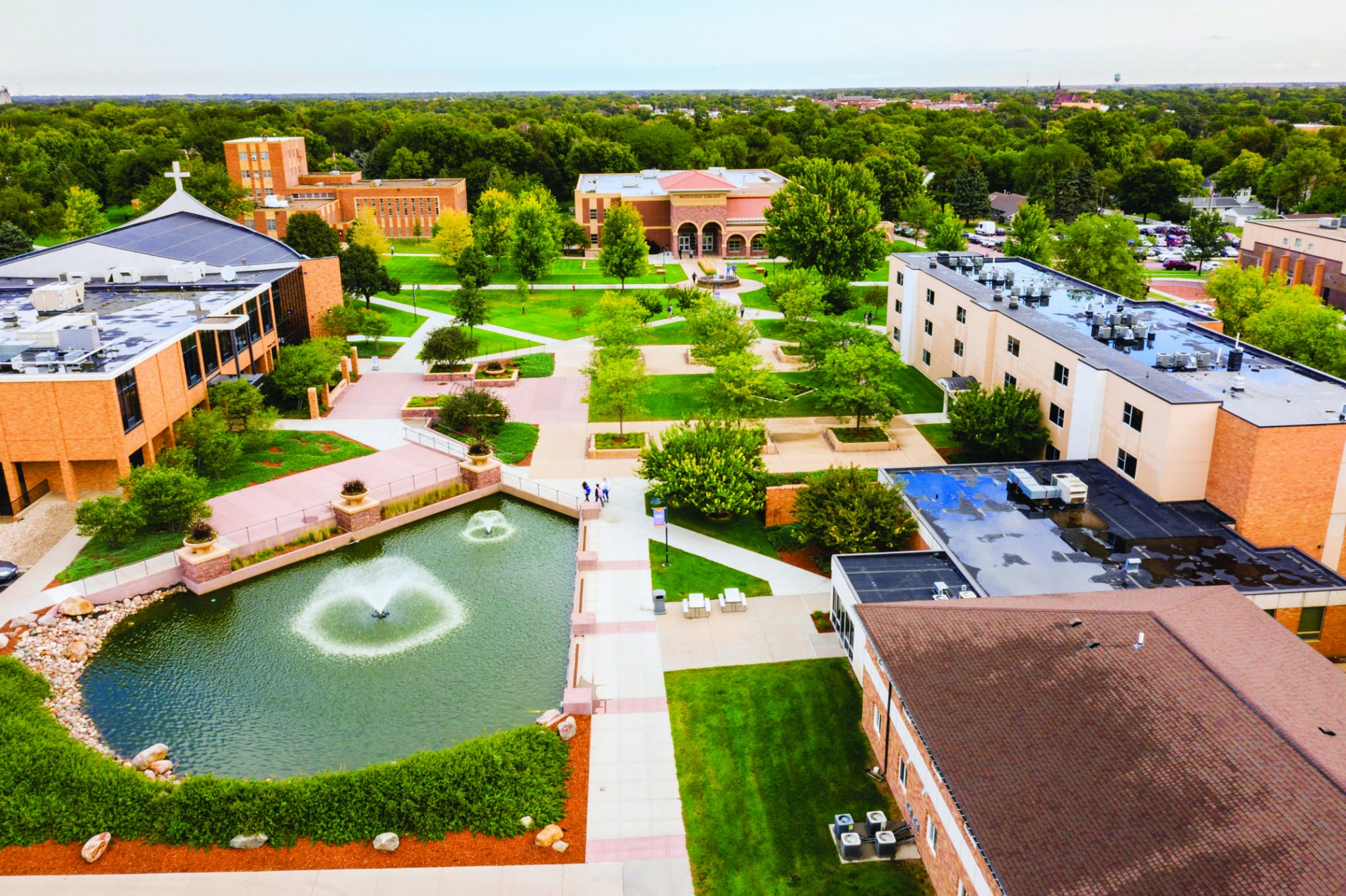
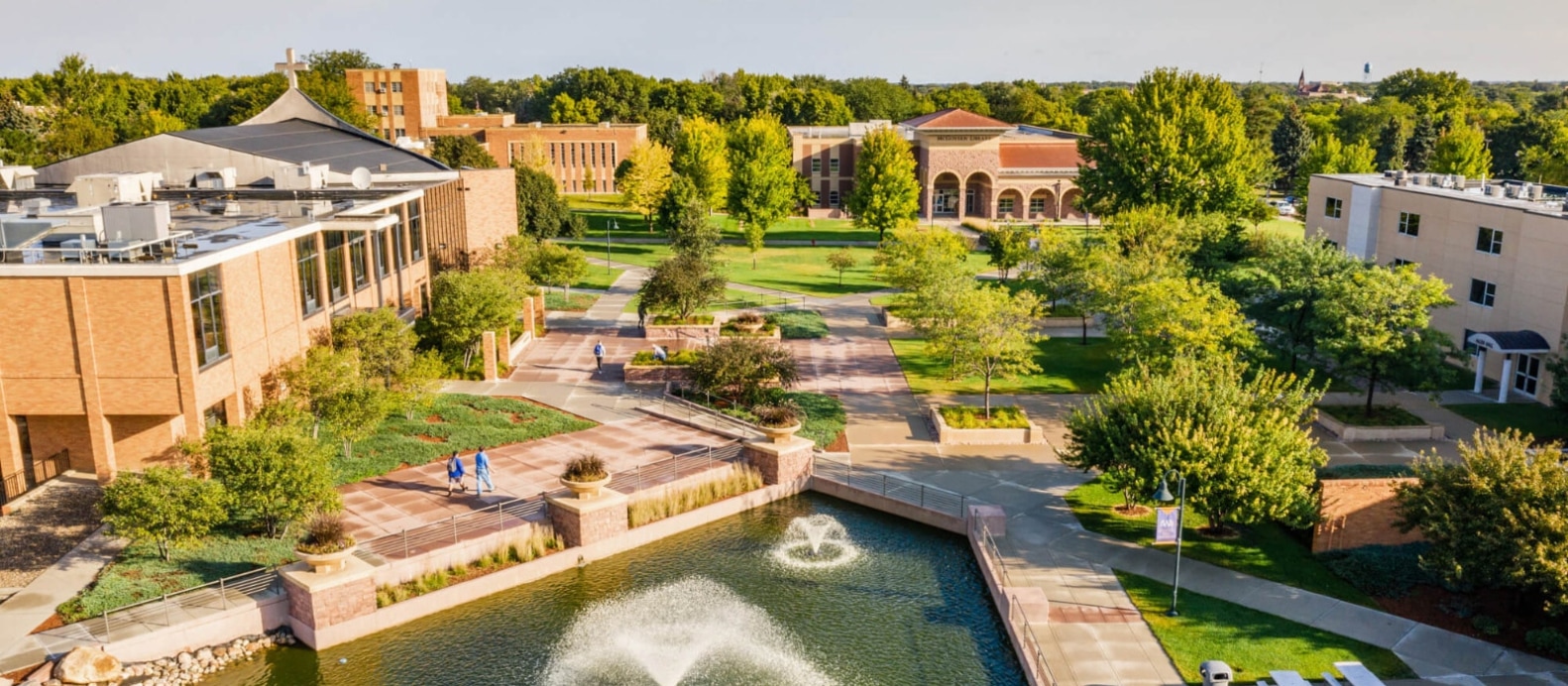
Life at DWU revolves around campus—a necessity in rural Mitchell (population 15,000)—with weekly events ranging from intramural sports to faith-based gatherings. The university leans into its small-town vibe, offering 'loud and quiet hang out spaces' like the Christen Family Wellness Center and the McGovern Library. A Facebook post captures the ethos: 'No footsteps in the halls, no laughter echoing across campus. The quiet really shows just how much our students bring this place to life.' With no Greek system, social bonds form through 30+ clubs and NAIA athletics (the Tigers compete in the Great Plains Athletic Conference).
DWU’s 57% four-year graduation rate towers over the 44% average for comparable private nonprofits, and its alumni earn median salaries of $53,728 within 10 years—respectable for a regional college. Nursing grads likely pull those numbers up, with the program’s NCLEX pass rates (unpublished but heavily promoted) serving as a draw. Notably, 75% of freshmen return for sophomore year, suggesting students find the support they need early on. Debt loads are middling (median $27,000), but earnings outpace many South Dakota peers.
At $21,901 (after aid), DWU undercuts many private colleges—thanks to aggressive institutional grants averaging $18,351. Three-quarters of first-years receive , with packages averaging $22,703 including federal ($4,769) and state ($1,787) grants. The university’s net price calculator suggests a typical student might pay $26,620 after accounting for scholarships like the McGovern Award. For context, that’s roughly the cost of attending South Dakota’s flagship public university as an out-of-state student.
DWU is the rare institution that blends Methodist piety with prairie pragmatism—a place where nursing students practice clinicals at Avera Queen of Peace Hospital while business majors network at the Mitchell Chamber of Commerce. Its 12:1 student-faculty ratio enables mentorship rare at this price point, and its 57% graduation rate (vs. 44% peers) proves the model works. For South Dakotans seeking a private college experience without elite pretensions—or out-of-staters chasing tuition discounts—it’s a shrewd bet.