Admit rate has ranged 13%–84% over the last 5 years — notably volatile. Source: IPEDS via Urban Institute.
Acceptance & SAT from Common Data Set / IPEDS; net price, earnings & graduation from the U.S. Dept. of Education College Scorecard. Figures lag ~1–2 years — verify with the school.
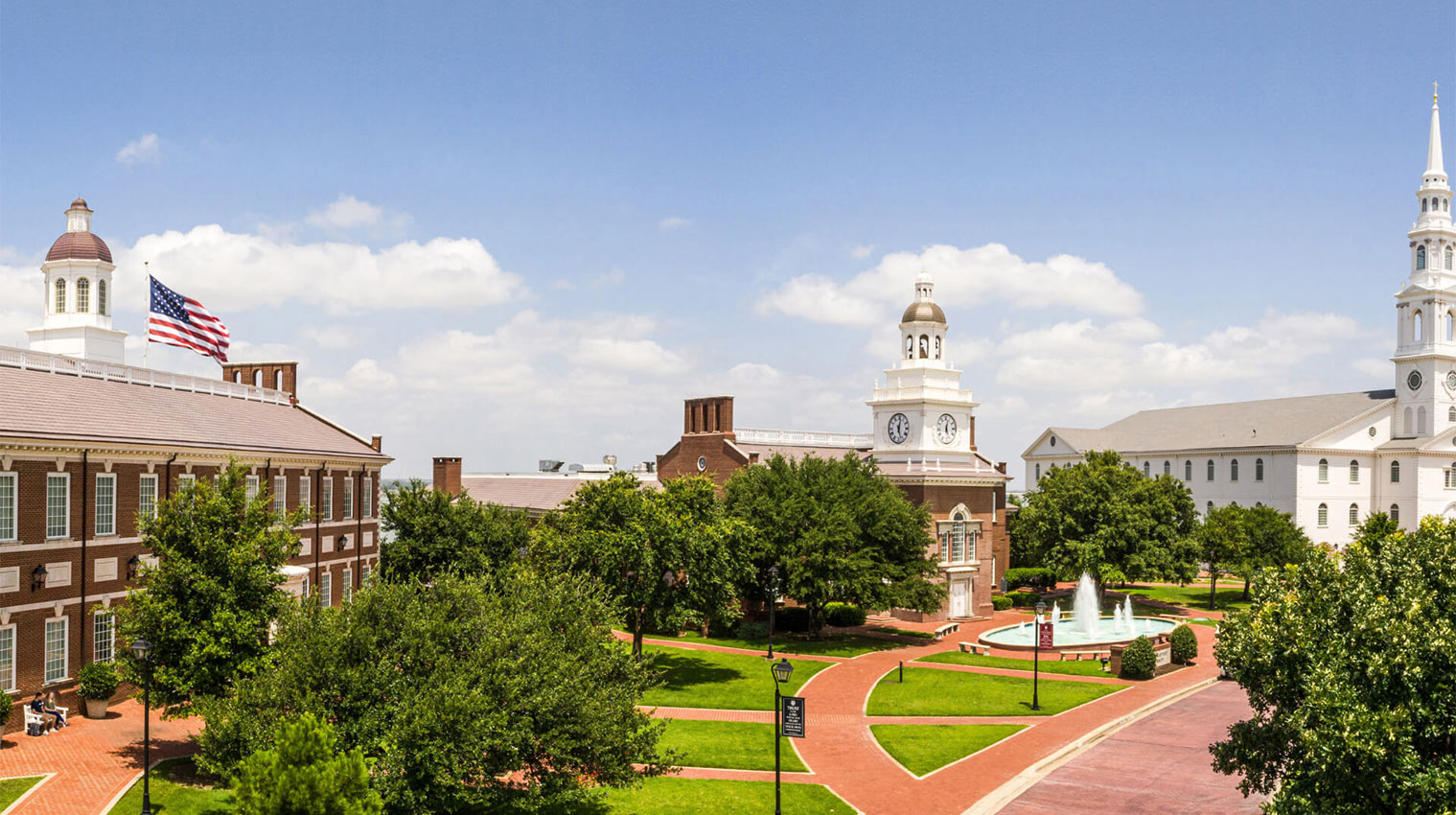
Dallas Christian College is a small, intensely focused Bible college in Dallas, Texas, where every student's academic journey is built on a foundation of biblical studies. It's a place defined by intimate scale, a 'family-like atmosphere,' and a clear mission to prepare students for Christian ministry and service-oriented careers. While its graduation and retention rates are challenges, it offers a tightly knit, affordable path for students committed to integrating faith with professions in teaching, business, and practical ministry.
Admission requirements
Test-optional — scores considered if submitted
Required
High school transcript
Grade point average
TOEFL (non-native English)
Considered (not required)
Class rank
Letters of recommendation
Test scores (SAT/ACT)
College-prep program
Demonstrated competencies
Source: IPEDS Admissions survey (2022) via Urban Institute. Covers formal factors only — it does not reflect essays, extracurriculars, or other holistic criteria.
More details
Undergrad enrollment
224
In-state tuition
$21,730
Out-of-state tuition
$21,730
Graduation Rate
29%
First-Year Retention
41%
Pell Grant Recipients
52%
Student-Faculty Ratio
13:1
Median Earnings (10yr)
$43,503
Outcomes & value
Outcomes & value
Median earnings (10 yr)
$43,503
Value (earnings ÷ net price)
1.9×
Median debt at graduation
$24,912
Graduation rate
29%
First-year retention
41%
Reducing loan balance (3 yr)
48%
Pell (lower-income) share
49%
First-gen share (among federal-aid recipients)
40%
Financial health
1.5 / 3.0Meets the federal financial-responsibility standard
U.S. Dept. of Education Financial Responsibility Composite Score (FY2022-23). Scale −1.0 to 3.0; ≥1.5 meets the standard. Reported for private nonprofit & for-profit institutions only — public universities are state-backed and not scored, so this is a stability signal, not a ranking.
Top-earning majors
Median earnings by field of study (highest credential), ~2 years after completion.
Business/Commerce, General$26,739
Pastoral Counseling and Specialized Ministries$24,035
Source: U.S. Dept. of Education College Scorecard (field-of-study earnings). Figures cover graduates who received federal aid and lag ~2 years; not all programs report data.
On-campus criminal offenses classed as violent (murder/non-negligent manslaughter, rape, robbery, aggravated assault) for the most recent reported year. Source: U.S. Dept. of Education Campus Safety and Security (Clery Act). Counts reflect what’s reported to the school, and urban campuses often report more partly due to non-student incidents nearby — read alongside campus size and setting, not as a standalone safety verdict.
Climate
Pleasant days / yr
89
Summer high
94°F
Winter low
40°F
Annual rain
56.7"
Annual snow
1.6"
Natural-hazard risk
Very High
Pleasant days counts days per year with a mean temperature of 55–75°F, a high at or below 90°F, a low at or above 45°F, and little precipitation — a transparent comfort measure, not a weighting we invented. Computed from Open-Meteo ERA5 daily history (2019–2023). Natural-hazard risk is the county’s composite rating from the FEMA National Risk Index.
Deep dive — research, future-scholar output & economic mobility▾
Research output
Institutional h-index
15
Scholarly works
261
Institutional research volume and impact from OpenAlex. The h-index reflects large research universities and will be low for teaching-focused liberal-arts colleges — not a measure of undergraduate quality.
Quick answers
What is the acceptance rate at Dallas Christian College?
Dallas Christian College's acceptance rate is approximately 22% (Dallas, TX), based on the most recent figures we compiled from public and primary sources.
What SAT score do you need for Dallas Christian College?
Admitted students at Dallas Christian College typically score 788–1088 on the SAT (the middle-50% range). Scores outside this band are still admitted, especially with strong applications.
How much does Dallas Christian College cost?
At Dallas Christian College, the average net price (after aid) is about $22,960 per year. Actual cost varies with financial aid and residency.
How many undergraduates attend Dallas Christian College?
Dallas Christian College enrolls approximately 224 undergraduate students.
Where is Dallas Christian College located?
Dallas Christian College is located in Dallas, TX.
Admissions
Admissions at Dallas Christian College is a straightforward process centered on meeting baseline academic criteria, though reported vary wildly from source to source—from as low as 13% to as high as 84%. The institution's own stated criteria for freshman admission are a score of 900 on the SAT (with 450 in both Math and Evidence-Based Reading and Writing) or a 19 composite ACT score. Conditional acceptance is granted based on unofficial transcripts. The college does not offer an Early Decision plan. The most recent federal data and niche guides suggest a more selective posture, with an acceptance rate around 22%, aligning with the canonical figure. The middle 50% SAT range for admitted students is reported between 788 and 1088.
Earnings = median of students working ~10 years after entry; debt = median of graduates. Value divides 10-yr earnings by one year’s net price — read it as earnings per dollar of annual cost, not a full lifetime ROI; it favors lower-cost schools. Source: U.S. Dept. of Education College Scorecard. Figures lag ~2 years and reflect all students, not your intended major.
The academic model is explicitly confessional and structured. Every degree program is designed to meet the requirements of the Association for Biblical Higher Education (ABHE), mandating a balanced curriculum across three areas: Bible, general education, and specialized or professional studies. This means all students, regardless of major, engage deeply with biblical texts and theology. The college offers Bachelor of Arts and Bachelor of Science degrees. Popular majors include Business/Commerce, Multi-/Interdisciplinary Studies, and Bible/Biblical Studies. Specific academic programs highlighted by the college include Teacher Education, Biblical Ministry, Business, Humanities, Interdisciplinary Studies, Practical Ministries, and Psychology. The student-faculty ratio is reported as 13:1, supporting the institution's emphasis on personal mentorship.
Life at DCC is intentionally communal and intimate, consistently described as having a 'family-like atmosphere.' The college fosters connections 'with each other, with our community, and with God' through various student organizations and activities. Campus life is residential, with residence halls designed to cultivate community; students wishing to live off-campus must apply for permission. The college's own social media promotes a vibrant, engaged campus culture, stating 'Campus vibes are off the charts.' This environment is built on the promise of 'life-long mentoring relationships' within a small, personal setting. The community guidelines formalize expectations for student conduct and residential life.
Post-graduation outcomes reflect the college's niche mission and the mix of service-oriented majors. The median earnings ten years after entry are $43,503. Other sources note early-career earnings for graduates average around $33,000. Graduation and retention rates are areas of significant challenge. The first-year retention rate is reported at 41%. The four-year graduation rate is 15%, and the six-year graduation rate is 21%. An internal graduation rates document shows six-year rates for incoming classes ranging from 30% to 40% for freshmen and 30% to 39% for transfer students.
Dallas Christian College is relatively affordable, especially with aid. The average after scholarships and grants is $22,960. One source lists the cost after aid as $22,463, with an average aid package of $9,349. The college emphasizes that 100% of undergraduate students receive financial aid, and 52% are federal Pell Grant recipients, indicating a population with high financial need. Institutional aid is capped: the maximum combined institutional aid (scholarships and grants) available is $15,000 annually. The college offers a Net Price Calculator for families to estimate costs and provides through federal programs like Federal Work-Study, which allows students to earn funds through part-time employment. Scholarships are also awarded for Christian character and leadership consistent with the college's mission.
Dallas Christian College stands out for its unwavering, singular focus. This isn't a liberal arts college with a Bible department; it's a Bible college where every academic program—from Business to Teacher Education—is structurally built upon a required core of biblical studies, as mandated by its ABHE accreditation. This creates a uniquely integrated educational experience for students pursuing faith-based vocations. Its defining characteristic is its scale and culture: an 'intimate, personal setting' that actively cultivates a 'family-like atmosphere' and 'life-long mentoring relationships.' It serves a specific student: one seeking an affordable, intensely communal Christian education with a practical, ministry-oriented bend, willing to trade the breadth and resources of a larger university for deep, personalized immersion in a faith-centered community.
Dallas Christian College seal · sourceDallas Christian College | TX Almanac · sourceChristian University, Online Christian University, Christian College Dallas · sourceDCC History - Dallas Christian College · source