Loading…
← All schools
Davis Technical College
Kaysville, UTpublicdavistech.edu
Avg net price
$13,410
Earnings (10 yr)
$41,734
Acceptance & SAT from Common Data Set / IPEDS; net price, earnings & graduation from the U.S. Dept. of Education College Scorecard. Figures lag ~1–2 years — verify with the school.
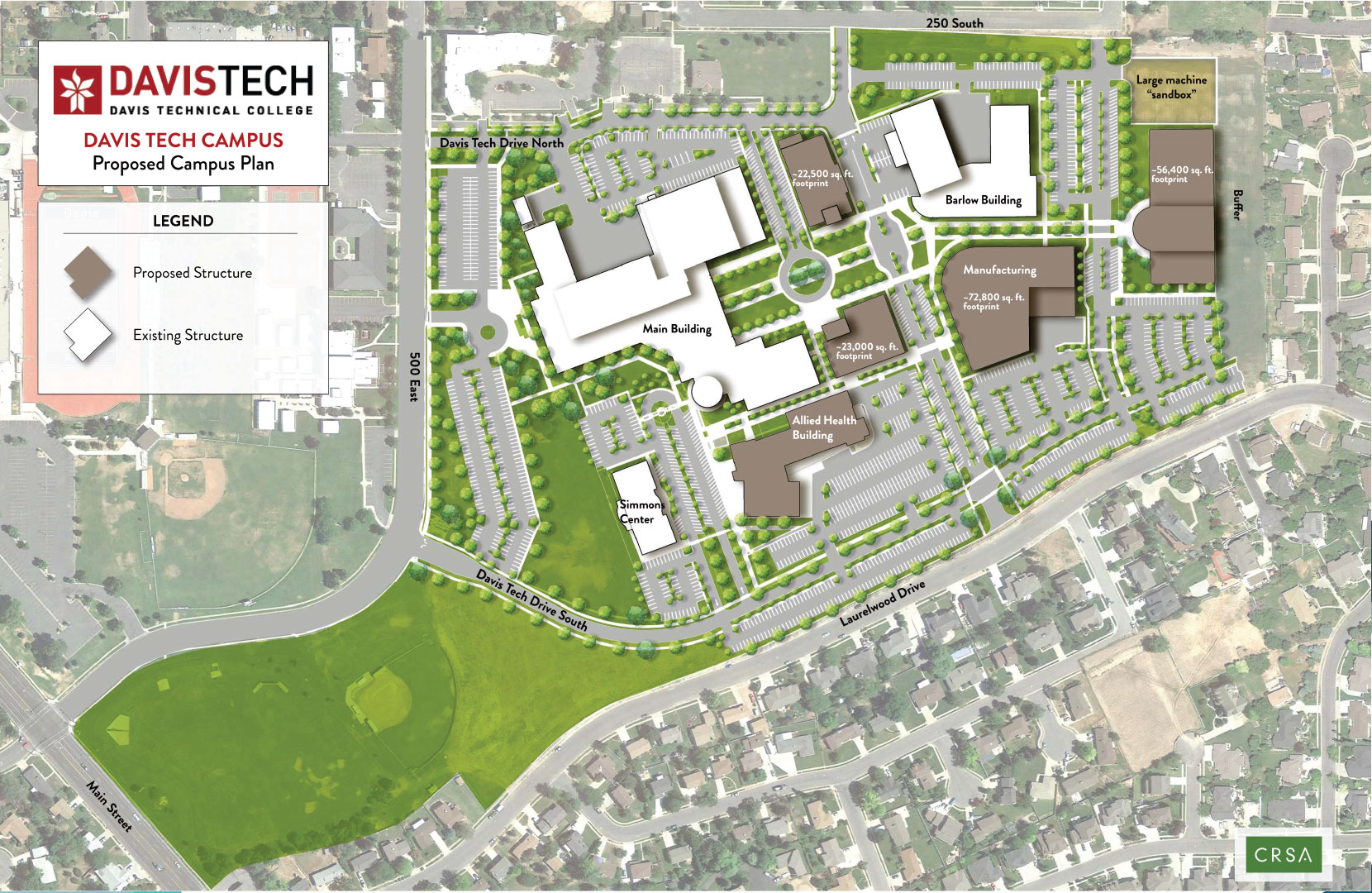
Davis Technical College is not a traditional four-year university but a public, open-admission trade school in Kaysville, Utah, built for speed and direct entry into the workforce. Its identity is forged in the shop, not the seminar room, offering accelerated, hands-on programs in fields like welding, culinary arts, and dental assisting where students graduate 'career ready.' The college operates with a starkly practical, no-frills ethos: it doesn't offer federal student loans, its admissions policy is 'open,' and its campus life is defined by the rhythms of technical training and community-facing clinics.
More details
- Undergrad enrollment
- 3,027
- Top Programs
- Culinary Arts, Welding, Dental Assisting
- Campus Features
- Public Salon & Spa, Café for hands-on training
- Graduation Rate
- ~57%
- Financial Aid Policy
- Does not participate in federal/private loan programs
- Student-Faculty Ratio
- 10:1
- Median Earnings (10yr)
- $41,734
Outcomes & value
Outcomes & value
- Median earnings (10 yr)
- $41,734
- Value (earnings ÷ net price)
- 3.1×
- Pell (lower-income) share
- 8%
- First-gen share (among federal-aid recipients)
- 36%
Earnings = median of students working ~10 years after entry; debt = median of graduates. Value divides 10-yr earnings by one year’s net price — read it as earnings per dollar of annual cost, not a full lifetime ROI; it favors lower-cost schools. Source: U.S. Dept. of Education College Scorecard. Figures lag ~2 years and reflect all students, not your intended major.
Campus & location
Campus safety
- On-campus violent crimes (2024)
- 0
On-campus criminal offenses classed as violent (murder/non-negligent manslaughter, rape, robbery, aggravated assault) for the most recent reported year. Source: U.S. Dept. of Education Campus Safety and Security (Clery Act). Counts reflect what’s reported to the school, and urban campuses often report more partly due to non-student incidents nearby — read alongside campus size and setting, not as a standalone safety verdict.
Climate
- Pleasant days / yr
- 82
- Summer high
- 85°F
- Winter low
- 22°F
- Annual rain
- 23.3"
- Annual snow
- 72.2"
- Natural-hazard risk
- Relatively Moderate
Pleasant days counts days per year with a mean temperature of 55–75°F, a high at or below 90°F, a low at or above 45°F, and little precipitation — a transparent comfort measure, not a weighting we invented. Computed from Open-Meteo ERA5 daily history (2019–2023). Natural-hazard risk is the county’s composite rating from the FEMA National Risk Index.
Quick answers
- How much does Davis Technical College cost?
- At Davis Technical College, the average net price (after aid) is about $13,410 per year. Actual cost varies with financial aid and residency.
- How many undergraduates attend Davis Technical College?
- Davis Technical College enrolls approximately 3,027 undergraduate students.
- Where is Davis Technical College located?
- Davis Technical College is located in Kaysville, UT.
Admissions
Davis Tech's admissions philosophy is defined by accessibility, not selectivity. The college has an open admission policy, meaning its is effectively 100% for applicants who meet basic program requirements. There is no mention of a competitive admissions process based on GPA or test scores; instead, prospective students are directed to review specific 'program admission requirements' published on each program's web page prior to enrollment. While the application does ask for ACT/SAT scores if taken within the last five years, this is for 'review' purposes within an open-admission framework, not as a gatekeeping mechanism. The process is streamlined and procedural, focused on aligning students with the technical training they seek rather than winnowing down an applicant pool.
Academics
The academic model at Davis Tech is a pure, unadulterated focus on career and technical education. The curriculum is described as 'accelerated' and 'hands-on,' designed so that students 'graduate career ready.' Programs are competency-based, emphasizing practical skills over theoretical knowledge. The college's most popular programs, based on conferred degrees, are squarely in the trades: Culinary Arts/Chef Training, Welding Technology/Welder, and Dental Assisting/Assistant. Beyond the core technical programs, the college offers Academic Development classes in basic skills like math, reading, language, and computer literacy, taught by Davis Tech faculty to support student success. The educational philosophy is captured in promotional material that highlights teaching 'some of the COOLEST programs,' from welding and machining to composites and automation, positioning the college as a source of immediately applicable, high-value skills.
Compare Davis Technical College
vs United States Air Force Academyvs Fort Lewis Collegevs University of Hawaii at Hilovs Southern Arkansas University Main Campus
See colleges similar to Davis Technical College →Sources
- Davis Technical College - IPEDS - Department of Education
- Davis Technical College Statistics
- Common Data Set Explorer 2026: Compare 100 Colleges
- Common Data Set Repository
- Admissions and Registration Policy and Procedures
- Common Data Set 2025-2026
- Davis Technical College
- Application
- Davis Technical College
- Davis Technical College - Sallie
- Davis College Admissions