Loading…
← All schools
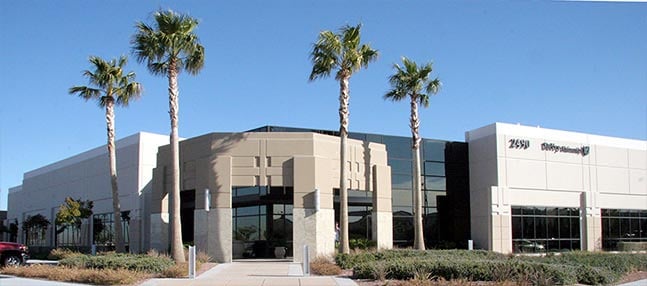
DeVry University-Nevada
Henderson, NVprivate forprofitdevry.edu
Earnings (10 yr)
$45,987
Graduation rate
—
Admit rate has ranged 67%–100% over the last 2 years — notably volatile. Source: IPEDS via Urban Institute.
Acceptance & SAT from Common Data Set / IPEDS; net price, earnings & graduation from the U.S. Dept. of Education College Scorecard. Figures lag ~1–2 years — verify with the school.
DeVry University-Nevada is a for-profit institution in Henderson that operates on a fundamentally different model than traditional colleges. It functions as an open-access career training center with a 100% acceptance rate, a heavy focus on business and technology, and a student body that is largely non-traditional and career-focused. Its outcomes—a 21% graduation rate and early-career earnings around $38,000—reflect its mission and the challenges inherent in its sector, making it a pragmatic, no-frills option for specific career paths rather than a conventional undergraduate experience.
Admission requirements
Test-optional — scores considered if submitted
Required
- High school transcript
- Grade point average
Considered (not required)
- Test scores (SAT/ACT)
- TOEFL (non-native English)
Source: IPEDS Admissions survey (2022) via Urban Institute. Covers formal factors only — it does not reflect essays, extracurriculars, or other holistic criteria.
More details
- Undergrad enrollment
- 1
- In-state tuition
- $17,408
- Out-of-state tuition
- $17,408
- No-Loan Policy
- No
- Popular Majors
- Business, Computer Networking, Communications
- Graduation Rate
- 21%
- Meets Full Need
- No
- First-Year Retention
- Not stated in sources
- Demonstrated Interest
- Not considered
- Median Earnings (10yr)
- $63,172 (per College Scorecard)
Outcomes & value
Outcomes & value
- Median earnings (10 yr)
- $45,987
- Median debt at graduation
- $24,807
- Graduation rate
- —
- Reducing loan balance (3 yr)
- 38%
- Pell (lower-income) share
- 25%
- First-gen share (among federal-aid recipients)
- 50%
Earnings = median of students working ~10 years after entry; debt = median of graduates. Value divides 10-yr earnings by one year’s net price — read it as earnings per dollar of annual cost, not a full lifetime ROI; it favors lower-cost schools. Source: U.S. Dept. of Education College Scorecard. Figures lag ~2 years and reflect all students, not your intended major.
Top-earning majors
Median earnings by field of study (highest credential), ~2 years after completion.
- Computer Systems Networking and Telecommunications$53,718
- Computer Systems Analysis$52,242
- Business/Commerce, General$48,225
- Business Administration, Management and Operations$46,521
- Communication and Media Studies$42,123
- Criminal Justice and Corrections
Campus & location
Campus safety
- On-campus violent crimes (2024)
- 0
On-campus criminal offenses classed as violent (murder/non-negligent manslaughter, rape, robbery, aggravated assault) for the most recent reported year. Source: U.S. Dept. of Education Campus Safety and Security (Clery Act). Counts reflect what’s reported to the school, and urban campuses often report more partly due to non-student incidents nearby — read alongside campus size and setting, not as a standalone safety verdict.
Climate
- Pleasant days / yr
- 93
- Summer high
- 102°F
- Winter low
- 40°F
- Annual rain
- 6.4"
- Annual snow
- 1.6"
- Natural-hazard risk
- Very High
Pleasant days counts days per year with a mean temperature of 55–75°F, a high at or below 90°F, a low at or above 45°F, and little precipitation — a transparent comfort measure, not a weighting we invented. Computed from Open-Meteo ERA5 daily history (2019–2023). Natural-hazard risk is the county’s composite rating from the FEMA National Risk Index.
Quick answers
- How many undergraduates attend DeVry University-Nevada?
- DeVry University-Nevada enrolls approximately 1 undergraduate students.
- Where is DeVry University-Nevada located?
- DeVry University-Nevada is located in Henderson, NV.
Admissions
DeVry University-Nevada's admissions process is defined by its open-access policy. The institution is not selective, with an of 100% according to data from its sister campuses, which is the standard across the DeVry system. There is no published average SAT or ACT score requirement, as these tests are not required for admission, though they may be considered if submitted. The university operates on a rolling admissions basis, accepting applications throughout the year without a strict regular decision deadline. There is no mention of an Early Decision or Early Action program specific to the Nevada campus, aligning with its non-selective, continuous enrollment model. Demonstrated interest, a critical factor at many selective colleges, is logically not a consideration here given the open admission policy.
Academics
Academics at DeVry are intensely career-oriented, with a curriculum built around business and technology. Popular majors include Business Administration, Management and Operations, Computer Systems Networking and Telecommunications, and Communications. The university promotes its accreditation and a "rigorous education," and its Information Technology program is ranked #2 in America by Niche. However, it also contends with a long-standing public reputation for having "extremely low academic standards," as noted in online discourse. The student-faculty ratio is reported as an unusually intimate 1:1, suggesting highly individualized attention, though this likely reflects a model with many adjunct instructors and small, career-focused classes rather than a traditional liberal arts seminar structure. The academic calendar and program structures are designed for flexibility to accommodate working adults.
Compare DeVry University-Nevada
vs University of Alaska Southeastvs Arizona Christian Universityvs Fisk Universityvs The College of Idaho
See colleges similar to DeVry University-Nevada →Sources
- Common Data Set (CDS) - University of Nevada, Reno
- [PDF] Common Data Set 2022-2023 - Vaughn College
- [PDF] Common Data Set 2024-2025 - The City College of New York
- Common Data Set | Office of Decision Support | UNLV Information ...
- Common Data Set | Office of Institutional Research - Brown University
- [PDF] Common Data Set - Definitions - 2022-23
- DeVry University - New York Admissions & Acceptance - Niche
- DeVry University SAT, ACT & GPA Requirements for Admissions
- DeVry University - New York Admission Requirements - PrepScholar
- DeVry University: Ontario Admissions - BigFuture College Search