Loading…
← All schools
DeVry University-Texas
Irving, TXprivate forprofitdevry.edu
Earnings (10 yr)
$45,987
Graduation rate
33%
Admit rate has ranged 36%–85% over the last 3 years — notably volatile. Source: IPEDS via Urban Institute.
Acceptance & SAT from Common Data Set / IPEDS; net price, earnings & graduation from the U.S. Dept. of Education College Scorecard. Figures lag ~1–2 years — verify with the school.
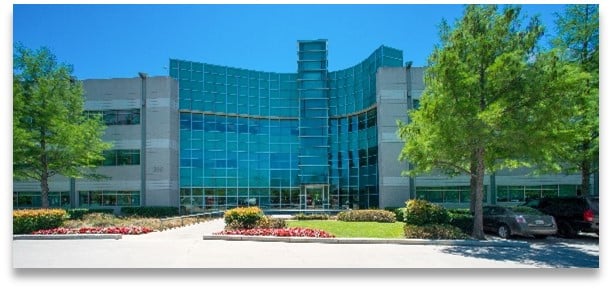
DeVry University-Texas is a for-profit, career-oriented institution in Irving that operates on a fundamentally different model than traditional universities. It's defined by open-access admissions, a heavy focus on online and hybrid learning in tech and business fields, and a student body that is small, commuter-based, and often balancing work and study. While its graduation rates and outcomes data are not prominently advertised, it positions itself as a practical, flexible option for adult learners seeking specific professional credentials.
Admission requirements
Test-optional — scores considered if submitted
Required
- High school transcript
- Grade point average
Considered (not required)
- Test scores (SAT/ACT)
- TOEFL (non-native English)
Source: IPEDS Admissions survey (2022) via Urban Institute. Covers formal factors only — it does not reflect essays, extracurriculars, or other holistic criteria.
More details
- Undergrad enrollment
- 8
- In-state tuition
- $17,408
- Out-of-state tuition
- $17,408
- Campus Setting
- Suburban, Commuter
- Instruction Format
- Online & Hybrid
- Key Academic Focus
- Technology, Business, Health Administration
- Application Deadline
- Rolling admissions
- Financial Aid Policy
- Aid packages include loans; not a 'no-loan' institution
- Student-Faculty Ratio
- 1:1
Outcomes & value
Outcomes & value
- Median earnings (10 yr)
- $45,987
- Median debt at graduation
- $24,807
- Graduation rate
- 33%
- Reducing loan balance (3 yr)
- 38%
- Pell (lower-income) share
- 54%
- First-gen share (among federal-aid recipients)
- 50%
Earnings = median of students working ~10 years after entry; debt = median of graduates. Value divides 10-yr earnings by one year’s net price — read it as earnings per dollar of annual cost, not a full lifetime ROI; it favors lower-cost schools. Source: U.S. Dept. of Education College Scorecard. Figures lag ~2 years and reflect all students, not your intended major.
Top-earning majors
Median earnings by field of study (highest credential), ~2 years after completion.
- Electrical/Electronic Engineering Technologies/Technicians$61,702
- Computer Engineering Technologies/Technicians$57,499
- Electromechanical Technologies/Technicians$54,192
- Computer Systems Networking and Telecommunications$53,718
- Computer Systems Analysis$52,242
- Business/Commerce, General
Campus & location
Campus safety
- On-campus violent crimes (2024)
- 0
- Per 1,000 students
- 0.00
On-campus criminal offenses classed as violent (murder/non-negligent manslaughter, rape, robbery, aggravated assault) for the most recent reported year. Source: U.S. Dept. of Education Campus Safety and Security (Clery Act). Counts reflect what’s reported to the school, and urban campuses often report more partly due to non-student incidents nearby — read alongside campus size and setting, not as a standalone safety verdict.
Climate
- Pleasant days / yr
- 90
- Summer high
- 94°F
- Winter low
- 40°F
- Annual rain
- 51.1"
- Annual snow
- 1.3"
- Natural-hazard risk
- Very High
Pleasant days counts days per year with a mean temperature of 55–75°F, a high at or below 90°F, a low at or above 45°F, and little precipitation — a transparent comfort measure, not a weighting we invented. Computed from Open-Meteo ERA5 daily history (2019–2023). Natural-hazard risk is the county’s composite rating from the FEMA National Risk Index.
Quick answers
- How many undergraduates attend DeVry University-Texas?
- DeVry University-Texas enrolls approximately 8 undergraduate students.
- Where is DeVry University-Texas located?
- DeVry University-Texas is located in Irving, TX.
Admissions
Admissions at DeVry University-Texas are best described as open-access, with a process focused on minimum eligibility rather than competitive selection. The school has a rolling admissions policy open throughout the year, and are exceptionally high. Niche reports an acceptance rate for the Texas campus, while other DeVry campuses and aggregators show rates at or near 100%—Peterson's lists a 92% acceptance rate for males at the Irving campus, and PrepScholar reports a 100% rate for DeVry-New York. The university sets baseline skill requirements for college-level work, considering minimum ACT scores of 17 in Math and 17 in English, or equivalent SAT scores. The process does not involve the complex, or early decision strategies common at selective colleges; sources discussing Early Decision advantages, Ivy League rates, and the nuances of the are not applicable to DeVry's model. Demonstrated interest, a factor tracked in the Common Data Set's Section C7 at many schools, is not a relevant consideration here given the non-selective nature of admissions.
- Policy: Rolling admissions, open year-round.
- Selectivity: Very high acceptance rates, often reported at or near 100% across its campuses.
- Requirements: Focus on meeting minimum standardized test score benchmarks (ACT 17 Math/English) or equivalents.
Compare DeVry University-Texas
vs Fisk Universityvs Huston-Tillotson Universityvs Reinhardt Universityvs University of Science and Arts of Oklahoma
See colleges similar to DeVry University-Texas →Sources
- Common Data Set | Office of Institutional Research - Brown University
- Common Data Set: Home
- Common Data Set | Office of Institutional Research - Yale OIR
- Decoding the Common Data Set What You Need to Know for Your ...
- The Common Data Set: What It Is & How to Use It In College ...
- Common Data Set - Institutional Reporting
- DeVry University - Texas Admissions & Acceptance
- DeVry University SAT, ACT & GPA Requirements for ...
- Undergraduate Admissions Requirements
- DeVry University-Illinois Acceptance Rates & Admissions ...
- DeVry University - Decatur - Tuition and Acceptance Rate