Admit rate has ranged 35%–52% over the last 5 years — notably volatile. Source: IPEDS via Urban Institute.
Acceptance & SAT from Common Data Set / IPEDS; net price, earnings & graduation from the U.S. Dept. of Education College Scorecard. Figures lag ~1–2 years — verify with the school.
Dickinson College is a selective liberal arts institution in Carlisle, Pennsylvania, that has carved out a distinctive identity as a politically engaged, globally-minded campus with a pragmatic streak. Known for its 'flexible liberal arts and sciences approach' that encourages exploration, the college fosters a culture where faculty expect 'high-quality effort and everyday attendance and engagement.' Its financial aid policy, which meets 100% of demonstrated need, and its historic campus—founded in 1773—anchor a community that is both tradition-minded and forward-looking, producing graduates who excel in fields from law and medicine to business and the arts.
Admission requirements
Test-optional — scores considered if submitted
Required
High school transcript
Grade point average
College-prep program
TOEFL (non-native English)
Considered (not required)
Class rank
Letters of recommendation
Test scores (SAT/ACT)
Demonstrated competencies
Source: IPEDS Admissions survey (2022) via Urban Institute. Covers formal factors only — it does not reflect essays, extracurriculars, or other holistic criteria.
More details
Undergrad enrollment
2,273
In-state tuition
$65,650
Out-of-state tuition
$65,650
No-Loan Policy
Not explicitly stated in provided sources
Graduation Rate
80%
Meets Full Need
Yes
ED Share of Class
About 50%
First-Year Retention
Not in sources
Demonstrated Interest
Considered
Median Earnings (10yr)
$70,204
Outcomes & value
Outcomes & value
Median earnings (10 yr)
$70,204
Value (earnings ÷ net price)
1.9×
Median debt at graduation
$19,000
Graduation rate
80%
First-year retention
92%
Reducing loan balance (3 yr)
88%
Pell (lower-income) share
13%
First-gen share (among federal-aid recipients)
12%
Financial health
2.7 / 3.0Meets the federal financial-responsibility standard
U.S. Dept. of Education Financial Responsibility Composite Score (FY2022-23). Scale −1.0 to 3.0; ≥1.5 meets the standard. Reported for private nonprofit & for-profit institutions only — public universities are state-backed and not scored, so this is a stability signal, not a ranking.
Top-earning majors
Median earnings by field of study (highest credential), ~2 years after completion.
Public Policy Analysis$55,338
Mathematics$53,358
International Business$51,750
Economics$50,320
International Relations and National Security Studies$48,823
Sociology$44,356
Psychology, General
Campus & location
Campus safety
On-campus violent crimes (2024)
13
Per 1,000 students
5.71
On-campus criminal offenses classed as violent (murder/non-negligent manslaughter, rape, robbery, aggravated assault) for the most recent reported year. Source: U.S. Dept. of Education Campus Safety and Security (Clery Act). Counts reflect what’s reported to the school, and urban campuses often report more partly due to non-student incidents nearby — read alongside campus size and setting, not as a standalone safety verdict.
Climate
Pleasant days / yr
88
Summer high
85°F
Winter low
27°F
Annual rain
40.5"
Annual snow
20.7"
Natural-hazard risk
Relatively Moderate
Pleasant days counts days per year with a mean temperature of 55–75°F, a high at or below 90°F, a low at or above 45°F, and little precipitation — a transparent comfort measure, not a weighting we invented. Computed from Open-Meteo ERA5 daily history (2019–2023). Natural-hazard risk is the county’s composite rating from the FEMA National Risk Index.
Deep dive — research, future-scholar output & economic mobility▾
Research output
Institutional h-index
105
Scholarly works
3,996
Institutional research volume and impact from OpenAlex. The h-index reflects large research universities and will be low for teaching-focused liberal-arts colleges — not a measure of undergraduate quality.
Economic mobility
Mobility rate
1.2%
Bottom → top quintile
54%
From bottom quintile
2%
Mobility rate = the share of students who both start in the bottom household-income quintile and reach the top quintile; bottom → top is that chance conditional on starting at the bottom. Source: Opportunity Insights Mobility Report Cards (Chetty, Friedman, Saez, Turner & Yagan). Reflects 1980–82 birth cohorts, so it’s directional, not current.
Quick answers
What is the acceptance rate at Dickinson College?
Dickinson College's acceptance rate is approximately 42% (Carlisle, PA), based on the most recent figures we compiled from public and primary sources.
What SAT score do you need for Dickinson College?
Admitted students at Dickinson College typically score 1310–1460 on the SAT (the middle-50% range). Scores outside this band are still admitted, especially with strong applications.
How much does Dickinson College cost?
At Dickinson College, the average net price (after aid) is about $37,607 per year. Actual cost varies with financial aid and residency.
How many undergraduates attend Dickinson College?
Dickinson College enrolls approximately 2,273 undergraduate students.
Where is Dickinson College located?
Dickinson College is located in Carlisle, PA.
Admissions
Dickinson's admissions process is selective, with a significant portion of its incoming class solidified through binding Early Decision plans. The college reports that 'each year, about half of our incoming class chooses Early Decision,' signaling a high level of intentional interest from a core of applicants. For the broader applicant pool, the process is holistic. While the middle 50% SAT range for admitted students is 1310–1460 and the ACT range is 30–33, Dickinson is , allowing students to decide whether to submit scores. The admitted student profile is academically strong, with over half of enrolling first-year students having graduated in the top 10% of their high school class. The student body skews female, with a reported ratio of 42% male to 58% female among first-year students. Demonstrated interest is a factor in admissions, as indicated by its inclusion in the 's C7 section on admission factors.
Earnings = median of students working ~10 years after entry; debt = median of graduates. Value divides 10-yr earnings by one year’s net price — read it as earnings per dollar of annual cost, not a full lifetime ROI; it favors lower-cost schools. Source: U.S. Dept. of Education College Scorecard. Figures lag ~2 years and reflect all students, not your intended major.
$42,682
Political Science and Government$40,737
Source: U.S. Dept. of Education College Scorecard (field-of-study earnings). Figures cover graduates who received federal aid and lag ~2 years; not all programs report data.
Dickinson's academic ethos is built on a 'flexible liberal arts and sciences approach' designed to encourage students to explore different avenues before discovering a focus. The curriculum is not just theoretical; it is explicitly geared toward preparing students to 'excel in fields including law, medicine, research, the arts and business and finance.' This practical orientation is reflected in popular majors: Social Sciences account for 23% of degrees, Biological and Biomedical Sciences for 14%, and Business, Management, Marketing, and Related Support Services for 9%. The teaching environment is highly regarded, with The Princeton Review ranking Dickinson #24 for 'Best Classroom Experience' and #9 for 'Most Politically Active Students.' Faculty are described as creating a 'very healthy environment' where they 'expect high-quality effort and everyday attendance and engagement.' This combination of rigorous, engaged teaching within a globally-focused liberal arts framework defines the Dickinson classroom.
Life at Dickinson is orchestrated to support a '360-degree student experience,' balancing academic intensity with a rich array of social and co-curricular opportunities. The Division of Student Life and the Campus Life office oversee a 'rich and varied program' including residential life, over 150 clubs and organizations, leadership development, and campus traditions. Greek life has a historical presence on campus, though current students note it is 'much smaller now,' with opportunities still available for those interested. The campus vibe is active and community-oriented, emphasizing 'having fun, making friends and staying active.' Student reviews highlight the social scene revolving around campus events, local bars and restaurants, and athletics. The college's location in Carlisle, a small Pennsylvania town, fosters a close-knit, residential campus feel where student-led organizations and campus-sponsored events form the core of social life.
Dickinson graduates enter the workforce and graduate schools at strong rates, with the college's focus on practical liberal arts bearing fruit. According to institutional data, 66% of the Class of 2019 and 62% of the Class of 2020 were employed within one year of graduation. An additional portion continues their education; for the Class of 2020, 27% were enrolled in graduate or professional programs within a year. Earnings potential grows significantly over time. While early-career salaries vary by major, federal data shows the median earnings six years after enrollment are $57,110. Longer-term data suggests substantial growth, with one source reporting average earnings of $71,404 five years after graduation. This trajectory underscores the value of the Dickinson degree, which opens doors to advanced study and careers with increasing financial returns.
Dickinson is a high-cost private institution, but it mitigates this with a robust and generous financial aid program. The college pledges to 'meet 100% of your demonstrated need for all four years on campus through a combination of need-based grants, student employment and loans.' This commitment to meeting full demonstrated need is a cornerstone of its aid policy. For families seeking an estimate, Dickinson provides a Calculator to generate an 'early estimate of their eligibility for need-based financial aid.' The average financial aid package is substantial, reported at $57,315, and a significant majority of students receive aid. This comprehensive support system is designed to make the Dickinson education accessible, leveraging grants and scholarships as the primary tools to bridge the gap between cost and a family's ability to pay.
Dickinson distinguishes itself through a potent blend of academic engagement, global citizenship, and financial responsibility. It's a campus where political awareness and classroom excellence are points of pride—ranked among the top schools for politically active students and best classroom experience. This isn't an ivory tower; it's a practical liberal arts college where the curriculum is explicitly linked to post-graduate success in law, medicine, business, and research. The community is self-selecting and committed, evidenced by the fact that half the class enrolls via binding Early Decision. Furthermore, Dickinson backs its commitment to access with a solid financial aid promise to meet 100% of demonstrated need, ensuring the campus is populated by students chosen for their ability, not just their ability to pay. The result is a cohesive, engaged, and intellectually serious student body on a historic campus that feels both traditional and dynamically connected to the wider world.
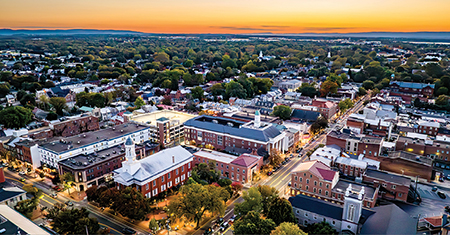
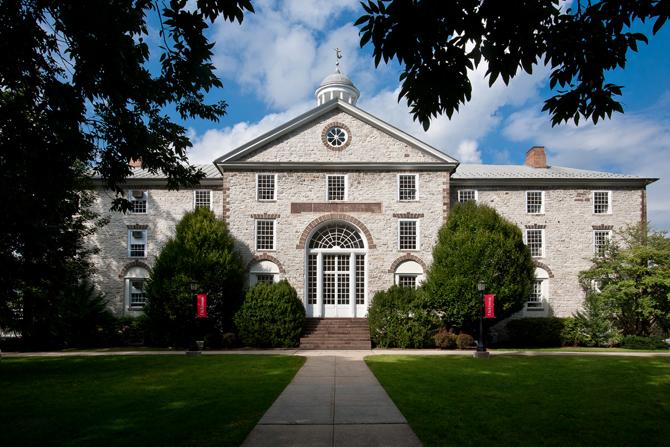
Dickinson College seal · sourceDickinson College - Profile, Rankings and Data | US News Best Colleges · sourceDickinson College Homepage · sourcePlan Your Visit | Dickinson College · source