Loading…
← All schools
Diesel Driving Academy-Baton Rouge
Baton Rouge, LAprivate forprofitwww.dda.edu/
Avg net price
$14,183
Earnings (10 yr)
$43,011
Acceptance & SAT from Common Data Set / IPEDS; net price, earnings & graduation from the U.S. Dept. of Education College Scorecard. Figures lag ~1–2 years — verify with the school.
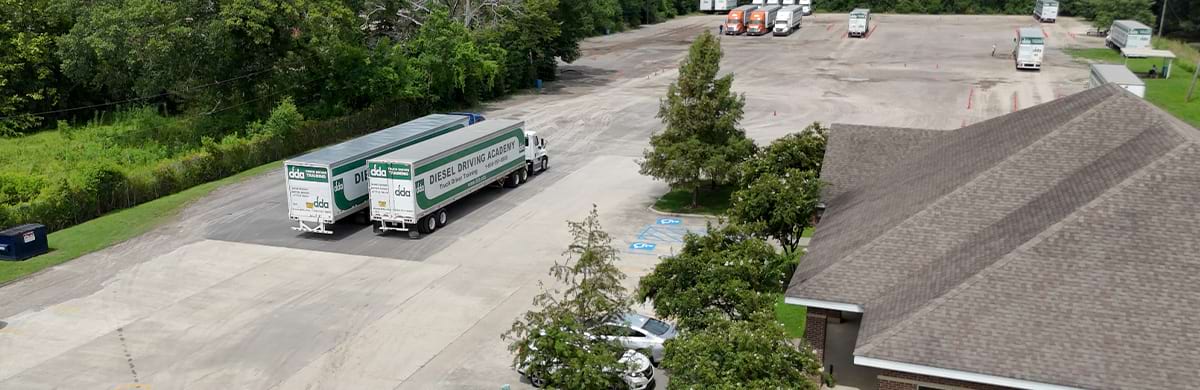
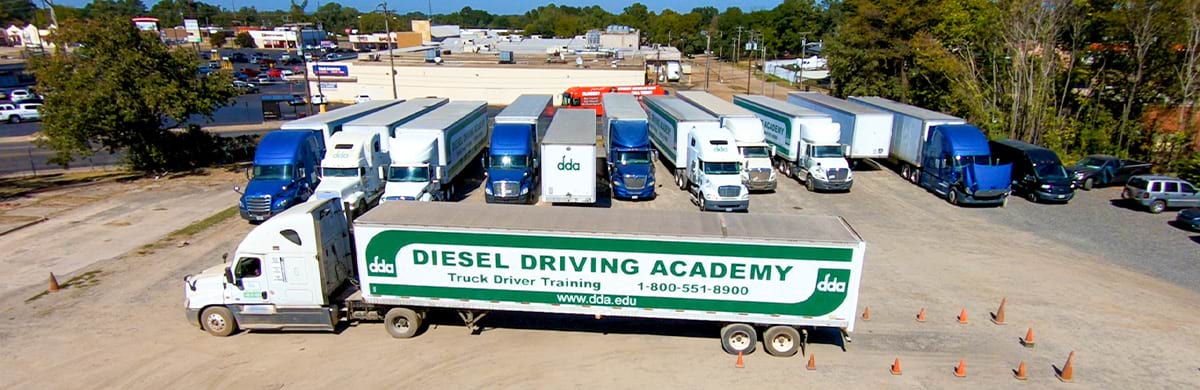
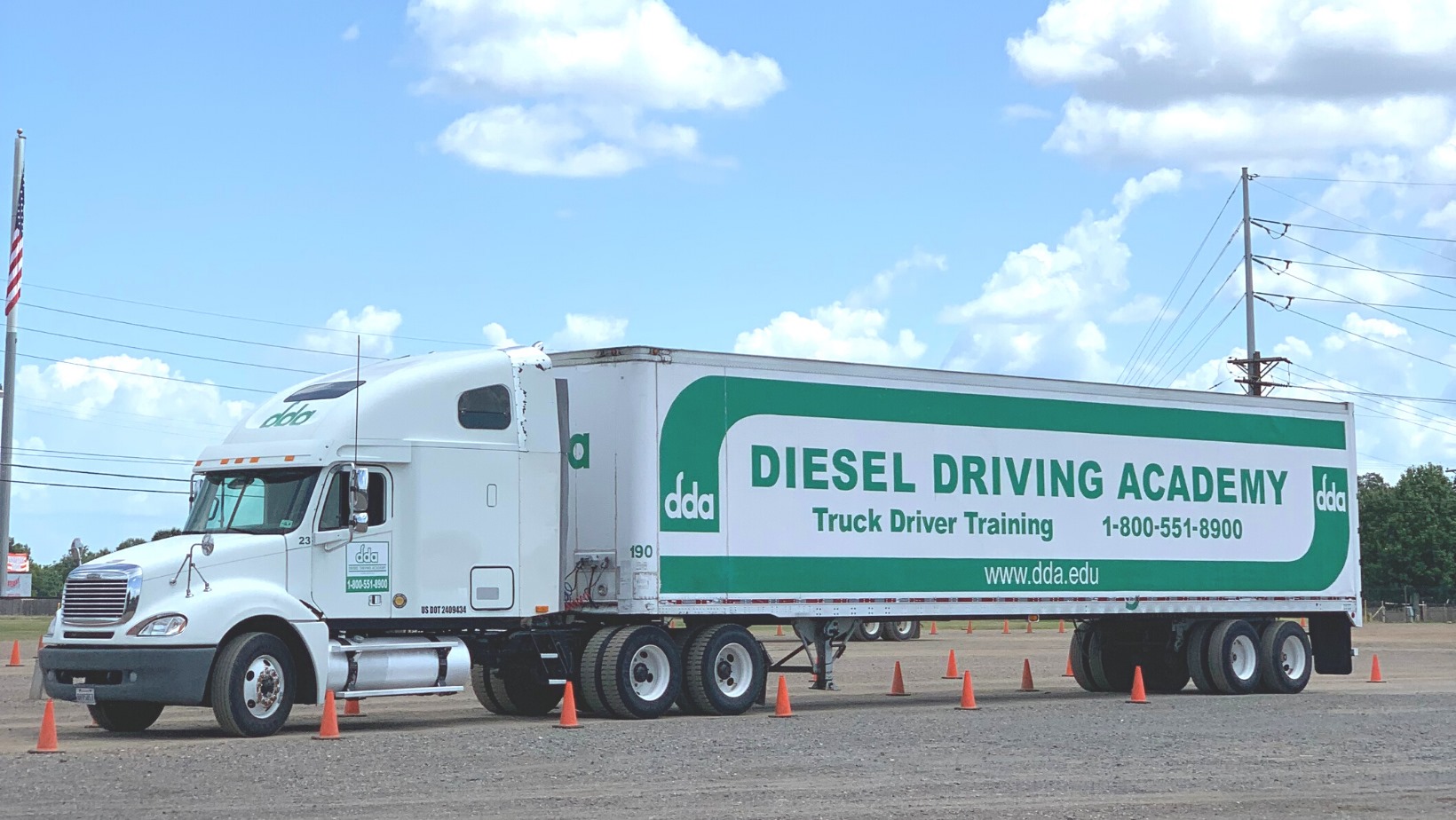
Diesel Driving Academy-Baton Rouge is a singular institution in American higher education: a private, for-profit trade school laser-focused on one thing—turning out commercial truck drivers. With an open admission policy and a 20-week program, it operates with the no-nonsense efficiency of a freight dispatch center, not a traditional college campus. Its urban Baton Rouge campus is a practical training ground where students spend their days mastering Class A CDL skills, aiming directly for the open road and a steady paycheck.
More details
- Undergrad enrollment
- 282
- Top Major
- Truck and Bus Driver/Commercial Vehicle Operation
- No-Loan Policy
- No
- Meets Full Need
- No
- Demonstrated Interest
- Not considered
- Median Earnings (10yr)
- $43,011
- Student-to-Faculty Ratio
- 11:1
Outcomes & value
Outcomes & value
- Median earnings (10 yr)
- $43,011
- Value (earnings ÷ net price)
- 3.0×
- Median debt at graduation
- $6,333
- Reducing loan balance (3 yr)
- 44%
- Pell (lower-income) share
- 73%
- First-gen share (among federal-aid recipients)
- 61%
Earnings = median of students working ~10 years after entry; debt = median of graduates. Value divides 10-yr earnings by one year’s net price — read it as earnings per dollar of annual cost, not a full lifetime ROI; it favors lower-cost schools. Source: U.S. Dept. of Education College Scorecard. Figures lag ~2 years and reflect all students, not your intended major.
Campus & location
Campus safety
- On-campus violent crimes (2024)
- 0
On-campus criminal offenses classed as violent (murder/non-negligent manslaughter, rape, robbery, aggravated assault) for the most recent reported year. Source: U.S. Dept. of Education Campus Safety and Security (Clery Act). Counts reflect what’s reported to the school, and urban campuses often report more partly due to non-student incidents nearby — read alongside campus size and setting, not as a standalone safety verdict.
Climate
- Pleasant days / yr
- 102
- Summer high
- 90°F
- Winter low
- 47°F
- Annual rain
- 62.3"
- Natural-hazard risk
- Relatively High
Pleasant days counts days per year with a mean temperature of 55–75°F, a high at or below 90°F, a low at or above 45°F, and little precipitation — a transparent comfort measure, not a weighting we invented. Computed from Open-Meteo ERA5 daily history (2019–2023). Natural-hazard risk is the county’s composite rating from the FEMA National Risk Index.
Quick answers
- How much does Diesel Driving Academy-Baton Rouge cost?
- At Diesel Driving Academy-Baton Rouge, the average net price (after aid) is about $14,183 per year. Actual cost varies with financial aid and residency.
- How many undergraduates attend Diesel Driving Academy-Baton Rouge?
- Diesel Driving Academy-Baton Rouge enrolls approximately 282 undergraduate students.
- Where is Diesel Driving Academy-Baton Rouge located?
- Diesel Driving Academy-Baton Rouge is located in Baton Rouge, LA.
Admissions
The admissions process at Diesel Driving Academy-Baton Rouge is defined by its absolute accessibility. The school has an open admission policy, meaning all applicants are accepted. This is a vocational gateway, not a selective filter; the primary requirement is a desire to train for a commercial driver's license. As such, the institution does not consider—and does not require—standardized test scores like the SAT or ACT for admission. There is no Early Decision process, and factors like demonstrated interest, which are critical at traditional colleges, are irrelevant here. The focus is on practical eligibility: students must be able to meet the physical and licensing requirements for a CDL. The school's reported reflects this open-door philosophy, though sources vary between 68% and 100%; the definitive College Scorecard data confirms the open admission policy.
Academics
Academic life is concentrated, hands-on, and singular in purpose. The school offers one major: Truck and Bus Driver/Commercial Vehicle Operation. The curriculum is not a broad liberal arts education but a targeted, immersive skills course designed to prepare students for the Commercial Driver's License (CDL) exam and a career behind the wheel. The program structure is intensive; one format described is a running Monday through Thursday from 8:30 AM to 4:00 PM. This schedule reflects the full-time, job-training nature of the education. With a reported , instruction is likely personalized and heavily focused on practical, behind-the-wheel training. The academy leverages its long history in the field, having trained Louisiana truck drivers since 1972, suggesting a deep-rooted, industry-specific pedagogy.
Compare Diesel Driving Academy-Baton Rouge
vs Huston-Tillotson Universityvs University of Science and Arts of Oklahomavs Johnson C Smith Universityvs Mars Hill University
See colleges similar to Diesel Driving Academy-Baton Rouge →Sources
- Common Data Set
- SCHOOL CATALOG 2025 1-800-551-8900
- Common Data Set: Home
- Diesel Driving Academy-Baton Rouge | College Scorecard
- Diesel Driving Academy-Baton Rouge Accreditation Data
- Common Data Set 2024-2025 - Registrar's Office - Hollins University
- Diesel Driving Academy Baton Rouge Acceptance Rate, SAT, GPA & ACT ...
- Diesel Driving Academy - Baton Rouge
- Diesel Driving Academy Baton Rouge Admissions - BigFuture
- Baton Rouge CDL School