Admit rate has ranged 42%–80% over the last 5 years — notably volatile, though the latest figure above (30%) falls outside that window. Source: IPEDS via Urban Institute.
Acceptance & SAT from Common Data Set / IPEDS; net price, earnings & graduation from the U.S. Dept. of Education College Scorecard. Figures lag ~1–2 years — verify with the school.
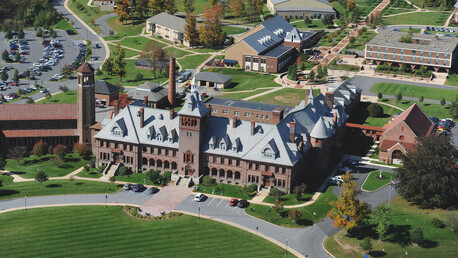
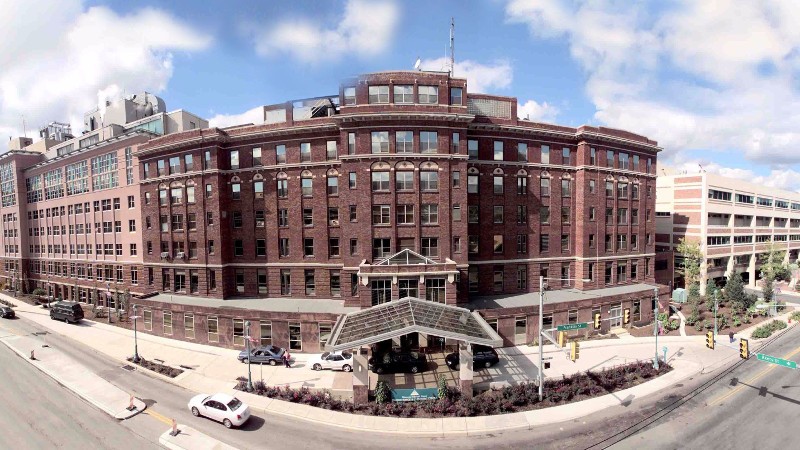
DLP Conemaugh Memorial Medical Center isn't a traditional liberal arts college; it's a hospital-based professional school in Johnstown, Pennsylvania, laser-focused on launching careers in nursing and allied health. Its identity is inseparable from its parent institution, Conemaugh Memorial, a teaching hospital recognized for clinical excellence, which means students train in a real-world medical environment from day one. With an admissions process centered on specific program requirements rather than holistic review, it offers a direct, no-frills path into high-demand healthcare fields.
Admission requirements
Test-blind — scores not considered
Required
High school transcript
Grade point average
Letters of recommendation
Source: IPEDS Admissions survey (2022) via Urban Institute. Covers formal factors only — it does not reflect essays, extracurriculars, or other holistic criteria.
More details
Undergrad enrollment
90
Graduation Rate
45%
First-Year Retention
39%
Demonstrated Interest
Not considered
Median Earnings (10yr)
$65,740
Outcomes & value
Outcomes & value
Median earnings (10 yr)
$65,740
Value (earnings ÷ net price)
3.4×
Median debt at graduation
$12,000
Reducing loan balance (3 yr)
70%
Pell (lower-income) share
29%
Earnings = median of students working ~10 years after entry; debt = median of graduates. Value divides 10-yr earnings by one year’s net price — read it as earnings per dollar of annual cost, not a full lifetime ROI; it favors lower-cost schools. Source: U.S. Dept. of Education College Scorecard. Figures lag ~2 years and reflect all students, not your intended major.
Campus & location
Campus safety
On-campus violent crimes (2024)
3
On-campus criminal offenses classed as violent (murder/non-negligent manslaughter, rape, robbery, aggravated assault) for the most recent reported year. Source: U.S. Dept. of Education Campus Safety and Security (Clery Act). Counts reflect what’s reported to the school, and urban campuses often report more partly due to non-student incidents nearby — read alongside campus size and setting, not as a standalone safety verdict.
Climate
Pleasant days / yr
94
Summer high
80°F
Winter low
26°F
Annual rain
50.4"
Annual snow
37.9"
Natural-hazard risk
Relatively Low
Pleasant days counts days per year with a mean temperature of 55–75°F, a high at or below 90°F, a low at or above 45°F, and little precipitation — a transparent comfort measure, not a weighting we invented. Computed from Open-Meteo ERA5 daily history (2019–2023). Natural-hazard risk is the county’s composite rating from the FEMA National Risk Index.
Quick answers
What is the acceptance rate at DLP Conemaugh Memorial Medical Center?
DLP Conemaugh Memorial Medical Center's acceptance rate is approximately 30% (Johnstown, PA), based on the most recent figures we compiled from public and primary sources.
What SAT score do you need for DLP Conemaugh Memorial Medical Center?
Admitted students at DLP Conemaugh Memorial Medical Center typically score 990–1150 on the SAT (the middle-50% range). Scores outside this band are still admitted, especially with strong applications.
How much does DLP Conemaugh Memorial Medical Center cost?
At DLP Conemaugh Memorial Medical Center, the average net price (after aid) is about $19,089 per year. Actual cost varies with financial aid and residency.
How many undergraduates attend DLP Conemaugh Memorial Medical Center?
DLP Conemaugh Memorial Medical Center enrolls approximately 90 undergraduate students.
Where is DLP Conemaugh Memorial Medical Center located?
DLP Conemaugh Memorial Medical Center is located in Johnstown, PA.
Admissions
The admissions process at DLP Conemaugh is straightforward and professional, reflecting its mission as a career-training institution. The school is moderately selective, with an of 30%. Test scores are a required component of the application; 100% of first-time enrollees submitted SAT scores, and the middle 50% SAT range for admitted students is 990–1150. The admissions decision for its programs, like the School of Radiologic Technology, is rendered once all application requirements are completed. Unlike many undergraduate colleges, there is no indication of an Early Decision program or that demonstrated interest in the institution is a considered factor in admissions decisions—selection appears based on meeting concrete academic and program-specific criteria.
Academic life is intensely focused. The institution offers only two undergraduate majors: Registered Nursing/Registered Nurse and Radiologic Technology/Science - Radiographer. This singular focus is part of Conemaugh's broader commitment to education, which includes the hospital-based Conemaugh School of Nursing, five Allied Health schools, and seven physician residency programs. Degrees awarded include Bachelor's Degrees, Master's Degrees, Post-master's certificates, and Doctor's degrees, though the undergraduate offerings are strictly in the health professions. The curriculum is inherently hands-on, with learning embedded within the operations of the medical center itself.
Student life is defined by immersion in a working hospital. Conemaugh Memorial is proudly a teaching hospital, and the environment is explicitly described as "medical-student friendly," where faculty and resident supervisors mentor and encourage students to maximize their rotation experiences. The campus provides on-campus housing. The school promotes its "state-of-the-art learning spaces" and direct connection with faculty, emphasizing a practical, supportive environment for aspiring healthcare professionals rather than a typical collegiate social scene.
The return on investment is clear and compelling. The median earnings for graduates 10 years after enrollment is $65,740. The parent health system, Conemaugh Memorial, has been recognized by U.S. News & World Report as one of the nation's Best Hospitals for 2024-2025, underscoring the quality of the clinical training environment. However, persistence can be a challenge; one source reports a graduation rate of 45% and a first-year retention rate of 39%, suggesting the intensive, career-focused program requires significant dedication.
The average after aid is $19,089. Financial aid is a central part of the process, with 67% of full-time beginning undergraduates receiving grant or scholarship aid. The school provides a Net Price Calculator to help families estimate costs, which include tuition, required fees, books, and supplies. The financial aid process begins with the FAFSA, which is used to apply for grants, loans, and scholarships. The school offers Unsubsidized Stafford Loans, which do not require a student to demonstrate financial need, though the student must be attending at least half-time.
DLP Conemaugh Memorial Medical Center stands out for its utter lack of pretense and its direct pipeline into the healthcare workforce. It is not a university with a nursing school; it is a nursing and allied health school that happens to grant degrees, operating from within the walls of a major regional hospital. This integration is its greatest asset: students learn in a "medical-student friendly" environment at a U.S. News-recognized Best Hospital, mentored by the same faculty and residents who treat patients. There are no general education requirements exploring the humanities—the entire curriculum is built around producing capable, employable clinicians. For a student certain of a career in nursing or radiologic technology, it offers a potent, immersive alternative to the traditional college path, with a strong median earnings outcome that validates its practical approach.
DLP Conemaugh Memorial Medical Center seal · sourceDLP Conemaugh Memorial Medical Center - Unigo.com · sourceDLP Conemaugh Memorial Medical Center — Admissions, Tuition & Acceptance Rate | Appily · sourceConemaugh Health System | Johnstown, PA · source
.png)