Loading…
← All schools
Douglas Education Center
Monessen, PAprivate forprofitwww.dec.edu/
Avg net price
$27,348
Earnings (10 yr)
$30,814
Acceptance & SAT from Common Data Set / IPEDS; net price, earnings & graduation from the U.S. Dept. of Education College Scorecard. Figures lag ~1–2 years — verify with the school.
Douglas Education Center in Monessen, Pennsylvania, is a small, intensely practical career school where the focus is on getting you trained, certified, and out the door into a specific job. Forget sprawling quads and liberal arts seminars; this is a place for hands-on mastery in fields like professional makeup artistry, truck driving, and medical assisting. With an open admissions policy and a graduation rate that far exceeds the norm for similar institutions, DEC operates like a focused apprenticeship, prioritizing direct skill acquisition and employment outcomes above all else.
More details
- Undergrad enrollment
- 178
- In-state tuition
- $19,450
- Out-of-state tuition
- $19,450
- Graduation Rate
- 88%
- Student-Faculty Ratio
- 13:1
- Median Earnings (10yr)
- $30,814
- First-Year Retention Rate
- 83%
Outcomes & value
Outcomes & value
- Median earnings (10 yr)
- $30,814
- Value (earnings ÷ net price)
- 1.1×
- Median debt at graduation
- $12,000
- Reducing loan balance (3 yr)
- 42%
- Pell (lower-income) share
- 42%
- First-gen share (among federal-aid recipients)
- 41%
Earnings = median of students working ~10 years after entry; debt = median of graduates. Value divides 10-yr earnings by one year’s net price — read it as earnings per dollar of annual cost, not a full lifetime ROI; it favors lower-cost schools. Source: U.S. Dept. of Education College Scorecard. Figures lag ~2 years and reflect all students, not your intended major.
Financial health
3.0 / 3.0Meets the federal financial-responsibility standard
U.S. Dept. of Education Financial Responsibility Composite Score (FY2022-23). Scale −1.0 to 3.0; ≥1.5 meets the standard. Reported for private nonprofit & for-profit institutions only — public universities are state-backed and not scored, so this is a stability signal, not a ranking.
Campus & location
Campus safety
- On-campus violent crimes (2024)
- 0
On-campus criminal offenses classed as violent (murder/non-negligent manslaughter, rape, robbery, aggravated assault) for the most recent reported year. Source: U.S. Dept. of Education Campus Safety and Security (Clery Act). Counts reflect what’s reported to the school, and urban campuses often report more partly due to non-student incidents nearby — read alongside campus size and setting, not as a standalone safety verdict.
Climate
- Pleasant days / yr
- 101
- Summer high
- 82°F
- Winter low
- 28°F
- Annual rain
- 39.2"
- Annual snow
- 21.1"
- Natural-hazard risk
- Relatively Moderate
Pleasant days counts days per year with a mean temperature of 55–75°F, a high at or below 90°F, a low at or above 45°F, and little precipitation — a transparent comfort measure, not a weighting we invented. Computed from Open-Meteo ERA5 daily history (2019–2023). Natural-hazard risk is the county’s composite rating from the FEMA National Risk Index.
Quick answers
- How much does Douglas Education Center cost?
- At Douglas Education Center, the average net price (after aid) is about $27,348 per year. Actual cost varies with financial aid and residency.
- How many undergraduates attend Douglas Education Center?
- Douglas Education Center enrolls approximately 178 undergraduate students.
- Where is Douglas Education Center located?
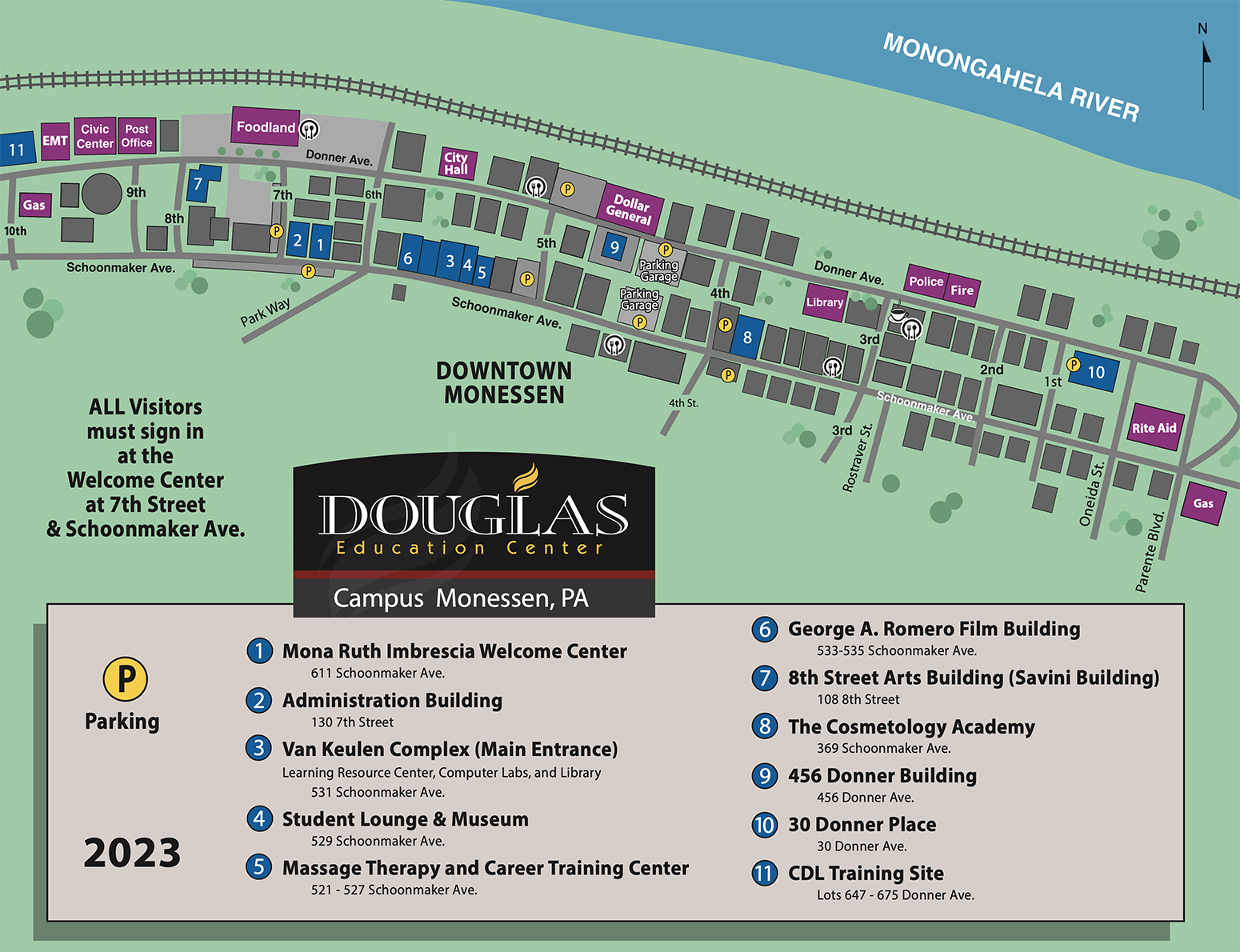
- Douglas Education Center is located in Monessen, PA.
Admissions
Getting into Douglas Education Center is about meeting a baseline, not competing in a high-stakes selection process. The school maintains an open admissions policy, with a reported of 100% [[4]]. The primary requirement is straightforward: applicants must be a high school graduate or hold a General Education Development (GED) Diploma [[2], [3]]. The process is designed for accessibility; students can apply online or by calling the admissions office, and no standardized test scores (SAT/ACT) are required [[6]]. Admissions decisions are based on the completed application and meeting that basic educational threshold [[6]]. The school does offer orientation sessions to help admitted students prepare for their program, framing it as a key step for a successful transition [[9]].
Academics
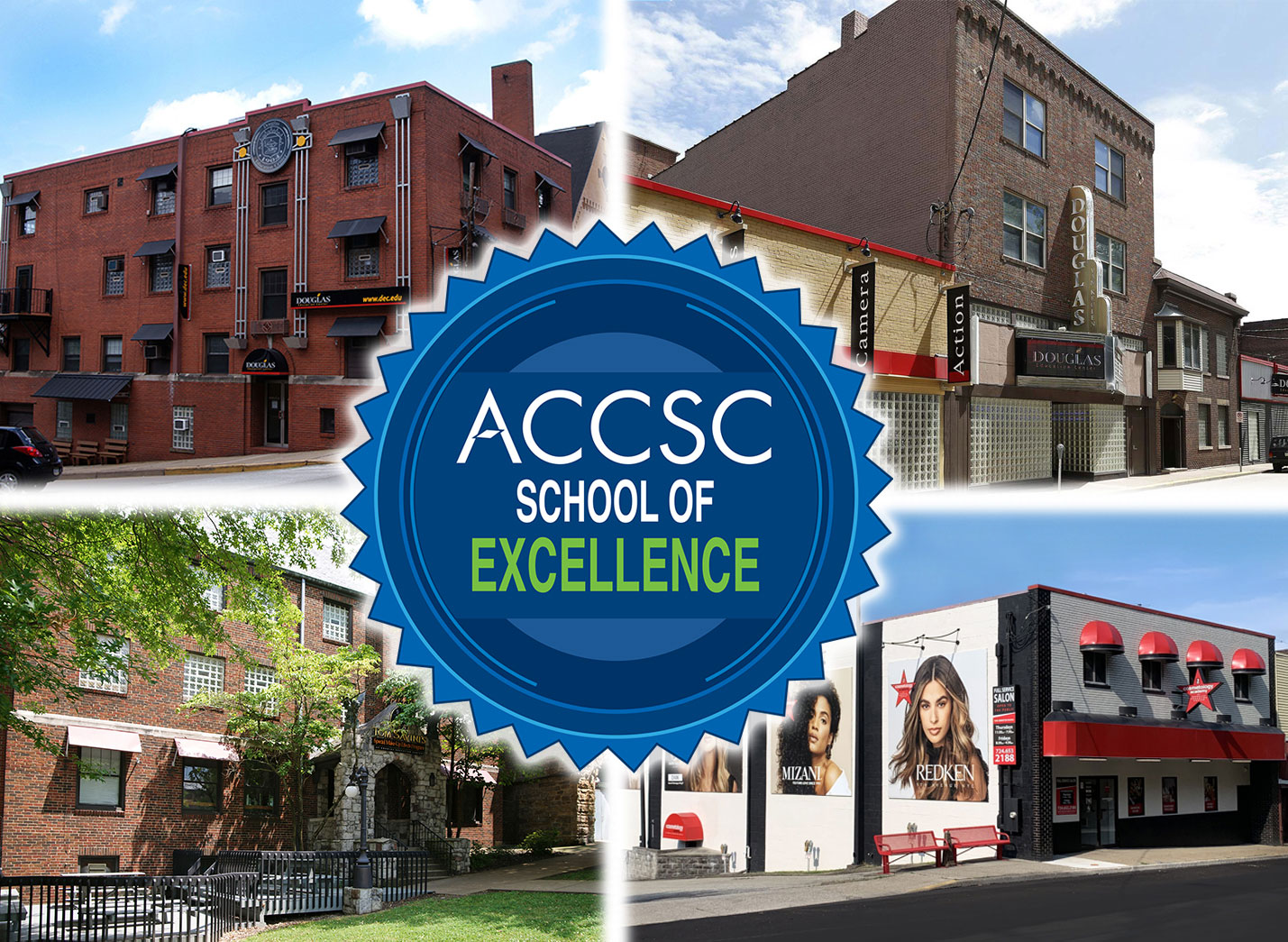
Academics at DEC are synonymous with career training. The center offers a tightly focused portfolio of certificate and degree programs across a handful of practical fields. Popular and signature programs include Make-Up Artist/Specialist, Medical/Clinical Assistant, and Ground Transportation (specifically Truck, Bus, and Commercial Vehicle Operation) [[4], [10]]. The institution has been recognized by its accreditor, the Accrediting Commission of Career Schools and Colleges (ACCSC), as a School of Excellence, specifically for its Energy Trade Programs [[12]].
Compare Douglas Education Center
See colleges similar to Douglas Education Center →Sources
- of 77 Catalog Volume 68 Version 1 Effective October 2, 2025
- ADMISSIONS
- Contents
- Douglas Education Center
- There's still time to strengthen your math skills before ...
- FAQ
- Douglas Education Center Admission, Acceptance Rate, SAT, ACT & GPA
- Douglas Education Center Admission Requirements
- ORIENTATION
- Douglas Education Center in Monessen, PA
- Catalog Volume 67 -Version 3 Effective June 5, 2025