Loading…
← All schools
Dr. Ida Rolf Institute
Boulder, COprivate nonprofitrolf.org
Acceptance
100%
Avg net price
$35,373
Admit rate has held near 100% across the last 4 years. Source: IPEDS via Urban Institute.
Acceptance & SAT from Common Data Set / IPEDS; net price, earnings & graduation from the U.S. Dept. of Education College Scorecard. Figures lag ~1–2 years — verify with the school.
The Dr. Ida Rolf Institute is not a typical college; it is the original, non-profit epicenter for a singular, hands-on discipline. Founded in 1971 in Lafayette, Colorado, this hyper-specialized school exists to train and certify practitioners in Rolfing® Structural Integration, the deep-tissue bodywork system pioneered by its namesake, a Barnard graduate and PhD biochemist. The entire enterprise revolves around a single, intensive program, attracting a small, globally diverse cohort of students committed to a career in this niche therapeutic art.
Admission requirements
Test-blind — scores not considered
Required
- Letters of recommendation
- College-prep program
- TOEFL (non-native English)
Considered (not required)
- Grade point average
- Demonstrated competencies
Source: IPEDS Admissions survey (2022) via Urban Institute. Covers formal factors only — it does not reflect essays, extracurriculars, or other holistic criteria.
More details
- Undergrad enrollment
- 12
- Program Length
- 600 hours
- Most Popular Major
- Massage Therapy and Bodywork
- Standardized Tests
- Not considered
- Federal Aid Eligibility
- For qualified programs
- Median Earnings (1yr after)
- $36,427
- Median Earnings (5yr after)
- $45,519
Outcomes & value
Outcomes & value
- Reducing loan balance (3 yr)
- 71%
- Pell (lower-income) share
- 18%
Earnings = median of students working ~10 years after entry; debt = median of graduates. Value divides 10-yr earnings by one year’s net price — read it as earnings per dollar of annual cost, not a full lifetime ROI; it favors lower-cost schools. Source: U.S. Dept. of Education College Scorecard. Figures lag ~2 years and reflect all students, not your intended major.
Financial health
2.2 / 3.0Meets the federal financial-responsibility standard
U.S. Dept. of Education Financial Responsibility Composite Score (FY2022-23). Scale −1.0 to 3.0; ≥1.5 meets the standard. Reported for private nonprofit & for-profit institutions only — public universities are state-backed and not scored, so this is a stability signal, not a ranking.
Campus & location
Campus safety
- On-campus violent crimes (2024)
- 0
On-campus criminal offenses classed as violent (murder/non-negligent manslaughter, rape, robbery, aggravated assault) for the most recent reported year. Source: U.S. Dept. of Education Campus Safety and Security (Clery Act). Counts reflect what’s reported to the school, and urban campuses often report more partly due to non-student incidents nearby — read alongside campus size and setting, not as a standalone safety verdict.
Climate
- Pleasant days / yr
- 91
- Summer high
- 84°F
- Winter low
- 19°F
- Annual rain
- 18.4"
- Annual snow
- 58"
- Natural-hazard risk
- Relatively Moderate
Pleasant days counts days per year with a mean temperature of 55–75°F, a high at or below 90°F, a low at or above 45°F, and little precipitation — a transparent comfort measure, not a weighting we invented. Computed from Open-Meteo ERA5 daily history (2019–2023). Natural-hazard risk is the county’s composite rating from the FEMA National Risk Index.
Quick answers
- What is the acceptance rate at Dr. Ida Rolf Institute?
- Dr. Ida Rolf Institute's acceptance rate is approximately 100% (Boulder, CO), based on the most recent figures we compiled from public and primary sources.
- How much does Dr. Ida Rolf Institute cost?
- At Dr. Ida Rolf Institute, the average net price (after aid) is about $35,373 per year. Actual cost varies with financial aid and residency.
- How many undergraduates attend Dr. Ida Rolf Institute?
- Dr. Ida Rolf Institute enrolls approximately 12 undergraduate students.
- Where is Dr. Ida Rolf Institute located?
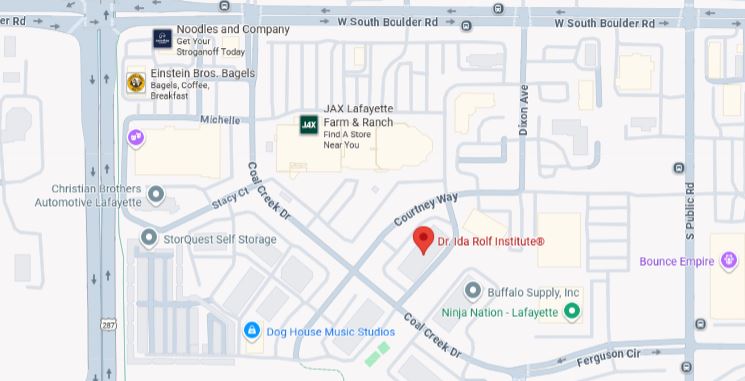
- Dr. Ida Rolf Institute is located in Boulder, CO.
Admissions
Admissions at the Dr. Ida Rolf Institute is a straightforward, non-selective gateway into a highly specialized field. The institute reports a 100% , reflecting its mission to train all qualified applicants in the Rolfing method rather than to curate a competitive undergraduate class. The process deemphasizes traditional academic metrics; standardized test scores (SAT/ACT) are neither required nor recommended, and secondary school records are also listed as neither required nor recommended. What is required is a clear commitment to the discipline. Applicants must submit recommendations, and the institute encourages prospective students to thoroughly review admission requirements, which focus on readiness for the intensive, hands-on training. The school does not publish data on early decision plans or the consideration of demonstrated interest, as its model is built on open enrollment for its singular program.
Compare Dr. Ida Rolf Institute
vs Arizona Christian Universityvs Carroll Collegevs Northwest Nazarene Universityvs Willamette University
See colleges similar to Dr. Ida Rolf Institute →Sources
- Common Data Set: Home
- Admissions - Dr. Ida Rolf Institute
- Decoding the Common Data Set What You Need to Know for Your ...
- How To Use a Common Data Set - The College Solution
- Demystifying the Common Data Set - Top Tier Admissions
- [PDF] Common Data Set 2021-2022 - Slippery Rock University
- Dr. Ida Rolf Institute Admissions - BigFuture College Search
- Dr. Ida Rolf Institute Admission, Acceptance Rate, SAT, ACT & GPA
- Dr. Ida Rolf Institute Admission and Test Scores - UnivStats
- Dr. Ida Rolf Institute - Niche
- Dr- Ida Rolf Institute Acceptance Rate - Admissions Chances & Data