Admit rate has ranged 59%–74% over the last 5 years — notably volatile. Source: IPEDS via Urban Institute.
Acceptance & SAT from Common Data Set / IPEDS; net price, earnings & graduation from the U.S. Dept. of Education College Scorecard. Figures lag ~1–2 years — verify with the school.
Earlham College is a small, Quaker-affiliated liberal arts school in Indiana that punches above its weight with a fiercely collaborative academic culture and an unusually high return on investment. Known for its standout science programs and 'best classroom experience' rankings, it attracts intellectually curious students who thrive in its tight-knit, socially conscious community.
Admission requirements
Test-optional — scores considered if submitted
Required
High school transcript
Grade point average
Letters of recommendation
College-prep program
TOEFL (non-native English)
Considered (not required)
Class rank
Test scores (SAT/ACT)
Source: IPEDS Admissions survey (2022) via Urban Institute. Covers formal factors only — it does not reflect essays, extracurriculars, or other holistic criteria.
More details
Undergrad enrollment
670
In-state tuition
$53,930
Out-of-state tuition
$53,930
Location
Richmond, IN
4-Year Grad Rate
59%
On-Campus Housing
92%
Most Popular Majors
Biology, Business, Psychology
Student-Faculty Ratio
10:1
Avg Financial Aid Package
$46,475
Outcomes & value
Outcomes & value
Median earnings (10 yr)
$50,797
Value (earnings ÷ net price)
2.1×
Median debt at graduation
$23,488
Graduation rate
69%
First-year retention
77%
Reducing loan balance (3 yr)
78%
Pell (lower-income) share
24%
First-gen share (among federal-aid recipients)
23%
Financial health
2.6 / 3.0Meets the federal financial-responsibility standard
U.S. Dept. of Education Financial Responsibility Composite Score (FY2022-23). Scale −1.0 to 3.0; ≥1.5 meets the standard. Reported for private nonprofit & for-profit institutions only — public universities are state-backed and not scored, so this is a stability signal, not a ranking.
Top-earning majors
Median earnings by field of study (highest credential), ~2 years after completion.
Business Administration, Management and Operations$38,289
Biology, General$24,421
Fine and Studio Arts$15,922
Source: U.S. Dept. of Education College Scorecard (field-of-study earnings). Figures cover graduates who received federal aid and lag ~2 years; not all programs report data.
On-campus criminal offenses classed as violent (murder/non-negligent manslaughter, rape, robbery, aggravated assault) for the most recent reported year. Source: U.S. Dept. of Education Campus Safety and Security (Clery Act). Counts reflect what’s reported to the school, and urban campuses often report more partly due to non-student incidents nearby — read alongside campus size and setting, not as a standalone safety verdict.
Climate
Pleasant days / yr
93
Summer high
81°F
Winter low
26°F
Annual rain
43.6"
Annual snow
20.1"
Natural-hazard risk
Relatively Low
Pleasant days counts days per year with a mean temperature of 55–75°F, a high at or below 90°F, a low at or above 45°F, and little precipitation — a transparent comfort measure, not a weighting we invented. Computed from Open-Meteo ERA5 daily history (2019–2023). Natural-hazard risk is the county’s composite rating from the FEMA National Risk Index.
Deep dive — research, future-scholar output & economic mobility▾
Research output
Institutional h-index
93
Scholarly works
1,395
Institutional research volume and impact from OpenAlex. The h-index reflects large research universities and will be low for teaching-focused liberal-arts colleges — not a measure of undergraduate quality.
Share of this school’s graduates who go on to earn research doctorates (2010–20), by national rank and per-capita yield (NSF institutional-yield ratio). A signal of a research-oriented student culture — not a causal promise, since it partly reflects who enrolls. Only top producers appear. Source: NSF NCSES, Baccalaureate Origins of U.S. Research Doctorate Recipients.
Economic mobility
Mobility rate
0.2%
Bottom → top quintile
Quick answers
What is the acceptance rate at Earlham College?
Earlham College's acceptance rate is approximately 73% (Richmond, IN), based on the most recent figures we compiled from public and primary sources.
What SAT score do you need for Earlham College?
Admitted students at Earlham College typically score 1110–1290 on the SAT (the middle-50% range). Scores outside this band are still admitted, especially with strong applications.
How much does Earlham College cost?
At Earlham College, the average net price (after aid) is about $24,714 per year. Actual cost varies with financial aid and residency.
How many undergraduates attend Earlham College?
Earlham College enrolls approximately 670 undergraduate students.
Where is Earlham College located?
Earlham College is located in Richmond, IN.
Admissions
Earlham's admissions process is moderately selective, with a 73% and an early acceptance rate of 83.6%. The median SAT score for admitted students is 1180 (with 75th percentile at 1285), while the median ACT is 27. Most admitted students rank in the top 25% of their high school class (55%), with 26% in the top 10%. Notably, 95% of students receive financial aid, making it accessible despite its private college price tag.
Earlham offers 42 majors and 39 minors, with particularly strong programs in biological sciences (19% of graduates), business (15%), and psychology. The college is nationally recognized for undergraduate teaching, ranking in Princeton Review's top 20 for 'Best Classroom Experience.' Students can design independent majors, and the science departments—especially biochemistry—are standouts. The academic culture emphasizes close faculty mentorship, with economics emerging as the most popular major.
Earnings = median of students working ~10 years after entry; debt = median of graduates. Value divides 10-yr earnings by one year’s net price — read it as earnings per dollar of annual cost, not a full lifetime ROI; it favors lower-cost schools. Source: U.S. Dept. of Education College Scorecard. Figures lag ~2 years and reflect all students, not your intended major.
5%
From bottom quintile
5%
Mobility rate = the share of students who both start in the bottom household-income quintile and reach the top quintile; bottom → top is that chance conditional on starting at the bottom. Source: Opportunity Insights Mobility Report Cards (Chetty, Friedman, Saez, Turner & Yagan). Reflects 1980–82 birth cohorts, so it’s directional, not current.
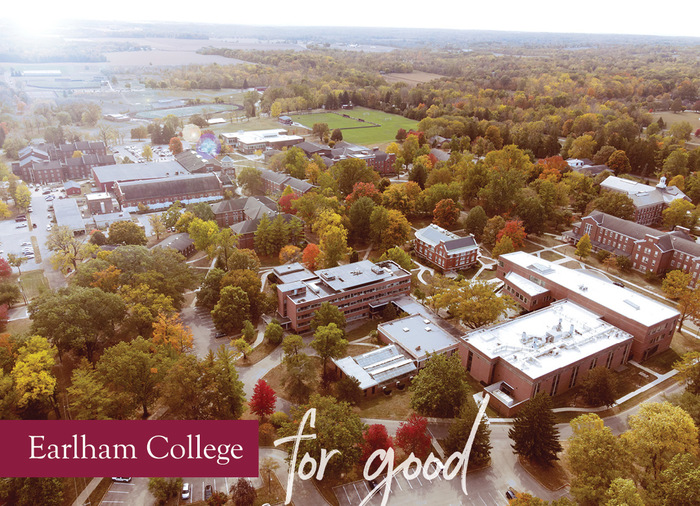
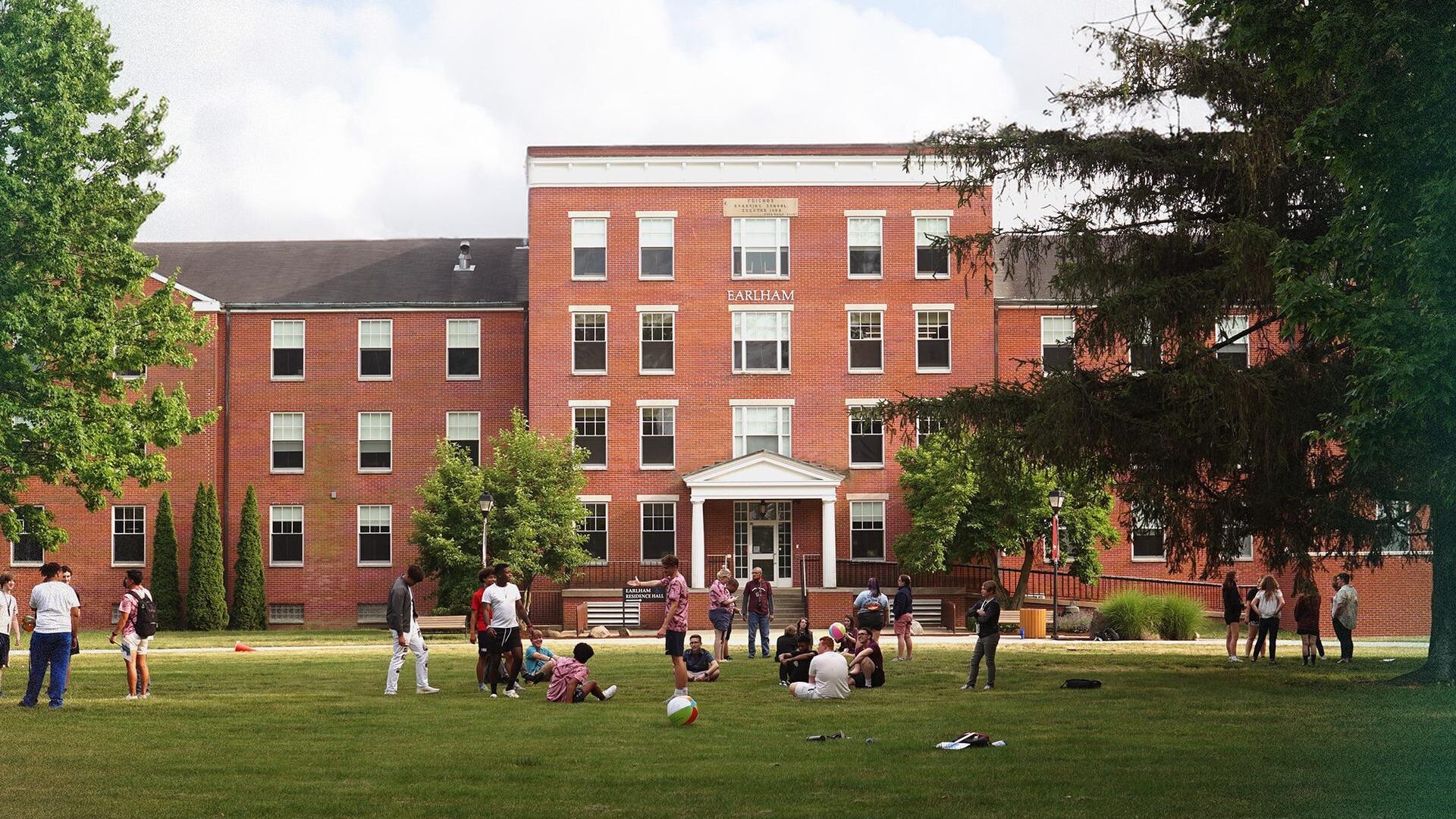
Campus life revolves around tight-knit communities, with 92% of students living on campus. Over 50 student organizations thrive, including cultural groups like the Black Student Union and Latin and Caribbean Student Association. The Quaker heritage fosters a socially conscious vibe—students describe Earlham as 'a spark for good in the world' in campus tours. Richmond, Indiana provides a quiet backdrop, making campus the hub for activities ranging from Quaker meetings to Division III athletics.
Within six months of graduation, 66% of Earlham alumni are employed—matching the national average for private colleges. The median early-career salary is $36,427, rising to $50,797 at the 10-year mark. The four-year graduation rate is 59%, climbing to 77% by six years. Earlham has been named a 'Best Value' college by Princeton Review for five consecutive years, reflecting its strong ROI for a liberal arts institution.
The sticker price is steep, but Earlham awards over $32 million annually in aid. The average financial aid package is $46,475, bringing the down to $25,431 for most students. A remarkable 79.2% of students receive grants or scholarships, with average annual aid at $42,970. This aggressive aid strategy—coupled with the Princeton Review's 'Best Value' designation—makes Earlham surprisingly affordable for a private liberal arts college.
Earlham distinguishes itself through its Quaker-inspired ethos of collaborative inquiry and social responsibility. Unlike many small liberal arts colleges, it delivers top-tier science programs (notably biochemistry) alongside humanities strengths. The 10:1 student-faculty ratio fosters intense mentorship, while the 'Best Classroom Experience' recognition speaks to its engaging pedagogy. For students seeking a progressive, intellectually rigorous community where they can design their own path—with substantial financial support—Earlham is a hidden gem.
Earlham College logo · sourceEarlham College — Excellence. For Good. For Life. · sourceGetting to Know Earlham College (IN) - Educated Quest · sourceApplying for Housing : Earlham College · source