Loading…
← All schools
East Los Angeles College
Monterey Park, CApublicwww.elac.edu/
Avg net price
$10,852
Earnings (10 yr)
$42,006
Acceptance & SAT from Common Data Set / IPEDS; net price, earnings & graduation from the U.S. Dept. of Education College Scorecard. Figures lag ~1–2 years — verify with the school.
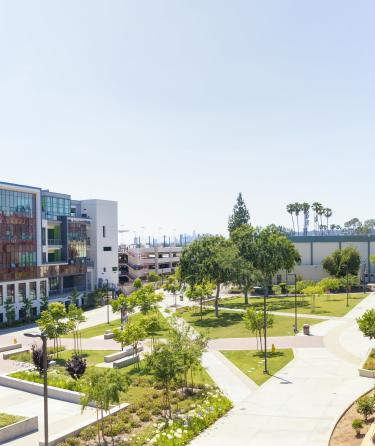
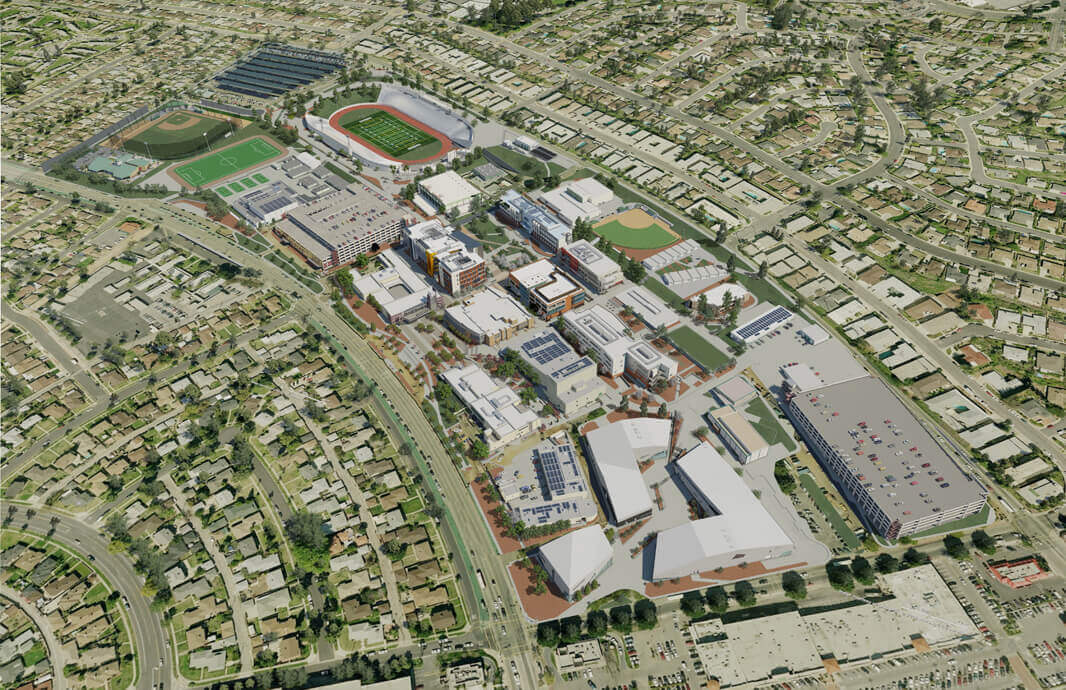
East Los Angeles College is the sprawling, open-door heart of higher education in the San Gabriel Valley, a massive community college where the mission of access is paramount. With a 100% acceptance rate and a student body that reflects the vibrant, international character of its 14 surrounding communities, ELAC is a critical launchpad for transfer, career training, and personal advancement. Its identity is defined not by exclusivity, but by its sheer scale, its eight structured Career and Academic Pathways, and its role as an economic engine for tens of thousands of students each year.
More details
- Undergrad enrollment
- 27,753
- In-state tuition
- $1,238
- Out-of-state tuition
- $10,572
- Student-Faculty Ratio
- 33-to-1
- Degrees Awarded (2024)
- 6,280
- Highest Degree Offered
- Associate
- Median Earnings (10yr)
- $42,006
- First-Year Retention Rate
- 87%
Outcomes & value
Outcomes & value
- Median earnings (10 yr)
- $42,006
- Value (earnings ÷ net price)
- 3.9×
- Median debt at graduation
- $10,500
- Reducing loan balance (3 yr)
- 37%
- Pell (lower-income) share
- 24%
- First-gen share (among federal-aid recipients)
- 69%
Earnings = median of students working ~10 years after entry; debt = median of graduates. Value divides 10-yr earnings by one year’s net price — read it as earnings per dollar of annual cost, not a full lifetime ROI; it favors lower-cost schools. Source: U.S. Dept. of Education College Scorecard. Figures lag ~2 years and reflect all students, not your intended major.
Campus & location
Campus safety
- On-campus violent crimes (2024)
- 1
On-campus criminal offenses classed as violent (murder/non-negligent manslaughter, rape, robbery, aggravated assault) for the most recent reported year. Source: U.S. Dept. of Education Campus Safety and Security (Clery Act). Counts reflect what’s reported to the school, and urban campuses often report more partly due to non-student incidents nearby — read alongside campus size and setting, not as a standalone safety verdict.
Climate
- Pleasant days / yr
- 221
- Summer high
- 87°F
- Winter low
- 46°F
- Annual rain
- 20.5"
- Natural-hazard risk
- Very High
Pleasant days counts days per year with a mean temperature of 55–75°F, a high at or below 90°F, a low at or above 45°F, and little precipitation — a transparent comfort measure, not a weighting we invented. Computed from Open-Meteo ERA5 daily history (2019–2023). Natural-hazard risk is the county’s composite rating from the FEMA National Risk Index.
Deep dive — research, future-scholar output & economic mobility
Research output
- Institutional h-index
- 33
- Scholarly works
- 195
Institutional research volume and impact from OpenAlex. The h-index reflects large research universities and will be low for teaching-focused liberal-arts colleges — not a measure of undergraduate quality.
Quick answers
- How much does East Los Angeles College cost?
- At East Los Angeles College, the average net price (after aid) is about $10,852 per year. Actual cost varies with financial aid and residency.
- How many undergraduates attend East Los Angeles College?
- East Los Angeles College enrolls approximately 27,753 undergraduate students.
- Where is East Los Angeles College located?
- East Los Angeles College is located in Monterey Park, CA.
Admissions
East Los Angeles College operates on a fundamentally open-access model. The school has an open admissions policy, which translates to a 100% for applicants who complete the requirements for consideration. This means that for the vast majority of students seeking entry, the barrier is not a competitive selection process but rather the completion of the actionable application itself. The institution does not engage in the early decision or early action frameworks common at selective four-year colleges; its admissions process is continuous and rolling, aligned with the academic calendar of a community college. While the is a standardized tool for researching colleges, its sections on selectivity and early decision are largely inapplicable to ELAC's mission of universal access. The focus here is on enrollment, not exclusion: in one reported cycle, 1,923 students applied and were accepted, with over 33,000 students enrolled overall, underscoring the college's massive scale and role as a primary point of entry into higher education for the region.
Academics
Compare East Los Angeles College
vs California State Polytechnic University-Pomonavs United States Air Force Academyvs North Carolina A & T State Universityvs Arizona State University Digital Immersion
See colleges similar to East Los Angeles College →Sources
- Common Data Set 2022-2023
- Common Data Set: Home
- Common Data Set 2025-2026 - Academic Planning and Budget
- The Common Data Set: What It Is & How to Use It In College Applications
- Common Data Set Repository
- Researching Colleges With the Common Data Set
- East Los Angeles College - Tuition and Acceptance Rate
- East Los Angeles College
- East Los Angeles College Acceptance Rate, SAT, GPA & ...
- East Los Angeles College | Class of 2030 Community ...
- ELAC: Homepage