Loading…
← All schools
Escuela Tecnica de Electricidad
Ponce, PRprivate forprofitetepr.edu
Avg net price
$5,684
Earnings (10 yr)
$26,398
Acceptance & SAT from Common Data Set / IPEDS; net price, earnings & graduation from the U.S. Dept. of Education College Scorecard. Figures lag ~1–2 years — verify with the school.
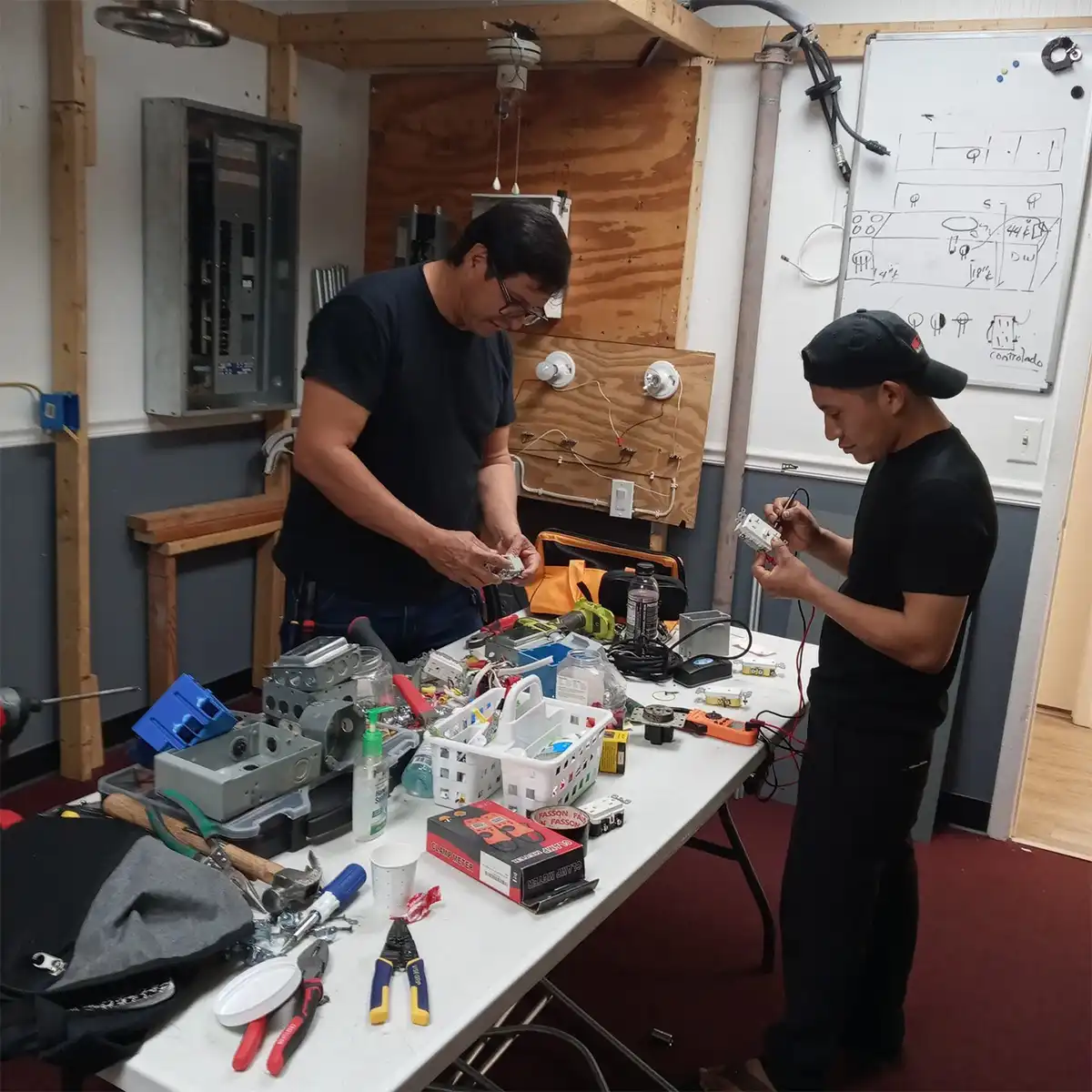
Escuela Técnica de Electricidad is a hyper-focused, for-profit trade school in Ponce, Puerto Rico, that operates on a single, powerful principle: you learn by doing. With an open-admission policy and a total enrollment of about 195 students, it’s a no-frills, high-intensity pipeline designed to turn out certified electricians and HVAC technicians in under two years. Its identity is its outcome—extraordinary graduation rates north of 90% and a direct, affordable path to a skilled trade.
More details
- Undergrad enrollment
- 183
- Location
- Urban, Ponce, PR
- Top Program
- Electrician (1-2 Year Certificate)
- Institution Type
- Private, For-Profit, Less-than-2-year
- First-Year Retention
- 90%
- Student-Faculty Ratio
- 20:1
- Graduation Rate (6-yr)
- 90.9% - 95%
- Median Earnings (10yr)
- $26,398
Outcomes & value
Outcomes & value
- Median earnings (10 yr)
- $26,398
- Value (earnings ÷ net price)
- 4.6×
- Pell (lower-income) share
- 73%
- First-gen share (among federal-aid recipients)
- 46%
Earnings = median of students working ~10 years after entry; debt = median of graduates. Value divides 10-yr earnings by one year’s net price — read it as earnings per dollar of annual cost, not a full lifetime ROI; it favors lower-cost schools. Source: U.S. Dept. of Education College Scorecard. Figures lag ~2 years and reflect all students, not your intended major.
Financial health
2.5 / 3.0Meets the federal financial-responsibility standard
U.S. Dept. of Education Financial Responsibility Composite Score (FY2022-23). Scale −1.0 to 3.0; ≥1.5 meets the standard. Reported for private nonprofit & for-profit institutions only — public universities are state-backed and not scored, so this is a stability signal, not a ranking.
Campus & location
Campus safety
- On-campus violent crimes (2024)
- 0
On-campus criminal offenses classed as violent (murder/non-negligent manslaughter, rape, robbery, aggravated assault) for the most recent reported year. Source: U.S. Dept. of Education Campus Safety and Security (Clery Act). Counts reflect what’s reported to the school, and urban campuses often report more partly due to non-student incidents nearby — read alongside campus size and setting, not as a standalone safety verdict.
Climate
- Pleasant days / yr
- 8
- Summer high
- 88°F
- Winter low
- 71°F
- Annual rain
- 36.6"
Pleasant days counts days per year with a mean temperature of 55–75°F, a high at or below 90°F, a low at or above 45°F, and little precipitation — a transparent comfort measure, not a weighting we invented. Computed from Open-Meteo ERA5 daily history (2019–2023).
Quick answers
- How much does Escuela Tecnica de Electricidad cost?
- At Escuela Tecnica de Electricidad, the average net price (after aid) is about $5,684 per year. Actual cost varies with financial aid and residency.
- How many undergraduates attend Escuela Tecnica de Electricidad?
- Escuela Tecnica de Electricidad enrolls approximately 183 undergraduate students.
- Where is Escuela Tecnica de Electricidad located?
- Escuela Tecnica de Electricidad is located in Ponce, PR.
Admissions
Escuela Técnica de Electricidad maintains an open admission policy, meaning it accepts virtually all applicants. Sources indicate its is 100%, a stark contrast to the national average of around 68%. The school is small, with a total enrollment of roughly 195 students. It is classified as a private, for-profit institution with a less-than-2-year program length, located in an urban setting in the city of Ponce. The admissions process appears geared toward accessibility rather than selectivity, focusing on preparing students for immediate entry into its intensive technical programs.
Academics
The academic model is brutally simple and intensely practical. The school offers only a handful of majors, all concentrated in the skilled trades. The most common program by far is the 1 to 2 Year Postsecondary Certificate in Electrician, with 241 degrees awarded according to recent data. The other primary offering is in . The institution's official materials emphasize that programs are designed to provide a comprehensive and practical education, allowing students to acquire real-world skills. The student-to-faculty ratio is 20:1, which the school and external sources frame as providing strong opportunities for personalized instruction and academic support, though it is noted as being higher than the national average of 15:1.
Compare Escuela Tecnica de Electricidad
vs Inter American University of Puerto Rico-Fajardovs EDP University of Puerto Rico Inc-San Juanvs Inter American University of Puerto Rico-Poncevs Inter American University of Puerto Rico-Guayama
See colleges similar to Escuela Tecnica de Electricidad →Sources
- Escuela Tecnica de Electricidad - Data USA
- Escuela Tecnica de Electricidad Academics - BigFuture
- Escuela Tecnica de Electricidad Statistics - Overgrad
- Escuela Tecnica de Electricidad - School Profile - EDsmart Data
- Escuela Tecnica de Electricidad - Data USA
- Escuela Tecnica de Electricidad - School Guiders
- Escuela Tecnica de Electricidad
- Escuela Tecnica De Electricidad Acceptance Rate, SAT, GPA & ACT ...
- Escuela Tecnica de Electricidad Overview
- Escuela Tecnica de Electricidad | FindMySchool.ai