Loading…
← All schools
Estes Institute of Cosmetology Arts and Science
Visalia, CAprivate forprofitwww.estescosmetology.com/
Avg net price
$14,546
Earnings (10 yr)
$26,965
Acceptance & SAT from Common Data Set / IPEDS; net price, earnings & graduation from the U.S. Dept. of Education College Scorecard. Figures lag ~1–2 years — verify with the school.
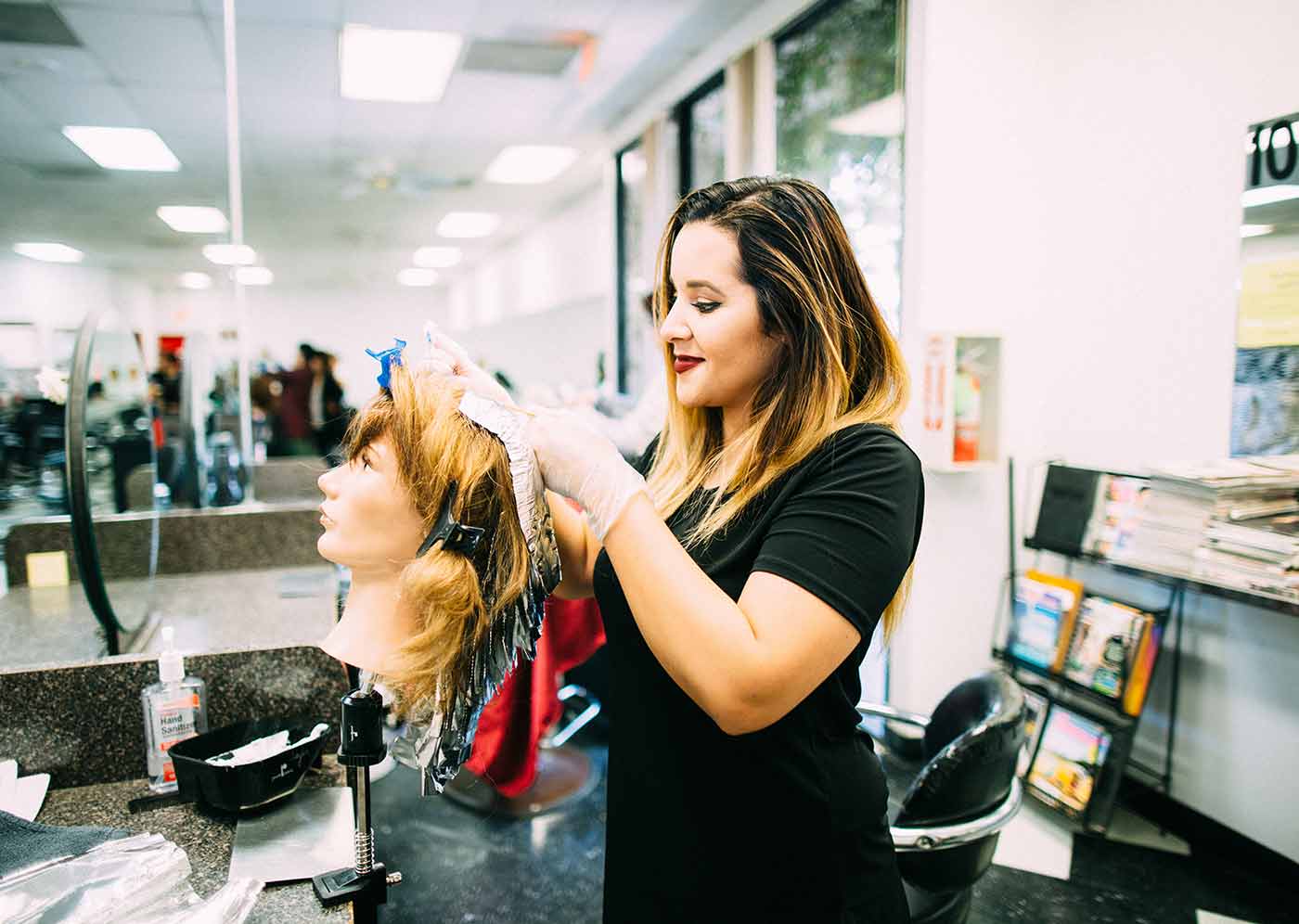
Estes Institute of Cosmetology Arts and Science is a hyper-focused, single-purpose trade school in California's Central Valley, built on over six decades of training stylists and nail technicians. With a microscopic student body of just 41 undergraduates and an 8:1 student-to-faculty ratio, it offers an intensely practical, hands-on education where the student salon is the primary classroom. This isn't a place for a broad liberal arts experience; it's a direct pipeline into the beauty industry, with a clear-eyed focus on licensure and job placement.
More details
- Undergrad enrollment
- 41
- Application Fee
- $100
- Placement Rate (2023)
- 80%
- Median Earnings (10yr)
- $26,965
- Student-to-Faculty Ratio
- 8:1
- First-Year Retention Rate
- 92%
- Students Receiving Grant Aid
- 85%
- On-Time Graduation Rate (2023)
- 31%
Outcomes & value
Outcomes & value
- Median earnings (10 yr)
- $26,965
- Value (earnings ÷ net price)
- 1.9×
- Reducing loan balance (3 yr)
- 52%
- Pell (lower-income) share
- 44%
- First-gen share (among federal-aid recipients)
- 51%
Earnings = median of students working ~10 years after entry; debt = median of graduates. Value divides 10-yr earnings by one year’s net price — read it as earnings per dollar of annual cost, not a full lifetime ROI; it favors lower-cost schools. Source: U.S. Dept. of Education College Scorecard. Figures lag ~2 years and reflect all students, not your intended major.
Campus & location
Campus safety
- On-campus violent crimes (2024)
- 0
On-campus criminal offenses classed as violent (murder/non-negligent manslaughter, rape, robbery, aggravated assault) for the most recent reported year. Source: U.S. Dept. of Education Campus Safety and Security (Clery Act). Counts reflect what’s reported to the school, and urban campuses often report more partly due to non-student incidents nearby — read alongside campus size and setting, not as a standalone safety verdict.
Climate
- Pleasant days / yr
- 96
- Summer high
- 102°F
- Winter low
- 40°F
- Annual rain
- 15.2"
- Annual snow
- 0.5"
- Natural-hazard risk
- Relatively High
Pleasant days counts days per year with a mean temperature of 55–75°F, a high at or below 90°F, a low at or above 45°F, and little precipitation — a transparent comfort measure, not a weighting we invented. Computed from Open-Meteo ERA5 daily history (2019–2023). Natural-hazard risk is the county’s composite rating from the FEMA National Risk Index.
Quick answers
- How much does Estes Institute of Cosmetology Arts and Science cost?
- At Estes Institute of Cosmetology Arts and Science, the average net price (after aid) is about $14,546 per year. Actual cost varies with financial aid and residency.
- How many undergraduates attend Estes Institute of Cosmetology Arts and Science?
- Estes Institute of Cosmetology Arts and Science enrolls approximately 41 undergraduate students.
- Where is Estes Institute of Cosmetology Arts and Science located?
- Estes Institute of Cosmetology Arts and Science is located in Visalia, CA.
Admissions
The admissions process at Estes Institute is straightforward and vocational in nature, reflecting its mission as a specialized trade school. The institute is small, with a total undergraduate enrollment of just 41 students, split between 24 full-time and 17 part-time learners. While a specific isn't consistently published across official sources, the process is designed for those committed to entering the cosmetology field. The application fee is $100. Unlike traditional colleges, standardized test scores like the SAT are not a factor in admissions; sources explicitly state SAT ranges are "not available" for comparison. The process appears geared toward evaluating a candidate's dedication to the trade rather than academic metrics.
Academics
Academics are laser-focused on practical, state-licensed trades. The institute offers certificate and bachelor's degree programs, with the core curriculum centered on Cosmetology/Cosmetologist training and Nail Technician specialties. The 1,600-hour Cosmetology program is the flagship. The defining feature is the exceptionally intimate scale: with a student-to-faculty ratio of 8:1, instruction is highly personalized and hands-on. The pedagogical model blends assigned academic learning, evaluated after each unit, with a mandated minimum number of practical experiences. This tight-knit environment seems to foster strong student engagement, evidenced by a notably high first-year retention rate of 92%.
Compare Estes Institute of Cosmetology Arts and Science
vs United States Coast Guard Academyvs Livingstone Collegevs United States Air Force Academyvs Hillsdale College
See colleges similar to Estes Institute of Cosmetology Arts and Science →Sources
- Estes Institute of Cosmetology Arts and Science
- Estes Institute Of Cosmetology Arts And Science Admissions - BigFuture
- Estes Institute of Cosmetology Arts & Science
- Estes Institute of Cosmetology Arts & Sciences - 2022 Annual Report
- Estes Institute Of Cosmetology | Beauty School | Visalia, CA
- estes institute of cosmetology 324 e main st, visalia, ca | 559 733-3617
- Estes Institute Of Cosmetology Arts And Science Acceptance Rate, SAT, ...
- Estes Institute Of Cosmetology Arts And Science - BigFuture
- Estes Institute of Cosmetology Arts and Science - Colleges