Admit rate has ranged 52%–59% over the last 5 years, though the latest figure above (60%) falls outside that window. Source: IPEDS via Urban Institute.
Acceptance & SAT from Common Data Set / IPEDS; net price, earnings & graduation from the U.S. Dept. of Education College Scorecard. Figures lag ~1–2 years — verify with the school.
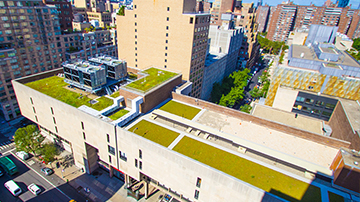
The Fashion Institute of Technology is not a typical liberal arts college; it's a hyper-specialized, industry-embedded trade school for the creative economy, planted in the heart of Manhattan's Garment District. Its defining feature is the '2+2' model, where every student earns an associate's degree before advancing to a bachelor's, creating a brutally practical, portfolio-driven education that feels more like an apprenticeship. The vibe is intensely focused, competitive in the studios, and overwhelmingly commuter-based, offering a direct pipeline into fashion, business, and design careers rather than a traditional 'college experience.'
Admission requirements
Test-blind — scores not considered
Required
High school transcript
Grade point average
Demonstrated competencies
TOEFL (non-native English)
Considered (not required)
College-prep program
Source: IPEDS Admissions survey (2022) via Urban Institute. Covers formal factors only — it does not reflect essays, extracurriculars, or other holistic criteria.
More details
Undergrad enrollment
7,637
In-state tuition
$6,294
Out-of-state tuition
$16,874
Housing
28% on-campus, 72% off-campus
Class Size
All classes under 30 students
Top Majors
Visual/Performing Arts (40%), Business (38%)
No-Loan Policy
No
Graduation Rate
81%
Meets Full Need
No
First-Year Retention
91%
Demonstrated Interest
Not considered
Median Earnings (10yr)
$62,696
Outcomes & value
Outcomes & value
Median earnings (10 yr)
$62,696
Value (earnings ÷ net price)
3.3×
Median debt at graduation
$12,000
Graduation rate
81%
First-year retention
91%
Reducing loan balance (3 yr)
69%
Pell (lower-income) share
32%
First-gen share (among federal-aid recipients)
28%
Top-earning majors
Median earnings by field of study (highest credential), ~2 years after completion.
Specialized Sales, Merchandising and Marketing Operations$45,889
Apparel and Textiles$43,638
Public Relations, Advertising, and Applied Communication$42,458
Marketing$41,689
Design and Applied Arts$41,076
Entrepreneurial and Small Business Operations
Campus & location
Campus safety
On-campus violent crimes (2024)
1
Per 1,000 students
0.13
On-campus criminal offenses classed as violent (murder/non-negligent manslaughter, rape, robbery, aggravated assault) for the most recent reported year. Source: U.S. Dept. of Education Campus Safety and Security (Clery Act). Counts reflect what’s reported to the school, and urban campuses often report more partly due to non-student incidents nearby — read alongside campus size and setting, not as a standalone safety verdict.
Climate
Pleasant days / yr
90
Summer high
83°F
Winter low
29°F
Annual rain
54.4"
Annual snow
18.3"
Natural-hazard risk
Relatively High
Pleasant days counts days per year with a mean temperature of 55–75°F, a high at or below 90°F, a low at or above 45°F, and little precipitation — a transparent comfort measure, not a weighting we invented. Computed from Open-Meteo ERA5 daily history (2019–2023). Natural-hazard risk is the county’s composite rating from the FEMA National Risk Index.
Deep dive — research, future-scholar output & economic mobility▾
Research output
Institutional h-index
52
Scholarly works
1,636
Institutional research volume and impact from OpenAlex. The h-index reflects large research universities and will be low for teaching-focused liberal-arts colleges — not a measure of undergraduate quality.
Economic mobility
Mobility rate
3.6%
Bottom → top quintile
28%
From bottom quintile
13%
Mobility rate = the share of students who both start in the bottom household-income quintile and reach the top quintile; bottom → top is that chance conditional on starting at the bottom. Source: Opportunity Insights Mobility Report Cards (Chetty, Friedman, Saez, Turner & Yagan). Reflects 1980–82 birth cohorts, so it’s directional, not current.
Quick answers
What is the acceptance rate at Fashion Institute of Technology?
Fashion Institute of Technology's acceptance rate is approximately 60% (New York, NY), based on the most recent figures we compiled from public and primary sources.
How much does Fashion Institute of Technology cost?
At Fashion Institute of Technology, the average net price (after aid) is about $19,095 per year. Actual cost varies with financial aid and residency.
How many undergraduates attend Fashion Institute of Technology?
Fashion Institute of Technology enrolls approximately 7,637 undergraduate students.
Where is Fashion Institute of Technology located?
Fashion Institute of Technology is located in New York, NY.
Admissions
FIT's admissions process is uniquely structured around its '2+2' educational model. All first-time applicants must apply to an Associate in Applied Science (AAS) degree program first; admission to a Bachelor's program comes later, after completing the associate's degree. This creates a two-tiered admissions landscape where the overall for the AAS level is higher, but progression to the coveted bachelor's programs—especially in flagship majors like Fashion Design—is far more selective. The school does not have an open admission policy. While standardized test scores (SAT/ACT) are not required for admission, if submitted, they are used for placement into English and Math classes. The admissions committee considers a student's academic record, but the portfolio or supplemental application (required for many art and design programs) is critically important. Demonstrated interest is not a factor considered in admissions decisions. The rate—the percentage of admitted students who enroll—is very high, indicating that those who are admitted are highly likely to choose FIT.
Earnings = median of students working ~10 years after entry; debt = median of graduates. Value divides 10-yr earnings by one year’s net price — read it as earnings per dollar of annual cost, not a full lifetime ROI; it favors lower-cost schools. Source: U.S. Dept. of Education College Scorecard. Figures lag ~2 years and reflect all students, not your intended major.
$34,526
Fine and Studio Arts$22,329
Graphic Communications$14,627
Source: U.S. Dept. of Education College Scorecard (field-of-study earnings). Figures cover graduates who received federal aid and lag ~2 years; not all programs report data.
Academics at FIT are narrowly focused, pre-professional, and notoriously demanding. The curriculum is built to foster critical thinking, intellectual growth, and business acumen within specific creative industries. The school operates on a semester system. The vast majority of students are concentrated in just a few fields: approximately 40% in Visual and Performing Arts and 38% in Business, Management, Marketing, and Related Support Services, with another significant portion in Communication and Journalism programs. This specialization is reflected in a course load that students describe as heavy, often consisting of 7 to 9 classes per semester, blending studio time, technical skills, and liberal arts. The 2+2 pathway is central to the experience: students first immerse themselves in the hands-on fundamentals of their AAS program before applying for advanced, conceptual study in a bachelor's program. All classes have fewer than 30 students, ensuring direct access to faculty who are often working professionals. The environment in studios and workrooms is described as competitive and can feel crowded, reflecting the high-pressure, real-world industry the school serves.
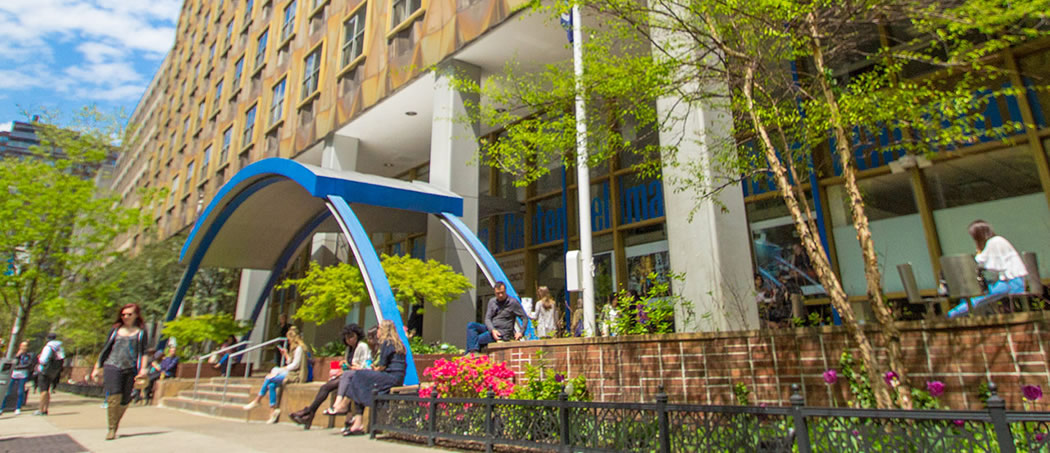
Student life at FIT is fundamentally shaped by its urban, commuter-school identity and its professional focus. Only about 28% of students live in college-owned, -operated, or -affiliated housing, with the overwhelming majority—72%—living off-campus. The Department of Student Life, located in the Dubinsky Student Center, coordinates educational, social, and cultural programming to build community. A variety of clubs, networking opportunities, and student-run events cater to interests related to fashion, art, and business. However, the culture is often described as competitive and can feel cliquey, with students intensely focused on their portfolios, internships, and part-time jobs in the city. The social scene is less about campus traditions and more about leveraging New York City itself—its galleries, showrooms, and industry events—as an extension of the classroom. The overall vibe is one of driven individuals navigating a high-pressure environment together, where networking often blends seamlessly with socializing.
FIT's raison d'être is career placement, and its outcomes data underscores a strong return on investment for its focused training. The first-year retention rate is high, at 91%. For bachelor's degree graduates, outcomes are solid: almost three-quarters of those working full-time report a total annual income of $50,000 or more. The graduation rates tell a compelling story about the 2+2 model's effectiveness. For students entering an AAS program, 63% graduate with that associate's degree within three years. Of those who then enter a BFA program, an impressive 96% graduate with their bachelor's degree. This indicates that students who successfully navigate the initial associate's degree and gain entry to the bachelor's level are highly likely to complete their studies. Alumni success spans from celebrity milliners to textile innovators, highlighting the school's role in shaping creative career paths.
As a public institution within the State University of New York (SUNY) system, FIT offers a relative value proposition for in-state students, especially compared to private art and design schools. The average aid package awarded is $13,971, with the average need-based scholarship or grant award being $8,065. The school provides a Calculator to help families estimate costs. Financial aid is a mix of federal, state, and institutional sources. FIT states it attempts to remove financial barriers to college entrance by providing loans, limited grants, and work-study. Full-time, degree-seeking New York State residents with demonstrated financial need may be eligible for additional state aid. It is important to note that FIT does not have a 'no-loan' policy; financial aid packages typically include federal loans to meet need. All students must file the FAFSA annually to be considered for need-based federal aid.
FIT stands out for its uncompromising, single-minded mission: to be the premier professional training ground for the global fashion, design, and related industries. Its distinctiveness is rooted in three pillars. First, the mandatory 2+2 model is unlike any other top-tier fashion school, ensuring every graduate has a solid foundation in technical craft before advancing to conceptual design, making them exceptionally employable. Second, its location is its campus. Situated in Manhattan's Garment District, the school is physically woven into the industry it serves; internships, guest lecturers, and job opportunities are not extras but integral parts of the curriculum. Third, its culture of pragmatic creativity. This isn't a place for theoretical art students; it's for builders, makers, and strategists. The workload is brutal, the competition is real, and the focus is relentlessly on building a market-ready portfolio and professional network. FIT trades the traditional collegiate quad for a sewing studio and the alumni network for a showroom booking, offering a direct, no-frills escalator into a fiercely competitive field.