Admit rate has ranged 58%–93% over the last 5 years — notably volatile, though the latest figure above (37%) falls outside that window. Source: IPEDS via Urban Institute.
Acceptance & SAT from Common Data Set / IPEDS; net price, earnings & graduation from the U.S. Dept. of Education College Scorecard. Figures lag ~1–2 years — verify with the school.
Fisk University isn't just a college; it's a living monument to Black excellence, intellectual rigor, and cultural legacy. Founded in 1866, this small, private HBCU in Nashville wraps students in an intensely supportive, family-like community where traditions run deep and the expectation to lead is woven into the curriculum. While its graduation and financial metrics reflect the challenges of its mission, Fisk's singular identity—producing scholars, artists, and activists from W.E.B. Du Bois to Nikki Giovanni—remains its most compelling draw.
Admission requirements
Test-optional — scores considered if submitted
Required
High school transcript
Grade point average
TOEFL (non-native English)
Considered (not required)
Class rank
Letters of recommendation
Test scores (SAT/ACT)
College-prep program
Source: IPEDS Admissions survey (2022) via Urban Institute. Covers formal factors only — it does not reflect essays, extracurriculars, or other holistic criteria.
More details
Undergrad enrollment
1,035
In-state tuition
$25,858
Out-of-state tuition
$25,858
No-Loan Policy
No
Meets Full Need
No
Full-Time Students
97.6%
Median Earnings (6yr)
$33,604
Median Earnings (10yr)
$45,454
Early Action Encouraged
Yes
Six-Year Graduation Rate
44%
Four-Year Graduation Rate
39%
Outcomes & value
Outcomes & value
Median earnings (10 yr)
$45,454
Value (earnings ÷ net price)
1.4×
Median debt at graduation
$27,000
Graduation rate
30%
First-year retention
74%
Reducing loan balance (3 yr)
40%
Pell (lower-income) share
52%
First-gen share (among federal-aid recipients)
27%
Financial health
2.9 / 3.0Meets the federal financial-responsibility standard
U.S. Dept. of Education Financial Responsibility Composite Score (FY2022-23). Scale −1.0 to 3.0; ≥1.5 meets the standard. Reported for private nonprofit & for-profit institutions only — public universities are state-backed and not scored, so this is a stability signal, not a ranking.
Campus & location
Campus safety
On-campus violent crimes (2024)
3
Per 1,000 students
2.83
On-campus criminal offenses classed as violent (murder/non-negligent manslaughter, rape, robbery, aggravated assault) for the most recent reported year. Source: U.S. Dept. of Education Campus Safety and Security (Clery Act). Counts reflect what’s reported to the school, and urban campuses often report more partly due to non-student incidents nearby — read alongside campus size and setting, not as a standalone safety verdict.
Climate
Pleasant days / yr
81
Summer high
88°F
Winter low
34°F
Annual rain
75.5"
Annual snow
5.1"
Natural-hazard risk
Relatively High
Pleasant days counts days per year with a mean temperature of 55–75°F, a high at or below 90°F, a low at or above 45°F, and little precipitation — a transparent comfort measure, not a weighting we invented. Computed from Open-Meteo ERA5 daily history (2019–2023). Natural-hazard risk is the county’s composite rating from the FEMA National Risk Index.
Deep dive — research, future-scholar output & economic mobility▾
Research output
Institutional h-index
109
Scholarly works
2,329
Institutional research volume and impact from OpenAlex. The h-index reflects large research universities and will be low for teaching-focused liberal-arts colleges — not a measure of undergraduate quality.
Quick answers
What is the acceptance rate at Fisk University?
Fisk University's acceptance rate is approximately 37% (Nashville, TN), based on the most recent figures we compiled from public and primary sources.
What SAT score do you need for Fisk University?
Admitted students at Fisk University typically score 1140–1510 on the SAT (the middle-50% range). Scores outside this band are still admitted, especially with strong applications.
How much does Fisk University cost?
At Fisk University, the average net price (after aid) is about $32,020 per year. Actual cost varies with financial aid and residency.
How many undergraduates attend Fisk University?
Fisk University enrolls approximately 1,035 undergraduate students.
Where is Fisk University located?
Fisk University is located in Nashville, TN.
Admissions
Fisk operates with a moderately selective admissions process, though selectivity appears to have increased significantly in recent cycles. The university received 11,421 applications for a recent class, admitting 4,274 for an of 37%. This marks a notable shift from a prior reported rate of 57.9%, indicating a more competitive landscape. The middle 50% SAT range for admitted students who submit scores is 1140–1510, with a corresponding ACT range of 21–26. The university strongly encourages applicants to apply through its Early Action or Early Action II decision rounds, noting that Regular Decision is "limited to space availability." There is no mention of a binding Early Decision plan. Demonstrated interest is not explicitly addressed in the provided sources, and no for Fisk was available to clarify its consideration. The enrolled student body is overwhelmingly full-time, with 97.6% of the Fall 2024 population of 1,058 students attending full-time.
Earnings = median of students working ~10 years after entry; debt = median of graduates. Value divides 10-yr earnings by one year’s net price — read it as earnings per dollar of annual cost, not a full lifetime ROI; it favors lower-cost schools. Source: U.S. Dept. of Education College Scorecard. Figures lag ~2 years and reflect all students, not your intended major.
Fisk offers a traditional liberal arts core through its College of Arts and Sciences, alongside programs in business and natural sciences. The curriculum is described as "exceptional" and delivered by an "award-winning, professionally renowned faculty." Popular majors, as indicated by external sources, include Biology/Biological Sciences, Business/Commerce, Computer and Information Sciences, Psychology, English, and Physics. The university provides a range of undergraduate and a few graduate degrees, such as a Master of Science in Healthcare Management. A distinctive feature is the high academic trajectory of its graduates; within the Business Administration department, for example, 65% of alumni go on to earn advanced degrees. The academic environment is intimate, with a total enrollment hovering around 1,000 students, fostering close mentorship. Discussions among prospective students highlight the appeal of a "typical college experience" coupled with the unique heritage and community of an HBCU.
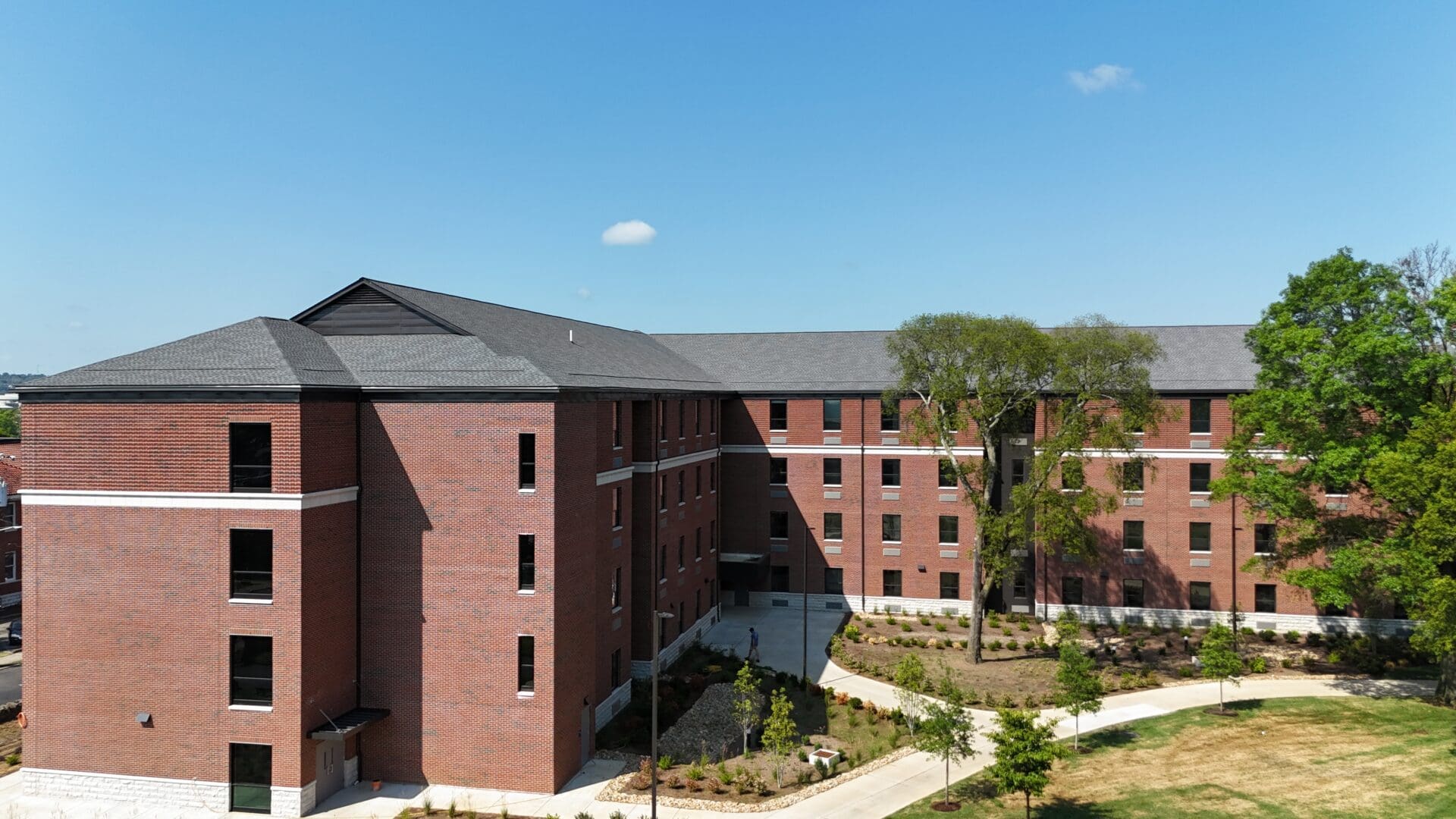
Life at Fisk is defined by a close-knit, vibrant campus culture that students and the administration describe as welcoming, inclusive, and family-oriented. The university is committed to maintaining a "diverse community in an atmosphere of mutual respect and appreciation of differences." Over 30 student groups and organizations provide avenues for leadership development, character building, and discipline. The Residence Life Department aims to cultivate a "healthy living and learning campus environment" that respects individual uniqueness. This communal vibe is central to the Fisk identity, creating a supportive network where students feel a strong sense of belonging. The campus is active, with resources and people dedicated to helping students reach their goals, embodying the spirit of 'Living Like a Bulldog.'
Student outcomes at Fisk present a mixed picture, reflecting both the transformative potential of its education and the significant challenges some students face. The four-year graduation rate is 39%, with the six-year rate at 44%. These figures underscore the importance of support structures and the reality that many students take longer than the traditional timeline to complete their degrees. For those who graduate, career paths are diverse. Notably, 65% of Business Administration graduates pursue advanced degrees. Alumni work in fields such as Finance & Accounting and Retail Management. The median salary for graduates six years after entry is reported as $33,604. The university itself highlights student achievement in areas like enrollment, retention, graduation, and job placement as key metrics of institutional effectiveness.
Fisk is a private institution with a sticker price that necessitates significant financial aid for most families. The average after grants and scholarships is $32,020. Aid packages, which average $18,280, are awarded on a "first-come, first-serve basis and depending upon the availability of funds and financial need." The university requires the FAFSA for aid consideration and participates in federal aid programs, including Federal Work-Study and Direct Unsubsidized Loans. A key point for families to note: Fisk does not have a policy of meeting 100% of demonstrated financial need, nor does it advertise a "no-loan" policy where loans are replaced with grants for low-income students. External sources confirm the university does not meet full need. This means financial aid packages typically include a loan component, and students are encouraged to seek out all available federal, state, and institutional resources.
Fisk University stands out not on a spreadsheet of metrics, but as an irreplaceable cultural and intellectual institution. Its identity is forged in history: it is one of the oldest HBCUs in the nation, with an alumni roll that includes towering figures like sociologist W.E.B. Du Bois, poet Nikki Giovanni, and historian John Hope Franklin. This of producing leaders and critical thinkers is not archival; it's a living charge felt on campus. The experience is characterized by an intense, familial community often cited as its greatest strength—a "cornerstone of excellence and education" where students are known personally and mentored closely. While its graduation rates and financial aid policies reveal the very real struggles of a mission-driven institution serving many and low-income students, choosing Fisk is a choice to become part of a narrative much larger than oneself. It's for the student who values profound heritage, transformative mentorship, and the unique, empowering environment of a premier HBCU over the amenities or statistical profiles of larger, wealthier universities.