Loading…
← All schools
Florida School of Traditional Midwifery
Gainesville, FLprivate nonprofitmidwiferyschool.org/
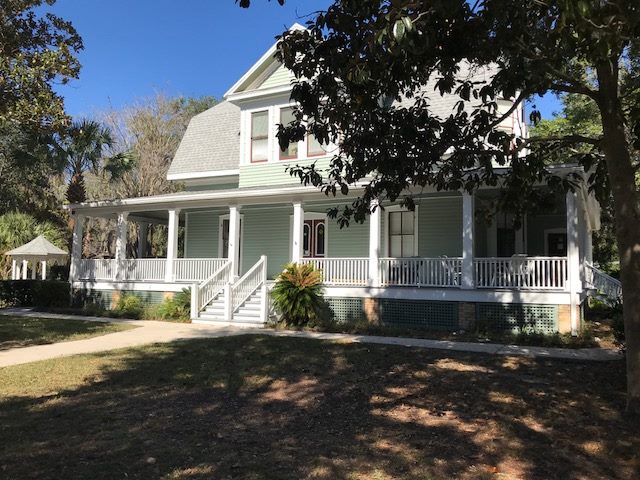
The Florida School of Traditional Midwifery is a singular institution, a tiny, mission-driven school in Gainesville laser-focused on training direct-entry midwives. It operates less like a conventional college and more like a professional guild, offering a single, intensive 91-credit program that blends rigorous academics with hands-on clinical training to prepare graduates to serve as community builders. With an 88% acceptance rate, it's accessible but demanding, attracting students committed to a specific, hands-on path in healthcare.
More details
- Undergrad enrollment
- 54
- Program Structure
- 91 credits, 9 terms
- Total Program Cost
- $39,168
- Single Major Offered
- Direct Entry Midwifery
- Median Earnings (10yr)
- $38,933
Outcomes & value
Outcomes & value
- Median earnings (10 yr)
- $38,933
- Median debt at graduation
- $38,130
- Reducing loan balance (3 yr)
- 33%
- Pell (lower-income) share
- 29%
Earnings = median of students working ~10 years after entry; debt = median of graduates. Value divides 10-yr earnings by one year’s net price — read it as earnings per dollar of annual cost, not a full lifetime ROI; it favors lower-cost schools. Source: U.S. Dept. of Education College Scorecard. Figures lag ~2 years and reflect all students, not your intended major.
Campus & location
Campus safety
- On-campus violent crimes (2024)
- 0
On-campus criminal offenses classed as violent (murder/non-negligent manslaughter, rape, robbery, aggravated assault) for the most recent reported year. Source: U.S. Dept. of Education Campus Safety and Security (Clery Act). Counts reflect what’s reported to the school, and urban campuses often report more partly due to non-student incidents nearby — read alongside campus size and setting, not as a standalone safety verdict.
Climate
- Pleasant days / yr
- 130
- Summer high
- 90°F
- Winter low
- 50°F
- Annual rain
- 47"
- Natural-hazard risk
- Relatively Moderate
Pleasant days counts days per year with a mean temperature of 55–75°F, a high at or below 90°F, a low at or above 45°F, and little precipitation — a transparent comfort measure, not a weighting we invented. Computed from Open-Meteo ERA5 daily history (2019–2023). Natural-hazard risk is the county’s composite rating from the FEMA National Risk Index.
Quick answers
- How many undergraduates attend Florida School of Traditional Midwifery?
- Florida School of Traditional Midwifery enrolls approximately 54 undergraduate students.
- Where is Florida School of Traditional Midwifery located?
- Florida School of Traditional Midwifery is located in Gainesville, FL.
Admissions
Admission to FSTM is notably accessible compared to most colleges, with an of 88% based on 22 admissions from 25 applications in 2020. This translates to accepting about 20 students per cycle. The school is not part of the Common Application, indicating a more direct, independent admissions process. While the provided snippets from the University of Florida discuss considering demonstrated interest and extracurricular activities, there is no specific data available from the sources to confirm whether FSTM follows a similar policy or has an open admission policy; one source notes that admissions data is only presented for institutions that do not have an open admission policy, but does not specify FSTM's policy. The enrollment figure is 73 students, suggesting a small, intimate cohort model.
Academics
Academics at FSTM are defined by an all-consuming, singular focus: the Direct Entry Midwifery program. The school offers only this one major, and it is known for its excellence in this field. The curriculum is a substantial 91 credits spread across 9 terms. Students praise the academic experience, with one review highlighting the school's Anatomy and Physiology course as the best they've encountered across multiple venues. The mission is to offer "the finest in direct-entry midwifery education," with the explicit goal of preparing graduates to be "community builders through midwifery." This is not a liberal arts college; it's a professional training ground where the academic journey is entirely dedicated to mastering the art and science of midwifery.
Compare Florida School of Traditional Midwifery
See colleges similar to Florida School of Traditional Midwifery →Sources
- Florida School of Traditional Midwifery
- Florida School of Traditional Midwifery Acceptance Rate
- Florida School of Traditional Midwifery Statistics
- Florida School of Traditional Midwifery - DFR Report HTML
- Florida School of Traditional Midwifery
- Common Data Set 2024-2025 - UF Main Campus
- Florida School of Traditional Midwifery
- Florida School of Traditional Midwifery - Admissions
- Florida School of Traditional Midwifery - Sallie
- Florida School of Traditional Midwifery