Admit rate has ranged 81%–91% over the last 5 years — notably volatile, though the latest figure above (60%) falls outside that window. Source: IPEDS via Urban Institute.
Acceptance & SAT from Common Data Set / IPEDS; net price, earnings & graduation from the U.S. Dept. of Education College Scorecard. Figures lag ~1–2 years — verify with the school.
Freed-Hardeman University is a small, private Christian university in Henderson, Tennessee, where faith isn't just a footnote—it's the foundation of campus life and the classroom. The school operates with a clear, practical mission: to offer a 'balanced education' through over 58 distinctive academic programs, with business, education, and health professions leading the way, all within a tight-knit, residential community where 90% of students live on campus. It's a place for students seeking a structured, values-driven environment where personal development is explicitly tied to spiritual growth, and where outcomes like a 71% graduation rate and solid median earnings suggest a focused return on investment.
Admission requirements
Test-optional — scores considered if submitted
Required
High school transcript
Grade point average
TOEFL (non-native English)
Considered (not required)
Letters of recommendation
Test scores (SAT/ACT)
Source: IPEDS Admissions survey (2022) via Urban Institute. Covers formal factors only — it does not reflect essays, extracurriculars, or other holistic criteria.
More details
Undergrad enrollment
1,212
In-state tuition
$25,620
Out-of-state tuition
$25,620
Top Majors
Business, Education, Health Professions
Campus Housing
90% live on campus
Graduation Rate
71%
Financial Aid Reach
96% receive grants/scholarships
Median Earnings (10yr)
$47,485
Outcomes & value
Outcomes & value
Median earnings (10 yr)
$47,485
Value (earnings ÷ net price)
2.2×
Median debt at graduation
$21,500
Graduation rate
71%
First-year retention
86%
Reducing loan balance (3 yr)
67%
Pell (lower-income) share
18%
First-gen share (among federal-aid recipients)
19%
Financial health
3.0 / 3.0Meets the federal financial-responsibility standard
U.S. Dept. of Education Financial Responsibility Composite Score (FY2022-23). Scale −1.0 to 3.0; ≥1.5 meets the standard. Reported for private nonprofit & for-profit institutions only — public universities are state-backed and not scored, so this is a stability signal, not a ranking.
Top-earning majors
Median earnings by field of study (highest credential), ~2 years after completion.
Registered Nursing, Nursing Administration, Nursing Research and Clinical Nursing$55,061
Bible/Biblical Studies$52,107
Accounting and Related Services$47,260
Business Administration, Management and Operations$38,289
Multi/Interdisciplinary Studies, Other$36,668
Teacher Education and Professional Development, Specific Levels and Methods
Campus & location
Campus safety
On-campus violent crimes (2024)
2
Per 1,000 students
1.22
On-campus criminal offenses classed as violent (murder/non-negligent manslaughter, rape, robbery, aggravated assault) for the most recent reported year. Source: U.S. Dept. of Education Campus Safety and Security (Clery Act). Counts reflect what’s reported to the school, and urban campuses often report more partly due to non-student incidents nearby — read alongside campus size and setting, not as a standalone safety verdict.
Climate
Pleasant days / yr
86
Summer high
89°F
Winter low
36°F
Annual rain
54.5"
Annual snow
3.4"
Natural-hazard risk
Relatively Low
Pleasant days counts days per year with a mean temperature of 55–75°F, a high at or below 90°F, a low at or above 45°F, and little precipitation — a transparent comfort measure, not a weighting we invented. Computed from Open-Meteo ERA5 daily history (2019–2023). Natural-hazard risk is the county’s composite rating from the FEMA National Risk Index.
Deep dive — research, future-scholar output & economic mobility▾
Research output
Institutional h-index
27
Scholarly works
2,616
Institutional research volume and impact from OpenAlex. The h-index reflects large research universities and will be low for teaching-focused liberal-arts colleges — not a measure of undergraduate quality.
Economic mobility
Mobility rate
1.4%
Bottom → top quintile
22%
From bottom quintile
7%
Mobility rate = the share of students who both start in the bottom household-income quintile and reach the top quintile; bottom → top is that chance conditional on starting at the bottom. Source: Opportunity Insights Mobility Report Cards (Chetty, Friedman, Saez, Turner & Yagan). Reflects 1980–82 birth cohorts, so it’s directional, not current.
Quick answers
What is the acceptance rate at Freed-Hardeman University?
Freed-Hardeman University's acceptance rate is approximately 60% (Henderson, TN), based on the most recent figures we compiled from public and primary sources.
What SAT score do you need for Freed-Hardeman University?
Admitted students at Freed-Hardeman University typically score 952–1087 on the SAT (the middle-50% range). Scores outside this band are still admitted, especially with strong applications.
How much does Freed-Hardeman University cost?
At Freed-Hardeman University, the average net price (after aid) is about $21,574 per year. Actual cost varies with financial aid and residency.
How many undergraduates attend Freed-Hardeman University?
Freed-Hardeman University enrolls approximately 1,212 undergraduate students.
Where is Freed-Hardeman University located?
Freed-Hardeman University is located in Henderson, TN.
Admissions
Freed-Hardeman's admissions process is best described as selective but accessible, with a focus on students prepared for its Christ-centered academic environment. The university reports an of 60%, a figure that aligns with its selective but not hyper-competitive positioning. For the admitted class, the middle 50% SAT range is 952–1087, and the middle 50% ACT range is 21–28. Academic preparation is a key factor; data shows a strong emphasis on high school GPA, with 58% of admitted students having a GPA of 3.75 or higher and another 18% in the 3.50–3.74 range. The university does offer an Early Admit program for high-achieving high school sophomores, requiring a minimum 3.25 GPA and a 21 ACT (or SAT equivalent), or a 3.75 GPA alone. While the framework outlines how colleges can rank factors like demonstrated interest, the specific consideration level for such factors at FHU is not detailed in the provided sources. The admissions funnel shows that for a recent cycle, 1,302 applicants resulted in 777 acceptances.
Earnings = median of students working ~10 years after entry; debt = median of graduates. Value divides 10-yr earnings by one year’s net price — read it as earnings per dollar of annual cost, not a full lifetime ROI; it favors lower-cost schools. Source: U.S. Dept. of Education College Scorecard. Figures lag ~2 years and reflect all students, not your intended major.
$36,107
Biology, General$33,993
Criminal Justice and Corrections$33,993
Source: U.S. Dept. of Education College Scorecard (field-of-study earnings). Figures cover graduates who received federal aid and lag ~2 years; not all programs report data.
Academics at FHU are framed as a 'balanced education' designed to propel students into the world of work or advanced studies. The university distinguishes itself through a focus on 'personal and relational learning' within a Christ-centered context. Students choose from over 58 distinctive undergraduate programs. The most popular majors cluster in practical, service-oriented fields:
Business, Management, Marketing, and Related Support Services (15% of 2024 graduates)
Education (13%)
Health Professions and Related Programs
Registered Nursing is noted as the single most popular major, with about 31 degrees granted annually. The curriculum is designed to 'empower our students to excel,' suggesting an emphasis on applied knowledge and readiness for a career or graduate school. The academic experience is intentionally intertwined with the university's spiritual mission, aiming to develop students' 'God-given talents.'
Life at Freed-Hardeman is intensely communal and explicitly faith-based. This is a predominantly residential campus, with 90% of students living in college-owned, -operated, or -affiliated housing. The campus culture is repeatedly described as a 'community built on compassion and connection,' where personal development is fostered through 'faith-based activities, supportive faculty, and meaningful social connections.' Spiritual life is not an extracurricular option but a central pillar, offering a range of opportunities 'from Bible studies to worship services to outreach programs.' Students describe the environment as welcoming and focused on growth. Beyond the spiritual core, the university provides opportunities for broader engagement, such as international business experiences, as evidenced by a student trip to South Korea. The overall vibe is one of a close-knit, structured community where academic, social, and spiritual spheres are deeply integrated.
FHU graduates enter the workforce with outcomes that suggest a solid return on the university's career-oriented, practical education. The four-year graduation rate is 69%, and the six-year graduation rate is 70%. In terms of earnings, the median salary for graduates six years after entry is $40,086. The most significant earnings data point is the median earnings ten years after entry, which is $47,485—a figure reported as 16% above the typical college graduate's earnings. This indicates that FHU alumni experience notable wage growth in the years following graduation, moving from typical early-career salaries to above-average mid-career earnings. These outcomes align with the university's popular majors in business, health professions, and education, fields known for stable career paths.
Making a Freed-Hardeman education affordable is a stated priority, and the university employs a mix of grants, scholarships, student employment, and loans to help families. A significant initiative is the FHU Promise, a last-dollar scholarship that can cover up to 90% of tuition costs for eligible first-time freshmen and transfer students. This program is a cornerstone of their aid strategy. The support is widespread: 96% of full-time beginning undergraduates receive grant or scholarship aid. The average aid package is $12,840. As a result, the —the cost after grants and scholarships—varies in reports from $17,546 to $18,556 per year. It's important to note that while the university meets financial need for many through grants and scholarships, the provided sources on loan policies describe standard federal loan options (like unsubsidized loans with a 6.52% fixed interest rate) and do not indicate the existence of a university-wide 'no-loan' policy where loans are eliminated from aid packages for low-income students.
Freed-Hardeman University stands out for its unwavering integration of faith, community, and practical education. This isn't a school where spirituality is confined to a chapel service; it's the lens through which 'personal and relational learning,' campus life, and talent development are viewed. The result is a uniquely cohesive environment—a 90% residential campus where the line between classroom, dorm, and worship service is intentionally blurred. Academically, it doubles down on this identity by channeling that mission into clear, outcome-driven pathways in business, education, and health sciences, particularly nursing. The FHU Promise scholarship program demonstrates a concrete commitment to accessibility for its target student body. For a student seeking a small, supportive, and values-explicit community that prepares them for a specific career while deeply nurturing their faith, FHU offers a singular package that few other institutions in the region can match. Its above-average median earnings a decade out suggest this focused model delivers tangible, long-term rewards.
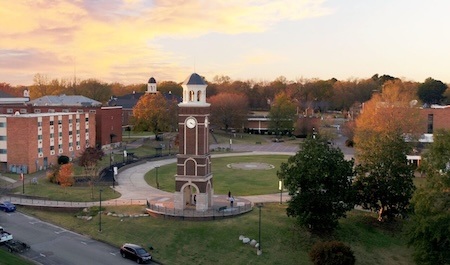
Freed-Hardeman University seal · sourceFreed-Hardeman University · sourceFreed-Hardeman University – Facilities · sourceFreed-Hardeman University – Facilities · source