Admit rate has ranged 58%–78% over the last 5 years — notably volatile. Source: IPEDS via Urban Institute.
Acceptance & SAT from Common Data Set / IPEDS; net price, earnings & graduation from the U.S. Dept. of Education College Scorecard. Figures lag ~1–2 years — verify with the school.
Fresno Pacific University is a small, Christ-centered liberal arts university in California's Central Valley, where faith, community, and practical preparation for the region's needs are woven into the fabric of campus life. It operates as a deeply local institution—over 96% of its students are from California—offering a personalized, values-driven education with particular strength in fields like education, business, and nursing. The vibe is intimate and service-oriented, built on a compact campus where academic, spiritual, and personal formation are explicitly linked.
Admission requirements
Test-optional — scores considered if submitted
Required
High school transcript
Grade point average
College-prep program
TOEFL (non-native English)
Considered (not required)
Class rank
Letters of recommendation
Test scores (SAT/ACT)
Demonstrated competencies
Source: IPEDS Admissions survey (2022) via Urban Institute. Covers formal factors only — it does not reflect essays, extracurriculars, or other holistic criteria.
More details
Undergrad enrollment
1,544
In-state tuition
$36,660
Out-of-state tuition
$36,660
No-Loan Policy
No
Graduation Rate
50%
Meets Full Need
No
Student Body from CA
>96%
Demonstrated Interest
Not considered
Median Earnings (10yr)
$58,896
Outcomes & value
Outcomes & value
Median earnings (10 yr)
$58,896
Value (earnings ÷ net price)
4.3×
Median debt at graduation
$23,146
Graduation rate
50%
First-year retention
72%
Reducing loan balance (3 yr)
53%
Pell (lower-income) share
58%
First-gen share (among federal-aid recipients)
47%
Financial health
2.1 / 3.0Meets the federal financial-responsibility standard
U.S. Dept. of Education Financial Responsibility Composite Score (FY2022-23). Scale −1.0 to 3.0; ≥1.5 meets the standard. Reported for private nonprofit & for-profit institutions only — public universities are state-backed and not scored, so this is a stability signal, not a ranking.
Top-earning majors
Median earnings by field of study (highest credential), ~2 years after completion.
Registered Nursing, Nursing Administration, Nursing Research and Clinical Nursing$100,849
Human Resources Management and Services$49,962
Business Administration, Management and Operations$45,207
Teacher Education and Professional Development, Specific Levels and Methods$30,119
Human Development, Family Studies, and Related Services$28,960
Campus & location
Campus safety
On-campus violent crimes (2024)
0
Per 1,000 students
0.00
On-campus criminal offenses classed as violent (murder/non-negligent manslaughter, rape, robbery, aggravated assault) for the most recent reported year. Source: U.S. Dept. of Education Campus Safety and Security (Clery Act). Counts reflect what’s reported to the school, and urban campuses often report more partly due to non-student incidents nearby — read alongside campus size and setting, not as a standalone safety verdict.
Climate
Pleasant days / yr
94
Summer high
101°F
Winter low
39°F
Annual rain
15.9"
Annual snow
1.2"
Natural-hazard risk
Relatively High
Pleasant days counts days per year with a mean temperature of 55–75°F, a high at or below 90°F, a low at or above 45°F, and little precipitation — a transparent comfort measure, not a weighting we invented. Computed from Open-Meteo ERA5 daily history (2019–2023). Natural-hazard risk is the county’s composite rating from the FEMA National Risk Index.
Deep dive — research, future-scholar output & economic mobility▾
Research output
Institutional h-index
35
Scholarly works
369
Institutional research volume and impact from OpenAlex. The h-index reflects large research universities and will be low for teaching-focused liberal-arts colleges — not a measure of undergraduate quality.
Economic mobility
Mobility rate
3.7%
Bottom → top quintile
37%
From bottom quintile
10%
Mobility rate = the share of students who both start in the bottom household-income quintile and reach the top quintile; bottom → top is that chance conditional on starting at the bottom. Source: Opportunity Insights Mobility Report Cards (Chetty, Friedman, Saez, Turner & Yagan). Reflects 1980–82 birth cohorts, so it’s directional, not current.
Quick answers
What is the acceptance rate at Fresno Pacific University?
Fresno Pacific University's acceptance rate is approximately 64% (Fresno, CA), based on the most recent figures we compiled from public and primary sources.
How much does Fresno Pacific University cost?
At Fresno Pacific University, the average net price (after aid) is about $13,630 per year. Actual cost varies with financial aid and residency.
How many undergraduates attend Fresno Pacific University?
Fresno Pacific University enrolls approximately 1,544 undergraduate students.
Where is Fresno Pacific University located?
Fresno Pacific University is located in Fresno, CA.
Admissions
Admissions at Fresno Pacific are moderately selective, with an that reflects its role as a regional, faith-based institution. The university receives approximately 1,800 applications each cycle. While standardized test scores are considered, the middle 50% SAT range for admitted students is reported between 970 and 1240, with an ACT range of 17-24. The average high school GPA of incoming students is around 3.54. A notable characteristic of the admitted pool is its intensely local composition: more than 96% of FPU students come from California. The rate—the percentage of admitted students who choose to enroll—is relatively low, reported at 17.25% for 2024-25 and 23.7% in 2023, indicating that many admitted students ultimately attend other institutions. The university does not appear to have a binding Early Decision program, and sources indicate that demonstrated interest is not considered in the admissions process.
Earnings = median of students working ~10 years after entry; debt = median of graduates. Value divides 10-yr earnings by one year’s net price — read it as earnings per dollar of annual cost, not a full lifetime ROI; it favors lower-cost schools. Source: U.S. Dept. of Education College Scorecard. Figures lag ~2 years and reflect all students, not your intended major.
Psychology, General
$25,967
Source: U.S. Dept. of Education College Scorecard (field-of-study earnings). Figures cover graduates who received federal aid and lag ~2 years; not all programs report data.
FPU offers a classic liberal arts core augmented by professional and pre-professional programs, with over 100 areas of study. The academic environment is defined by personalized attention, with smaller class sizes compared to larger universities. About 80% of professors hold the highest degree in their field and are committed to research and publishing. The most popular majors cluster in practical, community-oriented fields: Education; Business, Management, Marketing, and Related Support Services; and Public Administration and Social Service Professions. Other strong programs include Nursing, Biblical Studies, Psychology, and the Humanities. The university explicitly connects academic rigor with character development, asserting that employers love to hire its graduates for their "solid academic preparation, strong character and exceptional understanding of their communities." This integration of faith and learning is a stated priority, shaping both curriculum and classroom discussion.
Life on FPU's compact, residential campus is intentionally structured around community, faith, and holistic formation. The university offers a variety of services and programs to support students' "academic, spiritual, and personal formation," including on-campus clubs and ministries. The small campus size means living areas, the library, pool, gym, cafeteria, and classrooms are all in close proximity, fostering a tight-knit atmosphere. Housing and commuter life are designed to encourage engagement, with amenities like a coffee shop, fitness center, and game room. The university handbook outlines clear behavioral standards, stating FPU is "committed to promote the kind of culture that is most conducive to students' academic, social, and spiritual growth and development." This Christ-centered ethos permeates campus activities, as reflected in the university's social media, which highlights integrating "Christ-centered learning into the lives of students." With a total undergraduate enrollment of 1,615, the scale ensures students are known by name, not number.
Graduation rates and post-graduate earnings for FPU alumni reflect its mission of serving a diverse, often student population. The four-year graduation rate is reported at 44%, while the six-year rate is higher. Alumni earnings show steady growth. Data indicates median earnings one year after graduation are approximately $42,313, rising to about $61,378 five years out. Another source reports median earnings of $51,422 six years after graduation, and $63,285 four years after graduation. These figures suggest FPU graduates gain traction in the workforce over time, particularly in the Central Valley's key industries like education, healthcare, and business. The outcomes underscore the university's focus on practical preparation and community embeddedness, aiming to build careers within the region it primarily serves.
FPU is a private university with a published total around $53,638 (including tuition, fees, room, and board), but aggressive financial aid brings the down significantly for most students. The university reports that financial aid covers 74% of tuition, room, and board for the average student. A vast majority—99%—of undergraduate students receive some form of financial aid, with 59% benefiting from federal Pell grants for demonstrated financial need. Merit-based scholarships are also available, with awards ranging from $740 to $7,395 per year, and specific scholarships like the Out-of-State Scholarship offering $4,000 per year for eligible non-California students. The net price—the average cost after grants and scholarships—is a critical figure. While one source lists it at $30,620, the canonical figure provided is $13,630. It's important to note that FPU does not appear to have a "no-loan" policy that meets full need without loans; federal student loans remain a part of many aid packages, and waiving the FAFSA would make a student ineligible for all federal and state aid, including loans.
Fresno Pacific University stands out for its unwavering commitment to being a specific kind of place: a Christ-centered, community-embedded liberal arts college for the Central Valley. It is not trying to be a national brand. Its identity is powerfully local—over 96% of students are Californians—and its academic strengths are deliberately aligned with the region's needs, producing teachers, business leaders, nurses, and counselors. The campus culture is intentionally formative, linking academic work with spiritual and personal development under a shared set of behavioral standards. This creates an environment of known-ness, where small classes and a compact campus foster close relationships between students and the highly credentialed faculty. For students seeking a faith-based education that emphasizes character, service, and practical preparation within a supportive, intimate setting—and who want to build their lives and careers in California—FPU offers a distinctive and purposeful path.
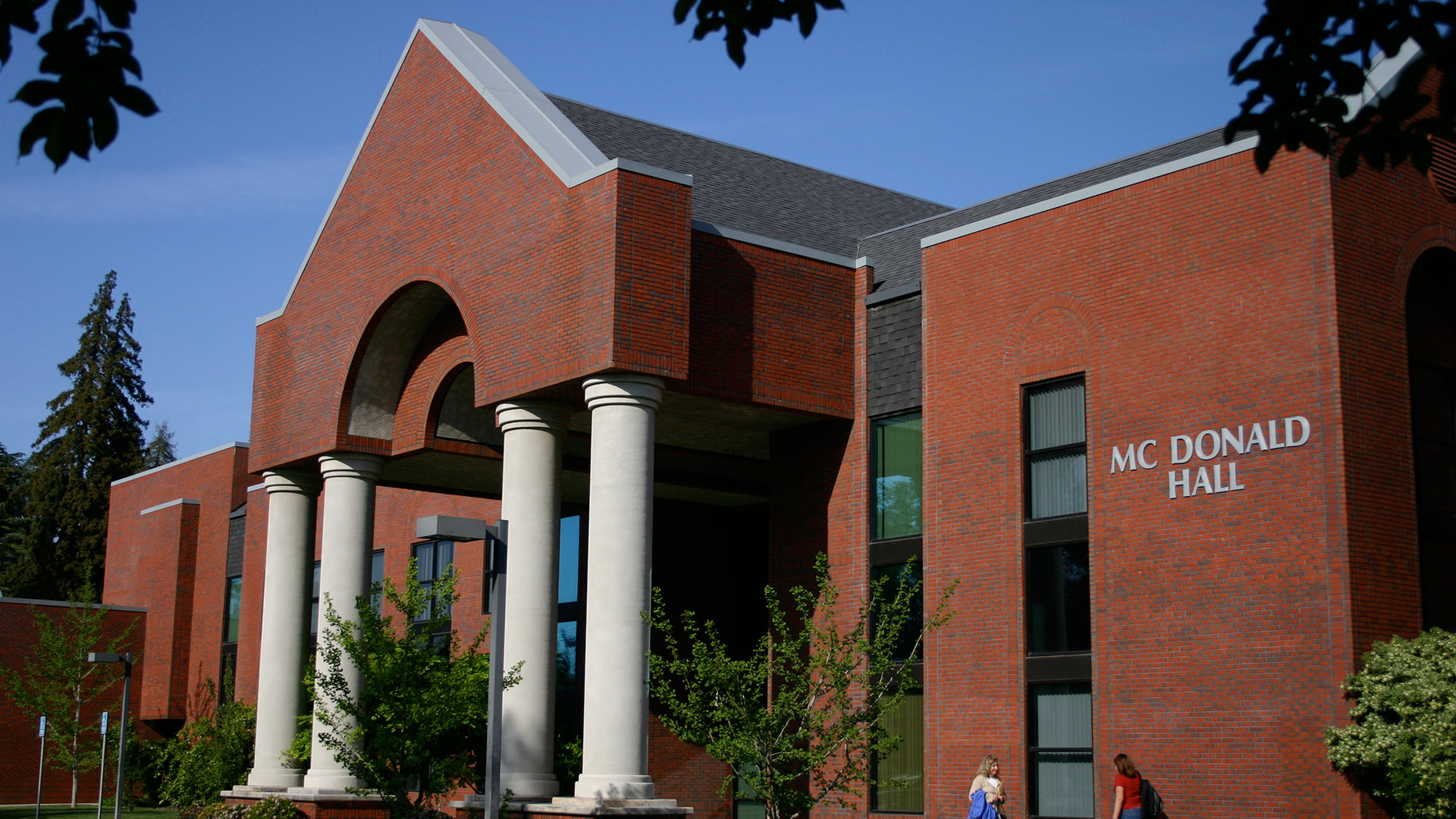
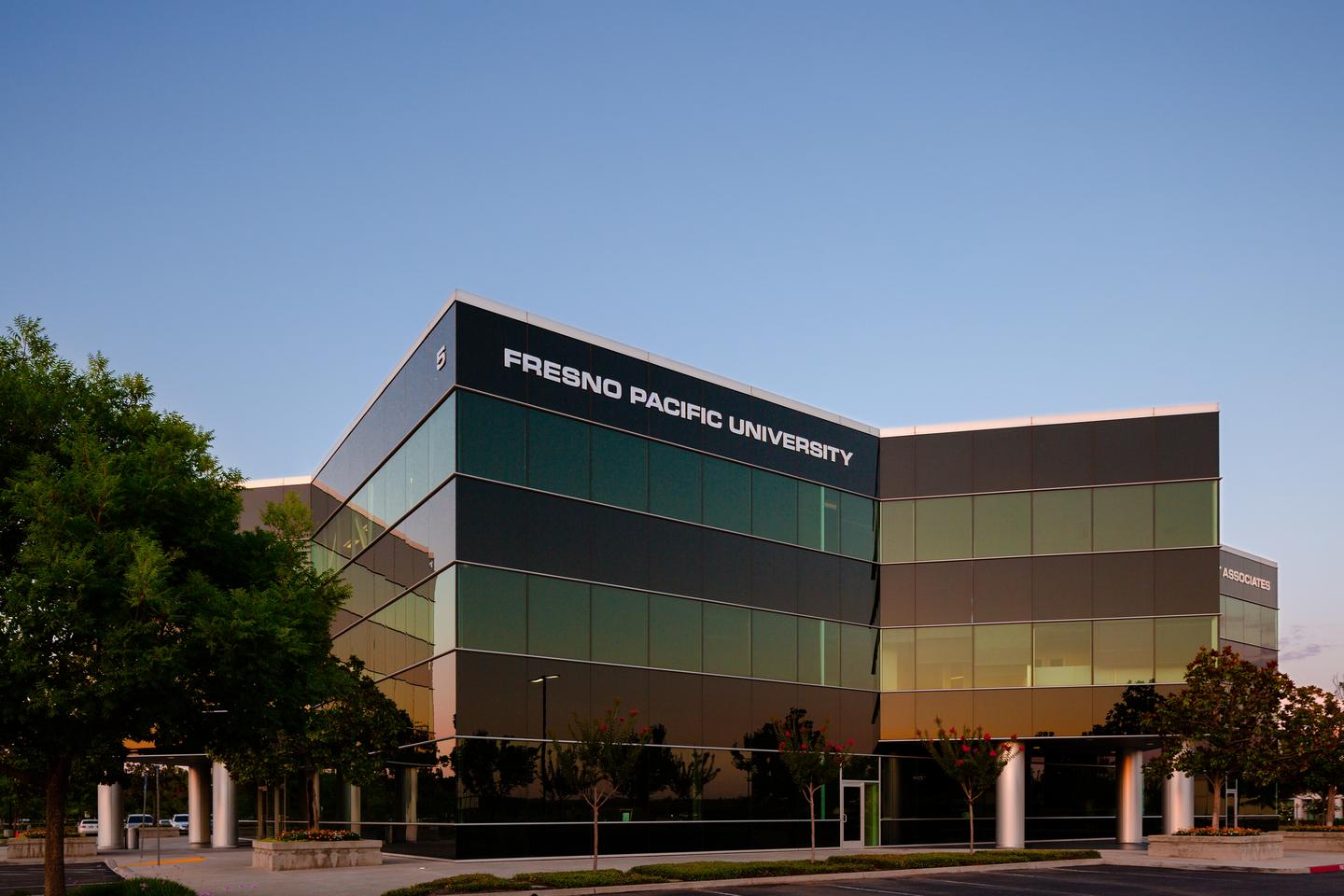
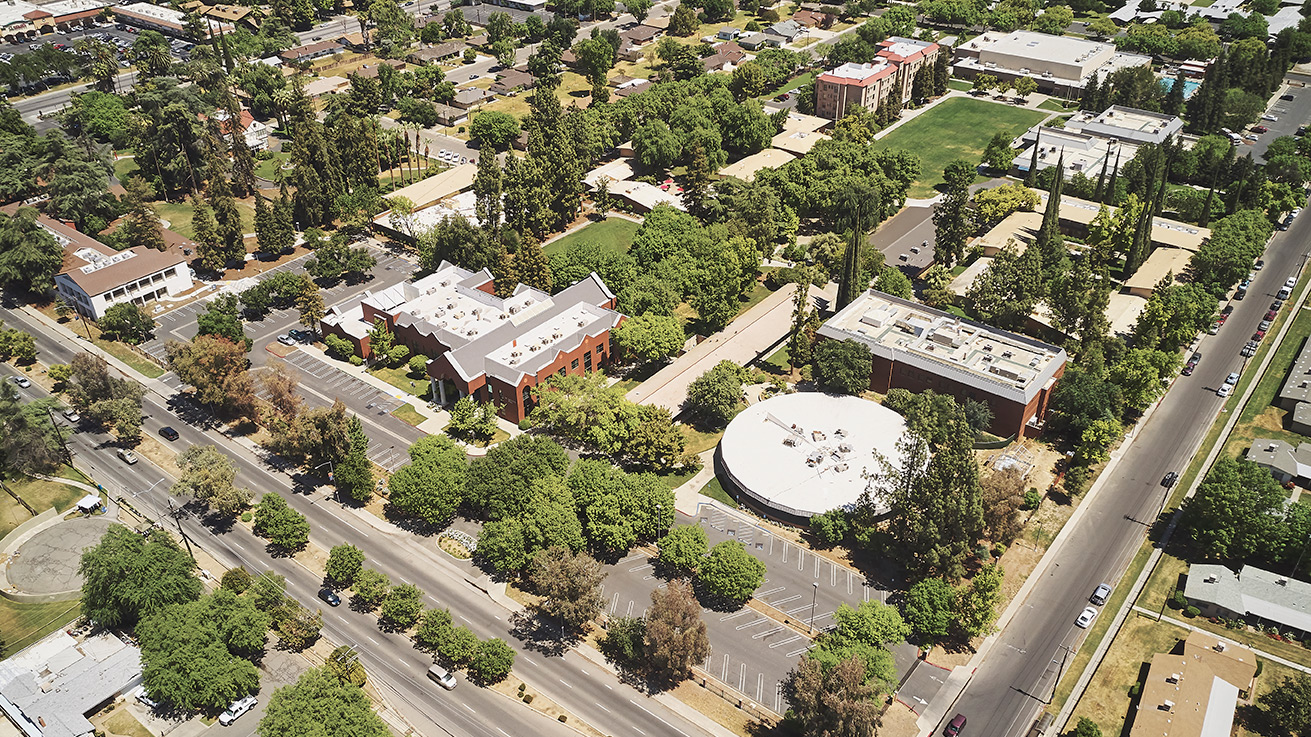
Fresno Pacific University seal · sourceCampuses | Fresno Pacific University · sourceCampuses | Fresno Pacific University · sourceBuildings | Fresno Pacific University · source