Loading…
← All schools
Full Sail University
Winter Park, FLprivate forprofitwww.fullsail.edu/
Avg net price
$38,875
Earnings (10 yr)
$38,219
Graduation rate
44%
Acceptance & SAT from Common Data Set / IPEDS; net price, earnings & graduation from the U.S. Dept. of Education College Scorecard. Figures lag ~1–2 years — verify with the school.
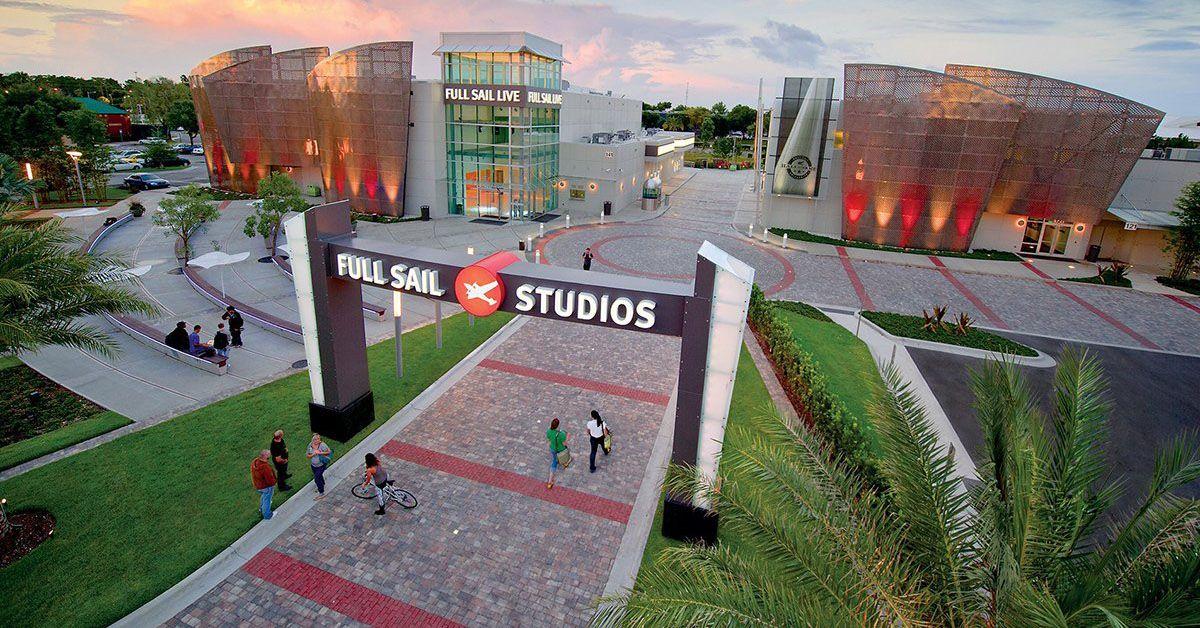
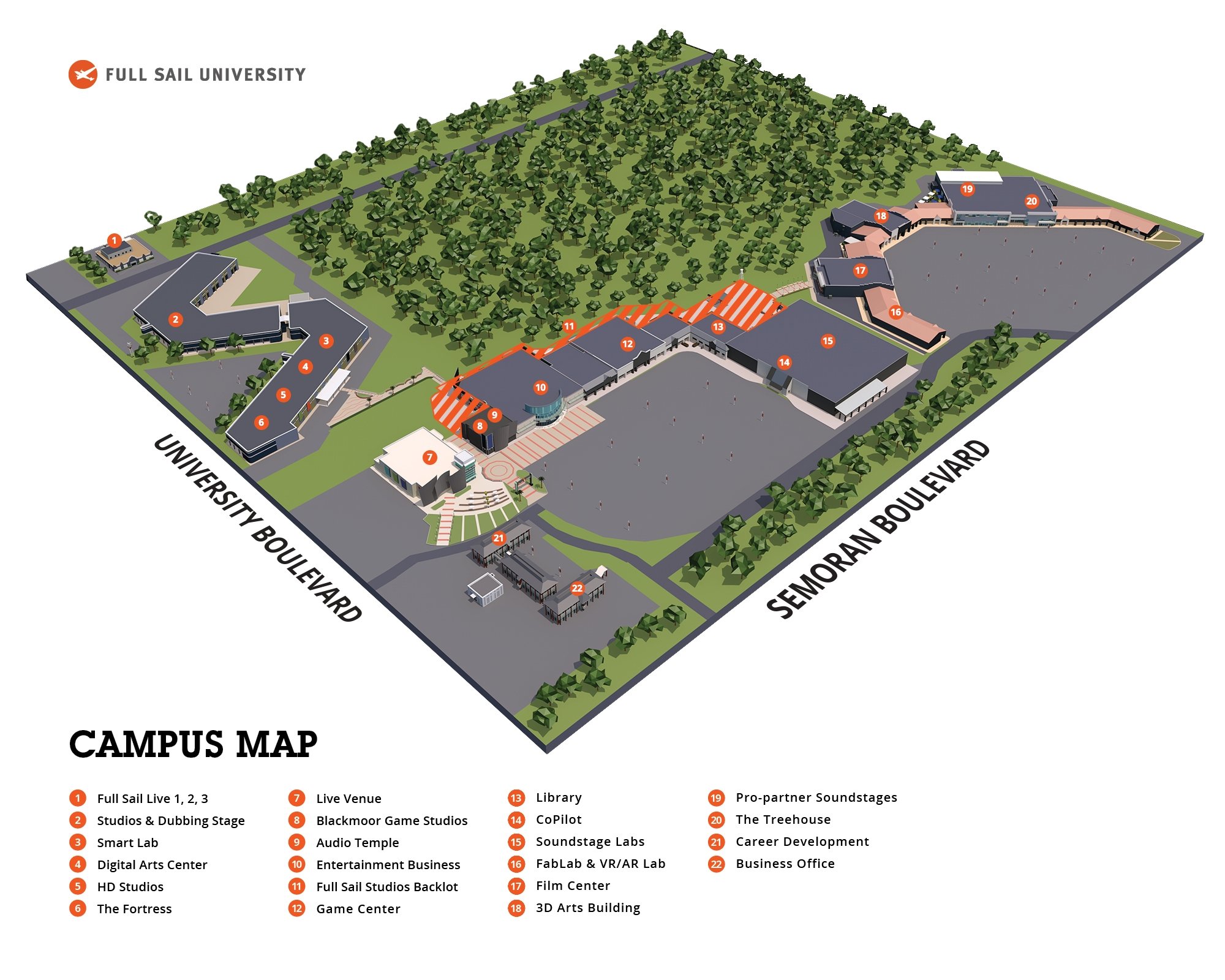
Full Sail University is less a traditional college and more a high-intensity vocational bootcamp for the entertainment and tech industries, housed in a single, sprawling complex in Winter Park, Florida. With an open-door admissions policy and a curriculum laser-focused on hands-on production in fields like audio engineering, game development, and film, it attracts a massive, predominantly online student body of aspiring creators. The experience is defined by accelerated, project-based degree programs, a significant financial investment, and a direct, if sometimes uneven, pipeline into creative careers.
More details
- Undergrad enrollment
- 25,777
- In-state tuition
- $26,906
- Out-of-state tuition
- $26,906
- Graduation Rate
- 44%
- First-Year Retention
- 53.1%
- Out-of-State Students
- 76%
- Median Earnings (10yr)
- $38,219
Outcomes & value
Outcomes & value
- Median earnings (10 yr)
- $38,219
- Value (earnings ÷ net price)
- 1.0×
- Median debt at graduation
- $27,000
- Graduation rate
- 44%
- First-year retention
- 53%
- Reducing loan balance (3 yr)
- 24%
- Pell (lower-income) share
- 34%
- First-gen share (among federal-aid recipients)
- 39%
Financial health
2.0 / 3.0Meets the federal financial-responsibility standard
U.S. Dept. of Education Financial Responsibility Composite Score (FY2022-23). Scale −1.0 to 3.0; ≥1.5 meets the standard. Reported for private nonprofit & for-profit institutions only — public universities are state-backed and not scored, so this is a stability signal, not a ranking.
Top-earning majors
Median earnings by field of study (highest credential), ~2 years after completion.
- Computer Programming$55,042
- Business Administration, Management and Operations$41,565
- Communication and Media Studies$37,208
- Computer Software and Media Applications$34,963
- Drama/Theatre Arts and Stagecraft$30,228
- Design and Applied Arts$29,907
Campus & location
Campus safety
- On-campus violent crimes (2024)
- 0
- Per 1,000 students
- 0.00
On-campus criminal offenses classed as violent (murder/non-negligent manslaughter, rape, robbery, aggravated assault) for the most recent reported year. Source: U.S. Dept. of Education Campus Safety and Security (Clery Act). Counts reflect what’s reported to the school, and urban campuses often report more partly due to non-student incidents nearby — read alongside campus size and setting, not as a standalone safety verdict.
Climate
- Pleasant days / yr
- 136
- Summer high
- 89°F
- Winter low
- 55°F
- Annual rain
- 56.3"
- Natural-hazard risk
- Relatively High
Pleasant days counts days per year with a mean temperature of 55–75°F, a high at or below 90°F, a low at or above 45°F, and little precipitation — a transparent comfort measure, not a weighting we invented. Computed from Open-Meteo ERA5 daily history (2019–2023). Natural-hazard risk is the county’s composite rating from the FEMA National Risk Index.
Deep dive — research, future-scholar output & economic mobility
Research output
- Institutional h-index
- 11
- Scholarly works
- 111
Institutional research volume and impact from OpenAlex. The h-index reflects large research universities and will be low for teaching-focused liberal-arts colleges — not a measure of undergraduate quality.
Economic mobility
- Mobility rate
- 1.5%
- Bottom → top quintile
- 14%
- From bottom quintile
- 11%
Mobility rate = the share of students who both start in the bottom household-income quintile and reach the top quintile; bottom → top is that chance conditional on starting at the bottom. Source: Opportunity Insights Mobility Report Cards (Chetty, Friedman, Saez, Turner & Yagan). Reflects 1980–82 birth cohorts, so it’s directional, not current.
Quick answers
- How much does Full Sail University cost?
- At Full Sail University, the average net price (after aid) is about $38,875 per year. Actual cost varies with financial aid and residency.
- How many undergraduates attend Full Sail University?
- Full Sail University enrolls approximately 25,777 undergraduate students.
- Where is Full Sail University located?
- Full Sail University is located in Winter Park, FL.
Admissions
Full Sail operates on an open admissions model, a stark contrast to the selective gates of traditional universities. Multiple sources characterize its as 100%, indicating that nearly all applicants who meet basic requirements are admitted. The process is streamlined and direct: prospective students are encouraged to contact the admissions department at 800.226.7625 or schedule an interview, with an online application portal available to speed up processing. The university does not appear to prioritize standardized test scores in admissions decisions; one source explicitly states "No SAT scores? Don't care," while another notes that test-taking information is not prominently featured in its profile. The student body is notably large, with total enrollment reported at 27,169 in 2024, and is diverse, with out-of-state students making up 76% of the population and significant Hispanic/Latino (19.56%) and Black or African American (31.97%) representation.
- Open Door Policy: Acceptance rate is widely reported as 100%.
- Process: Heavily driven by direct contact with admissions (phone/ interview) and an online application.
- Student Body: Massive enrollment (27,169 in 2024), highly national, with 76% from out-of-state.
Compare Full Sail University
vs North Carolina A & T State Universityvs Alabama A & M Universityvs Southern University and A & M Collegevs University of Puerto Rico-Rio Piedras
See colleges similar to Full Sail University →Sources
- Full Sail University - IPEDS - Department of Education
- Full Sail University
- Full Sail University Application: About You
- Full Sail University Overview
- Common Data Set: Home
- How To Use a Common Data Set
- Full sail university : r/ApplyingToCollege
- Full Sail University Admissions & Acceptance
- Full Sail University Requirements for Admission
- Full Sail University Statistics
- Full Sail University SAT Scores, ACT Scores, Acceptance Rate & ...