Admit rate has ranged 53%–71% over the last 5 years — notably volatile, though the latest figure above (43%) falls outside that window. Source: IPEDS via Urban Institute.
Acceptance & SAT from Common Data Set / IPEDS; net price, earnings & graduation from the U.S. Dept. of Education College Scorecard. Figures lag ~1–2 years — verify with the school.
Furman University is a selective, private liberal arts college in Greenville, South Carolina, that cultivates a distinctly Southern, pre-professional, and polished campus culture. It combines a rigorous academic core—noted for undergraduate teaching and research—with a sprawling, country-club-like campus and a student body often described as well-dressed, collaborative, and conservative-leaning. The experience is structured and supportive, with a heavy emphasis on outcomes, from high graduation rates to strong mid-career earnings.
Admission requirements
Test-optional — scores considered if submitted
Required
High school transcript
Grade point average
College-prep program
TOEFL (non-native English)
Considered (not required)
Class rank
Letters of recommendation
Test scores (SAT/ACT)
Demonstrated competencies
Source: IPEDS Admissions survey (2022) via Urban Institute. Covers formal factors only — it does not reflect essays, extracurriculars, or other holistic criteria.
More details
Undergrad enrollment
2,379
In-state tuition
$59,770
Out-of-state tuition
$59,770
No-Loan Policy
No
Meets Full Need
No universal policy stated
Most Popular Major
Kinesiology & Exercise Science
Demonstrated Interest
Considered
Median Earnings (10yr)
$68,635
Faculty with Highest Degree
99.1%
Six-Year Graduation Rate Goal
79%
Student Clubs & Organizations
170+
Outcomes & value
Outcomes & value
Median earnings (10 yr)
$68,635
Value (earnings ÷ net price)
2.3×
Median debt at graduation
$23,250
Graduation rate
79%
First-year retention
91%
Reducing loan balance (3 yr)
83%
Pell (lower-income) share
13%
First-gen share (among federal-aid recipients)
12%
Financial health
2.3 / 3.0Meets the federal financial-responsibility standard
U.S. Dept. of Education Financial Responsibility Composite Score (FY2022-23). Scale −1.0 to 3.0; ≥1.5 meets the standard. Reported for private nonprofit & for-profit institutions only — public universities are state-backed and not scored, so this is a stability signal, not a ranking.
Top-earning majors
Median earnings by field of study (highest credential), ~2 years after completion.
Economics$57,318
Business Administration, Management and Operations$47,260
Accounting and Related Services$42,682
Communication and Media Studies$40,140
Romance Languages, Literatures, and Linguistics$37,568
Political Science and Government$36,668
Campus & location
Campus safety
On-campus violent crimes (2024)
6
Per 1,000 students
2.35
On-campus criminal offenses classed as violent (murder/non-negligent manslaughter, rape, robbery, aggravated assault) for the most recent reported year. Source: U.S. Dept. of Education Campus Safety and Security (Clery Act). Counts reflect what’s reported to the school, and urban campuses often report more partly due to non-student incidents nearby — read alongside campus size and setting, not as a standalone safety verdict.
Climate
Pleasant days / yr
104
Summer high
87°F
Winter low
37°F
Annual rain
50.4"
Annual snow
2.4"
Natural-hazard risk
Relatively Moderate
Pleasant days counts days per year with a mean temperature of 55–75°F, a high at or below 90°F, a low at or above 45°F, and little precipitation — a transparent comfort measure, not a weighting we invented. Computed from Open-Meteo ERA5 daily history (2019–2023). Natural-hazard risk is the county’s composite rating from the FEMA National Risk Index.
Deep dive — research, future-scholar output & economic mobility▾
Research output
Institutional h-index
144
Scholarly works
4,617
Institutional research volume and impact from OpenAlex. The h-index reflects large research universities and will be low for teaching-focused liberal-arts colleges — not a measure of undergraduate quality.
Economic mobility
Mobility rate
0.7%
Bottom → top quintile
31%
From bottom quintile
2%
Mobility rate = the share of students who both start in the bottom household-income quintile and reach the top quintile; bottom → top is that chance conditional on starting at the bottom. Source: Opportunity Insights Mobility Report Cards (Chetty, Friedman, Saez, Turner & Yagan). Reflects 1980–82 birth cohorts, so it’s directional, not current.
Quick answers
What is the acceptance rate at Furman University?
Furman University's acceptance rate is approximately 43% (Greenville, SC), based on the most recent figures we compiled from public and primary sources.
What SAT score do you need for Furman University?
Admitted students at Furman University typically score 1260–1430 on the SAT (the middle-50% range). Scores outside this band are still admitted, especially with strong applications.
How much does Furman University cost?
At Furman University, the average net price (after aid) is about $30,308 per year. Actual cost varies with financial aid and residency.
How many undergraduates attend Furman University?
Furman University enrolls approximately 2,379 undergraduate students.
Where is Furman University located?
Furman University is located in Greenville, SC.
Admissions
Furman is a selective institution, admitting roughly 43% of its applicants. The admissions process is , with 55% of the enrolling Class of 2029 choosing not to submit scores. For those who do, the middle 50% SAT range is 1260–1430. The university offers both Early Decision (I and II) and Early Action plans, with a notably higher for binding Early Decision applicants—sources cite rates as high as 73.28% or 86.3% for ED, compared to the overall rate. Demonstrated interest is a factor Furman considers in its admissions process, as indicated in reporting. The goal for the incoming class size is typically around 650 students.
Earnings = median of students working ~10 years after entry; debt = median of graduates. Value divides 10-yr earnings by one year’s net price — read it as earnings per dollar of annual cost, not a full lifetime ROI; it favors lower-cost schools. Source: U.S. Dept. of Education College Scorecard. Figures lag ~2 years and reflect all students, not your intended major.
English Language and Literature, General$35,060
Religion/Religious Studies$33,993
Source: U.S. Dept. of Education College Scorecard (field-of-study earnings). Figures cover graduates who received federal aid and lag ~2 years; not all programs report data.
Furman's academic identity is built on a strong liberal arts foundation fused with a deliberate focus on pre-professional preparation and hands-on learning. The Princeton Review highlights the "strength of its pre-professional curriculum" as a top selling point. Academics are structured around high-impact practices: 100% of students complete writing-intensive courses in their disciplines, 90% undertake a senior capstone, and 39% participate in undergraduate research or creative projects. The faculty is highly credentialed, with 99.1% holding the highest degree in their field. While offering a broad range of majors and minors, the most popular major is Kinesiology and Exercise Science, awarding about 70 degrees annually. The university is ranked #21 for Best Undergraduate Teaching and #44 for Undergraduate Research by U.S. News, underscoring a commitment to an accessible, faculty-led educational experience.
Life on Furman's sprawling campus is active, organized, and carries a distinct Southern social flavor. The community is repeatedly described as "close-knit, supportive, and collaborative." Over 170 clubs and organizations fuel student involvement, ranging from student government and Greek life to groups focused on board games, spikeball, or environmental issues. Observers note a particular campus vibe: "The vibe at Furman is Southern. The students are well dressed, conservative, and open-minded... described as right of center, not the 'new right'." However, this very structured culture has its critics; the student newspaper has published opinion pieces describing an "entrenched and out of touch" student life apparatus that fosters a "milquetoast, anodyne, and kitschy campus culture." The picture that emerges is of a highly participatory but somewhat conventional environment where social norms are clearly felt.
Furman positions itself as an institution that delivers a strong return on investment, with graduation and earnings outcomes that exceed many national averages. The university aims for a six-year graduation rate of 79% for all students (and 72% for Pell Grant recipients). Post-graduate earnings data shows robust mid-career growth: graduates report a median income of $64,492 four years after graduation (7% above the national average), and sources note earnings of $62,799 five years out. One analysis suggests the earnings of an average Furman graduate surpass those of a high school graduate within 24 years. These outcomes validate the university's focus on pre-professional training and structured academic support, translating the liberal arts degree into tangible economic mobility.
Furman's stated tuition price is high, but the university emphasizes comprehensive to improve accessibility. The average grant award for students is $23,041, and the average school grant is $20,263. The —the average cost after aid and scholarships—is a central figure in their communications, with sources citing amounts around $34,947. The university directs all families to its official Net Price Calculator to get an individualized estimate, stating that "most families pay significantly less than the published price." Furman's financial aid packages are based on a review of the FAFSA and other financial information. It is important to note that while Furman offers substantial aid, it is not listed among colleges with a universal "no-loan" policy that replaces all student loans with grants.
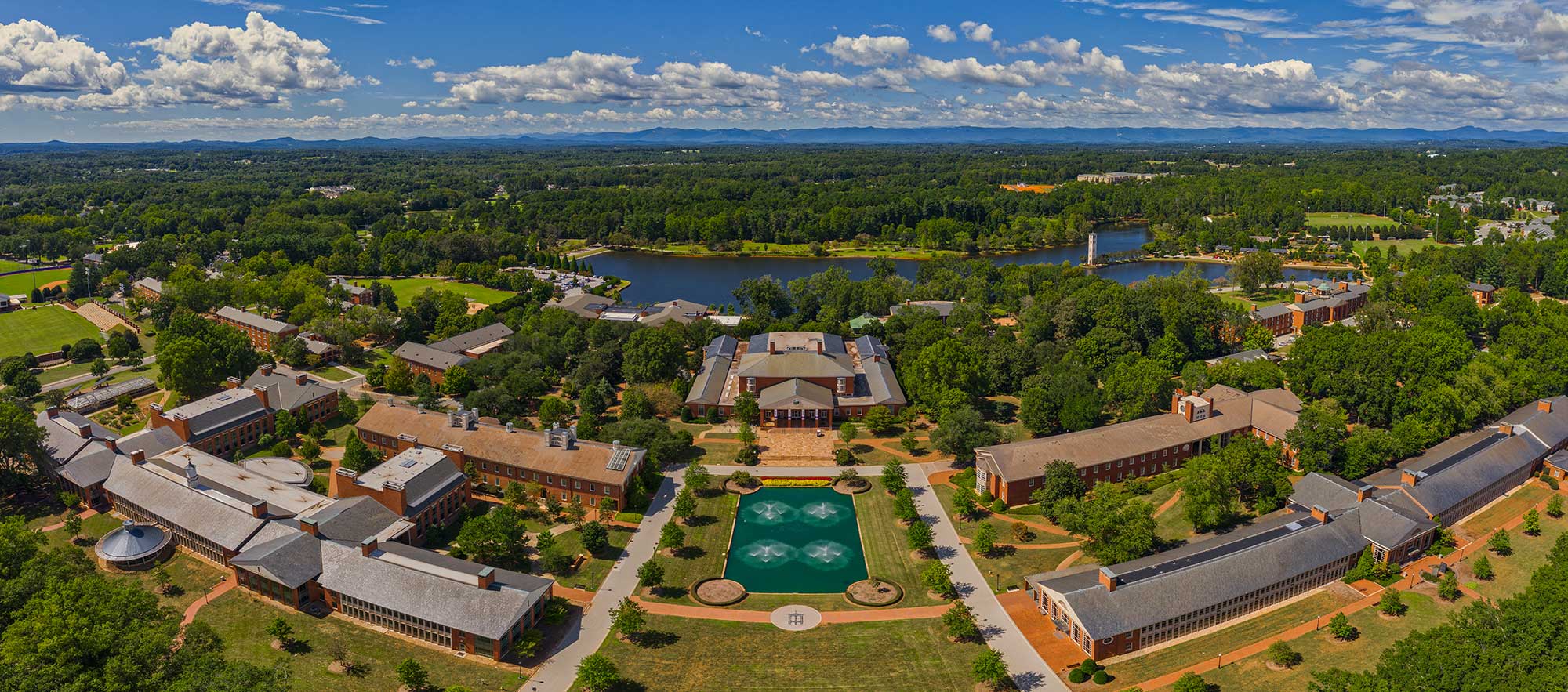
Furman carves out a unique niche as a Southern liberal arts college that successfully marries traditional, polished campus life with serious academic heft and a relentless focus on post-graduate success. It’s not a place for the countercultural or the radically experimental; its strengths lie in structure, support, and execution. The combination of a top-ranked undergraduate teaching faculty, near-universal participation in capstone projects and writing-intensive courses, and a pre-professional tilt creates graduates who are articulate, prepared, and competitive in the job market. The campus itself—a well-manicured, resort-like setting—mirrors the student culture: attractive, orderly, and socially conscious in a particular, Southern-conservative way. For students seeking a beautiful, supportive, and outcomes-oriented college experience within a clear social framework, Furman delivers with remarkable consistency.
Furman University seal · sourceLocation | About | Furman University · sourceVirtual Campus Tour | Furman University · sourceLocation | About | Furman University · source