Loading…
← All schools
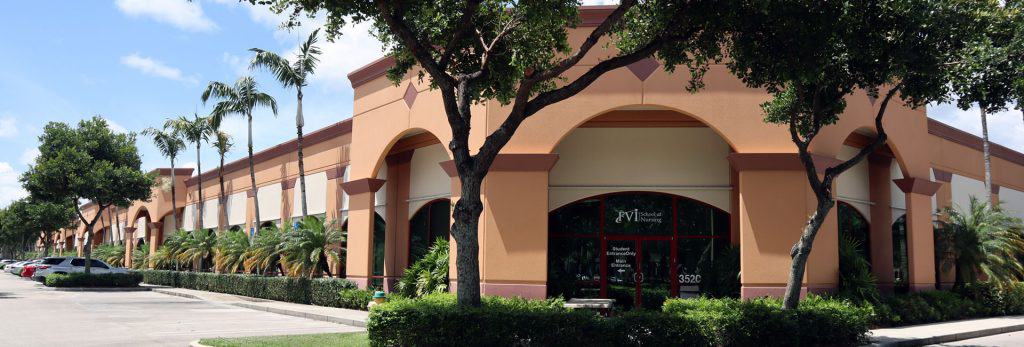
FVI School of Nursing and Technology
Miami, FLprivate forprofitwww.fvi.edu/
Acceptance
74%
Avg net price
$35,514
Admit rate has ranged 61%–100% over the last 3 years — notably volatile. Source: IPEDS via Urban Institute.
Acceptance & SAT from Common Data Set / IPEDS; net price, earnings & graduation from the U.S. Dept. of Education College Scorecard. Figures lag ~1–2 years — verify with the school.
FVI School of Nursing and Technology is a Miami-based vocational school laser-focused on fast-tracking students into healthcare careers, with a scrappy, hands-on approach and standout NCLEX pass rates. Its 25:1 student-faculty ratio and 74% acceptance rate reflect an accessible but rigorous pipeline for aspiring nurses and allied health professionals, though graduation rates and earnings lag behind traditional colleges.
Admission requirements
Test-blind — scores not considered
Required
- High school transcript
Source: IPEDS Admissions survey (2022) via Urban Institute. Covers formal factors only — it does not reflect essays, extracurriculars, or other holistic criteria.
More details
- Undergrad enrollment
- 661
- Median Debt
- $9,000
- Retention Rate
- 79%
- NCLEX Pass Rate
- 93.3% (2026)
- Annual Cost After Aid
- $26,818
- Student-Faculty Ratio
- 25:1
- Median Earnings (6-Years)
- $21,000
Outcomes & value
Outcomes & value
- Median debt at graduation
- $9,396
- Reducing loan balance (3 yr)
- 61%
- Pell (lower-income) share
- 63%
- First-gen share (among federal-aid recipients)
- 52%
Earnings = median of students working ~10 years after entry; debt = median of graduates. Value divides 10-yr earnings by one year’s net price — read it as earnings per dollar of annual cost, not a full lifetime ROI; it favors lower-cost schools. Source: U.S. Dept. of Education College Scorecard. Figures lag ~2 years and reflect all students, not your intended major.
Campus & location
Campus safety
- On-campus violent crimes (2024)
- 0
On-campus criminal offenses classed as violent (murder/non-negligent manslaughter, rape, robbery, aggravated assault) for the most recent reported year. Source: U.S. Dept. of Education Campus Safety and Security (Clery Act). Counts reflect what’s reported to the school, and urban campuses often report more partly due to non-student incidents nearby — read alongside campus size and setting, not as a standalone safety verdict.
Climate
- Pleasant days / yr
- 99
- Summer high
- 88°F
- Winter low
- 63°F
- Annual rain
- 71.3"
- Natural-hazard risk
- Very High
Pleasant days counts days per year with a mean temperature of 55–75°F, a high at or below 90°F, a low at or above 45°F, and little precipitation — a transparent comfort measure, not a weighting we invented. Computed from Open-Meteo ERA5 daily history (2019–2023). Natural-hazard risk is the county’s composite rating from the FEMA National Risk Index.
Quick answers
- What is the acceptance rate at FVI School of Nursing and Technology?
- FVI School of Nursing and Technology's acceptance rate is approximately 74% (Miami, FL), based on the most recent figures we compiled from public and primary sources.
- How much does FVI School of Nursing and Technology cost?
- At FVI School of Nursing and Technology, the average net price (after aid) is about $35,514 per year. Actual cost varies with financial aid and residency.
- How many undergraduates attend FVI School of Nursing and Technology?
- FVI School of Nursing and Technology enrolls approximately 661 undergraduate students.
- Where is FVI School of Nursing and Technology located?
- FVI School of Nursing and Technology is located in Miami, FL.
Admissions
FVI's admissions process is somewhat competitive, with fluctuating between 61-74% across sources—likely reflecting different program cohorts. The school doesn't require SAT/ACT scores or a minimum GPA, prioritizing vocational readiness over traditional academic metrics. Recent data shows 518-704 applicants annually, with enrollment numbers suggesting a rate that hovers around 50-60%. Notably, the applicant pool grew 32.3% in one recent cycle, signaling rising demand for its nursing programs.
Academics
FVI operates with a 25:1 student-faculty ratio, offering 7 allied health and nursing programs—most notably a 72-credit nursing degree blending clinical training with general education. The school boasts a 91-93.3% first-time NCLEX pass rate for nursing graduates, exceeding state averages. Retention sits at , though graduation rates are inconsistently reported (ranging from 0% in some sources to 87-89% in others—likely reflecting different program lengths). Faculty vacancy rates are notable: , suggesting some staffing challenges.
Compare FVI School of Nursing and Technology
See colleges similar to FVI School of Nursing and Technology →Sources
- Common Data Set | data.uchicago.edu - Institutional Analysis
- How To Use a Common Data Set - The College Solution
- [PDF] Common Data Set 2021-2022 - Colorado Department of Education
- Common Data Set: Home
- Where to find Common Data Set (CDS) for college admission statistics
- [PDF] Common Data Set 2018-2019 - University of Florida
- FVI School Of Nursing And Technology Admissions - BigFuture
- FVI School of Nursing and Technology - Data USA
- FVI School of Nursing and Technology - Niche
- FVI School of Nursing and Technology | My Future