Loading…
← All schools
Galen College of Nursing-Tampa Bay
Saint Petersburg, FLprivate forprofitwww.galencollege.edu/tampabay
Avg net price
$28,197
Earnings (10 yr)
$61,480
Graduation rate
63%
Acceptance & SAT from Common Data Set / IPEDS; net price, earnings & graduation from the U.S. Dept. of Education College Scorecard. Figures lag ~1–2 years — verify with the school.
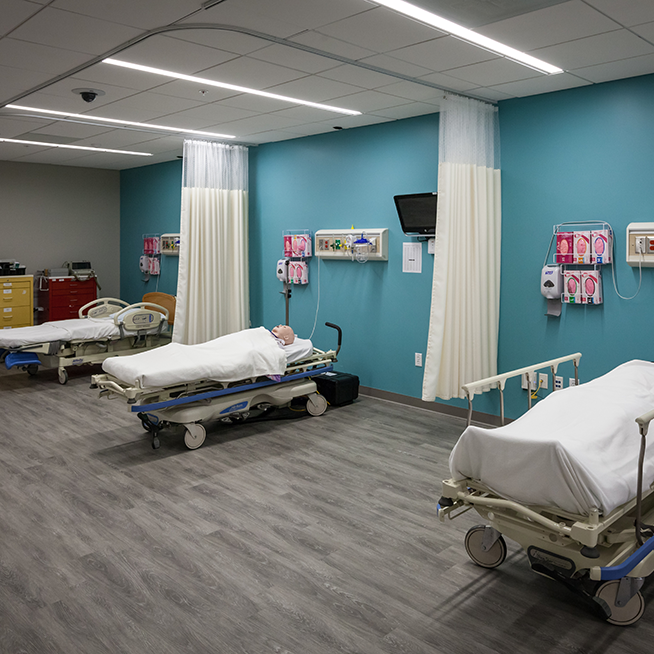
Galen College of Nursing-Tampa Bay is a single-purpose institution with a mission as focused as a laser: it exists to turn out nurses, period. Located in Saint Petersburg, this private, for-profit college operates on an open-admission model, welcoming students into a high-touch, clinically-intensive environment where the curriculum is, in its own words, 'nothing extra, nothing less' than what's needed for the profession. The experience is defined by its modern simulation labs, a student body of over 1,400, and a pragmatic, career-first approach that delivers solid graduation rates and strong early-career earnings for its graduates.
More details
- Undergrad enrollment
- 1,465
- In-state tuition
- $17,048
- Out-of-state tuition
- $17,048
- Tests Required
- ACT, SAT, HESI A2, or TEAS (considered, not required for selection)
- Graduation Rate
- 63%
- Student-Faculty Ratio
- 12:1 - 14:1
- Highest Degree Offered
- Bachelor of Science in Nursing (BSN)
- Median Earnings (10yr)
- $61,480
- Financial Aid Recipients
- 77% of first-year students
Outcomes & value
Outcomes & value
- Median earnings (10 yr)
- $61,480
- Value (earnings ÷ net price)
- 2.2×
- Median debt at graduation
- $24,166
- Graduation rate
- 63%
- First-year retention
- 54%
- Reducing loan balance (3 yr)
- 40%
- Pell (lower-income) share
- 49%
- First-gen share (among federal-aid recipients)
- 49%
Top-earning majors
Median earnings by field of study (highest credential), ~2 years after completion.
- Registered Nursing, Nursing Administration, Nursing Research and Clinical Nursing$63,749
Source: U.S. Dept. of Education College Scorecard (field-of-study earnings). Figures cover graduates who received federal aid and lag ~2 years; not all programs report data.
Compare on earnings: best colleges for Nursing
Campus & location
Campus safety
- On-campus violent crimes (2024)
- 0
On-campus criminal offenses classed as violent (murder/non-negligent manslaughter, rape, robbery, aggravated assault) for the most recent reported year. Source: U.S. Dept. of Education Campus Safety and Security (Clery Act). Counts reflect what’s reported to the school, and urban campuses often report more partly due to non-student incidents nearby — read alongside campus size and setting, not as a standalone safety verdict.
Climate
- Pleasant days / yr
- 133
- Summer high
- 89°F
- Winter low
- 57°F
- Annual rain
- 48.7"
- Natural-hazard risk
- Relatively High
Pleasant days counts days per year with a mean temperature of 55–75°F, a high at or below 90°F, a low at or above 45°F, and little precipitation — a transparent comfort measure, not a weighting we invented. Computed from Open-Meteo ERA5 daily history (2019–2023). Natural-hazard risk is the county’s composite rating from the FEMA National Risk Index.
Quick answers
- How much does Galen College of Nursing-Tampa Bay cost?
- At Galen College of Nursing-Tampa Bay, the average net price (after aid) is about $28,197 per year. Actual cost varies with financial aid and residency.
- How many undergraduates attend Galen College of Nursing-Tampa Bay?
- Galen College of Nursing-Tampa Bay enrolls approximately 1,465 undergraduate students.
- Where is Galen College of Nursing-Tampa Bay located?
- Galen College of Nursing-Tampa Bay is located in Saint Petersburg, FL.
Admissions
The gate is wide open at Galen-Tampa Bay, which operates under a formal open admission policy—meaning all applicants who apply are accepted. There is no competitive selection based on academic standing alone. The process is less about proving you're the best and more about confirming you're prepared and committed. It begins with a scheduled 45-minute admissions appointment with an enrollment counselor, a structured conversation that serves as the official starting point.
While the college has an open door, it does have baseline academic requirements for its nursing programs. Applicants must typically have a minimum high school GPA of 2.50. Standardized test scores (ACT, SAT, HESI A2, or TEAS) are required, but they are 'considered, not required' in a selective sense; they are used for placement and readiness assessment rather than as a filter. Sources indicate accepted students' test scores often fall within a broad range (ACT 10-15, SAT 630-850). The admissions —the percentage of accepted students who enroll—has been reported at 15.61%, suggesting many students apply to Galen as one of several options.
- Contact: Prospective students initiate the process by calling the dedicated Tampa Bay admissions line (727-722-9292) or the general Galen number (877-223-7040).
- Enrollment: The college is sizable for a specialized institution, with a total enrollment of 1,465 students as of 2024, 879 of whom are full-time.
Compare Galen College of Nursing-Tampa Bay
vs LeTourneau Universityvs Queens University of Charlottevs Southwestern Universityvs Austin College
See colleges similar to Galen College of Nursing-Tampa Bay →Sources
- Tampa Bay: Admission Appointment
- Galen College of Nursing-Tampa Bay
- Galen College of Nursing-Tampa Bay
- Galen College of Nursing-Tampa Bay Statistics
- Nursing School in Tampa Bay, FL
- Galen College of Nursing-Tampa Bay — Saint Petersburg, Florida
- Galen College of Nursing-Tampa Bay Acceptance Rate
- Admission Requirements
- Galen College of Nursing-Tampa Bay - Sallie
- Galen College of Nursing-Tampa Bay | Class of 2030 ...
- Galen College of Nursing - Tampa Bay