Admit rate has ranged 59%–63% over the last 5 years, though the latest figure above (58%) falls outside that window. Source: IPEDS via Urban Institute.
Acceptance & SAT from Common Data Set / IPEDS; net price, earnings & graduation from the U.S. Dept. of Education College Scorecard. Figures lag ~1–2 years — verify with the school.
Gallaudet University isn't just a college; it's the epicenter of Deaf culture, language, and intellectual life in the United States. As the world's only university designed to be barrier-free for deaf and hard of hearing students, it offers a singular academic and social experience where American Sign Language (ASL) is the primary mode of communication. This creates a profoundly immersive environment that empowers students academically while fostering a tight-knit, activist community in the heart of Washington, D.C. Its mission-driven focus results in an admissions process that prioritizes fit and communication access over cutthroat selectivity, and a campus life that is vibrant, unique, and entirely its own.
Admission requirements
Test scores required
Required
High school transcript
Grade point average
Letters of recommendation
Test scores (SAT/ACT)
Considered (not required)
College-prep program
Source: IPEDS Admissions survey (2022) via Urban Institute. Covers formal factors only — it does not reflect essays, extracurriculars, or other holistic criteria.
More details
Undergrad enrollment
812
In-state tuition
$19,654
Out-of-state tuition
$19,654
No-Loan Policy
No
Graduation Rate
47%
Meets Full Need
No
ED Share of Class
Not offered
First-Year Retention
71%
Demonstrated Interest
Not considered
Median Earnings (10yr)
$43,101
Students Receiving Financial Aid
90.72%
Outcomes & value
Outcomes & value
Median earnings (10 yr)
$43,101
Value (earnings ÷ net price)
2.7×
Median debt at graduation
$18,000
Graduation rate
47%
First-year retention
71%
Reducing loan balance (3 yr)
56%
Pell (lower-income) share
58%
First-gen share (among federal-aid recipients)
34%
Financial health
1.8 / 3.0Meets the federal financial-responsibility standard
U.S. Dept. of Education Financial Responsibility Composite Score (FY2022-23). Scale −1.0 to 3.0; ≥1.5 meets the standard. Reported for private nonprofit & for-profit institutions only — public universities are state-backed and not scored, so this is a stability signal, not a ranking.
Top-earning majors
Median earnings by field of study (highest credential), ~2 years after completion.
American Sign Language$39,729
Sports, Kinesiology, and Physical Education/Fitness$29,685
Biology, General$25,194
Source: U.S. Dept. of Education College Scorecard (field-of-study earnings). Figures cover graduates who received federal aid and lag ~2 years; not all programs report data.
On-campus criminal offenses classed as violent (murder/non-negligent manslaughter, rape, robbery, aggravated assault) for the most recent reported year. Source: U.S. Dept. of Education Campus Safety and Security (Clery Act). Counts reflect what’s reported to the school, and urban campuses often report more partly due to non-student incidents nearby — read alongside campus size and setting, not as a standalone safety verdict.
Climate
Pleasant days / yr
86
Summer high
87°F
Winter low
31°F
Annual rain
54.8"
Annual snow
10.4"
Natural-hazard risk
Relatively High
Pleasant days counts days per year with a mean temperature of 55–75°F, a high at or below 90°F, a low at or above 45°F, and little precipitation — a transparent comfort measure, not a weighting we invented. Computed from Open-Meteo ERA5 daily history (2019–2023). Natural-hazard risk is the county’s composite rating from the FEMA National Risk Index.
Deep dive — research, future-scholar output & economic mobility▾
Research output
Institutional h-index
124
Scholarly works
2,562
Institutional research volume and impact from OpenAlex. The h-index reflects large research universities and will be low for teaching-focused liberal-arts colleges — not a measure of undergraduate quality.
Economic mobility
Mobility rate
0.6%
Bottom → top quintile
4%
From bottom quintile
13%
Mobility rate = the share of students who both start in the bottom household-income quintile and reach the top quintile; bottom → top is that chance conditional on starting at the bottom. Source: Opportunity Insights Mobility Report Cards (Chetty, Friedman, Saez, Turner & Yagan). Reflects 1980–82 birth cohorts, so it’s directional, not current.
Quick answers
What is the acceptance rate at Gallaudet University?
Gallaudet University's acceptance rate is approximately 58% (Washington, DC), based on the most recent figures we compiled from public and primary sources.
What SAT score do you need for Gallaudet University?
Admitted students at Gallaudet University typically score 780–1022 on the SAT (the middle-50% range). Scores outside this band are still admitted, especially with strong applications.
How much does Gallaudet University cost?
At Gallaudet University, the average net price (after aid) is about $15,845 per year. Actual cost varies with financial aid and residency.
How many undergraduates attend Gallaudet University?
Gallaudet University enrolls approximately 812 undergraduate students.
Where is Gallaudet University located?
Gallaudet University is located in Washington, DC.
Admissions
Gallaudet's admissions process is characterized by its mission-driven accessibility rather than extreme selectivity. With an of 58%, the university maintains a moderately selective posture that is considerably more accessible than many national universities. The middle 50% SAT range for admitted students is 780–1022, indicating a broad academic profile among the incoming class. The university superscores both the SAT and ACT for admissions consideration and for awarding merit scholarships. While the is the definitive source for institutional data, public sources consistently report this accessible admissions rate. Notably, Gallaudet's rate—the percentage of admitted students who choose to enroll—is reported at 60.68%, which is significantly higher than the average for schools with similar acceptance rates, suggesting that those who are admitted are highly likely to commit, drawn by the unique environment Gallaudet offers. The university does not offer an Early Decision plan, so there is no ED advantage or separate ED acceptance rate to consider. Furthermore, according to standard practice for interpreting the Common Data Set, the level of an applicant's demonstrated interest is not a factor considered in admissions decisions, placing the focus squarely on the applicant's academic and personal qualifications.
Earnings = median of students working ~10 years after entry; debt = median of graduates. Value divides 10-yr earnings by one year’s net price — read it as earnings per dollar of annual cost, not a full lifetime ROI; it favors lower-cost schools. Source: U.S. Dept. of Education College Scorecard. Figures lag ~2 years and reflect all students, not your intended major.
Gallaudet promises a "world-class" academic experience built around a bilingual philosophy (ASL and English) and a barrier-free learning environment. The curriculum is expansive, with more than 50 majors and 30 minors available, including a Self-Directed Major option for students with specific interdisciplinary interests. Popular majors, as ranked by degrees awarded, include Business Administration and Management, Political Science and Government, American Sign Language, Social Work, and Communication. The university structures its programs to fit student passions and strengthen critical thinking. Certain programs, like those in the Business Department, report strong internal outcomes; for example, the 5-year average graduate rate for the Business Administration program is 87%. The academic culture is inherently unique, as all instruction and community interaction are designed to be fully accessible in ASL, creating a learning environment where deaf and hard of hearing students are not accommodating themselves to a hearing world, but are instead at the center of the educational experience.
Life at Gallaudet is an immersive cultural experience, forming what is essentially the capital of the Deaf world. The campus is a self-contained, vibrant community where visual communication is the norm. Over 84% of students live in college-owned, -operated, or -affiliated housing, fostering a highly residential and integrated campus vibe. The social scene is active and centered around a rich array of more than 24 clubs and organizations, as well as parties and Greek life, which many students enjoy for the strong sense of community they provide. The Office of Student Affairs and the Student Engagement & Leadership team provide resources and programming tailored to support academic success, wellness, and campus involvement. From art and culture to competitions, student life is designed to be diverse and inclusive, leveraging its prime location in Washington, D.C., for internships and cultural excursions. The Residence Life program explicitly aims to support personal growth and learning outside the classroom, making the residential experience a core component of the Gallaudet journey.
Gallaudet's outcomes reflect its unique student population and mission. The university's graduation rate is 47%. Post-graduation, median earnings for alumni ten years after entry are $43,101. Other sources note average annual earnings for graduates around $40,225. The university has shown improvement in national rankings, recently placing 198th among 436 National Universities in the U.S. News & World Report rankings, which it notes as a "double-digit improvement" from the previous year. It also ranked in the category for Best Value among National Universities. Retention rates, a key indicator of student satisfaction, are reported at 71% for first-year students returning for their sophomore year. It's important to view these outcomes within the context of Gallaudet's mission to serve deaf and hard of hearing students, for whom comparable, barrier-free educational opportunities are exceptionally rare.
Gallaudet is committed to making its unique education financially accessible. The average after grants and scholarships is $15,845. A very high percentage of students—90.72%—receive financial aid, with an average aid package of $32,771. The university promotes scholarship and financial aid opportunities worth up to $80,000 over four years. The standard undergraduate tuition and fees are listed at $20,634 for lower-division students, with room and board adding approximately $16,158. Financial aid at Gallaudet is primarily need-based; the university states it makes "every effort to provide financial aid to students who are able to demonstrate that they are in need of assistance." This need is met through a combination of grants, scholarships, and loans. Direct Unsubsidized Loans are available to all students, regardless of need. The university's materials emphasize that most aid programs require demonstrated financial need, and they do not advertise a "no-loan" policy where all need is met with grants. Instead, after grants and scholarships, remaining need may be met through federal loan programs.
Gallaudet University stands alone. It is not merely a college with robust support services; it is the world's only university designed from the ground up to be a barrier-free, bilingual (ASL/English) institution for deaf and hard of hearing students. This foundational difference creates an academic and social ecosystem unlike any other. Here, deafness is not a disability to be accommodated but the core of a rich cultural and linguistic identity. The classroom dynamic is flipped—students are not straining to lip-read or follow an interpreter; they are engaging directly with professors and peers in a visually centered language. This results in an unparalleled sense of belonging, empowerment, and academic focus. The campus in Washington, D.C., functions as the de facto capital of Deaf America, buzzing with activism, art, and intellectual debate specific to the community. While its graduation and earnings statistics may not compete with elite Ivy League schools, they represent significant achievement within a population that has historically faced profound educational barriers. For the right student—one who is deaf, hard of hearing, or deeply committed to ASL and Deaf culture—Gallaudet offers not just an education, but a transformative homecoming and a launchpad for leadership.
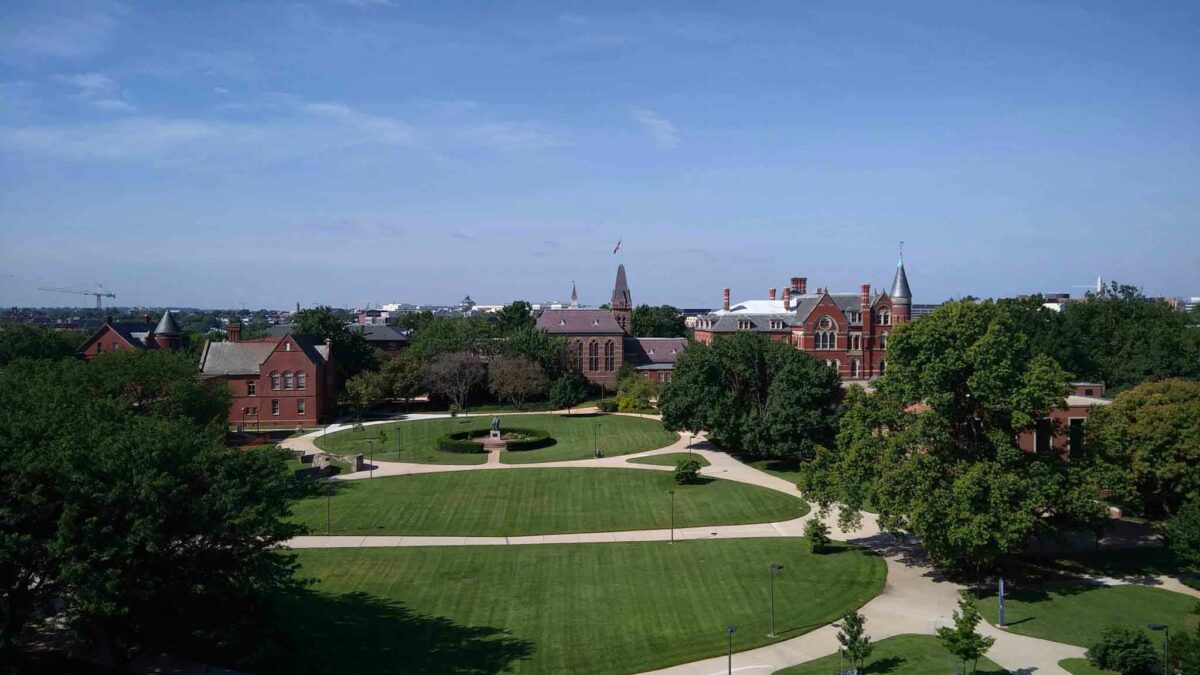
Gallaudet University seal · sourceCampus Design and Planning | Gallaudet University · sourceCampus Design and Planning | Gallaudet University · sourceMap and Directions | Clerc Center · source