Loading…
← All schools
Gemological Institute of America-New York
New York, NYprivate nonprofitwww.gia.edu/gem-education
Avg net price
$18,977
Earnings (10 yr)
$42,588
Acceptance & SAT from Common Data Set / IPEDS; net price, earnings & graduation from the U.S. Dept. of Education College Scorecard. Figures lag ~1–2 years — verify with the school.
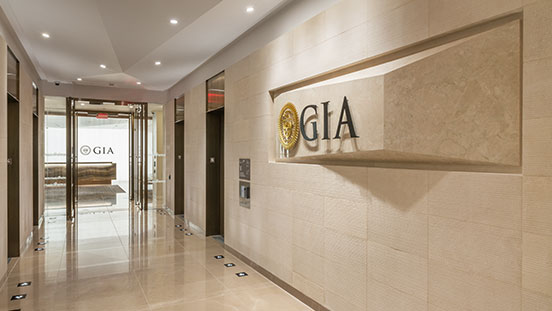
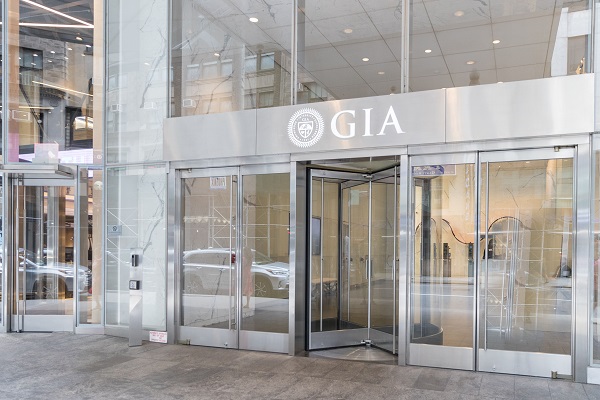
The Gemological Institute of America-New York isn't a traditional liberal arts college; it's a hyper-specialized trade school embedded directly into the global gem and jewelry industry. Located in the International Gem Tower in the heart of Manhattan's Diamond District, GIA offers a singular, career-focused education where students learn to grade diamonds, identify gemstones, and craft jewelry not from textbooks, but from hands-on work with the real thing. Its reputation is its currency, with a GIA certification serving as a global passport in a multi-billion dollar industry.
More details
- Undergrad enrollment
- 160
- Average Debt
- $10,558
- Graduation Rate
- 26.6%
- Median Earnings (10yr)
- $42,588
Outcomes & value
Outcomes & value
- Median earnings (10 yr)
- $42,588
- Value (earnings ÷ net price)
- 2.2×
- Reducing loan balance (3 yr)
- 81%
- Pell (lower-income) share
- 4%
- First-gen share (among federal-aid recipients)
- 33%
Earnings = median of students working ~10 years after entry; debt = median of graduates. Value divides 10-yr earnings by one year’s net price — read it as earnings per dollar of annual cost, not a full lifetime ROI; it favors lower-cost schools. Source: U.S. Dept. of Education College Scorecard. Figures lag ~2 years and reflect all students, not your intended major.
Campus & location
Campus safety
- On-campus violent crimes (2024)
- 0
On-campus criminal offenses classed as violent (murder/non-negligent manslaughter, rape, robbery, aggravated assault) for the most recent reported year. Source: U.S. Dept. of Education Campus Safety and Security (Clery Act). Counts reflect what’s reported to the school, and urban campuses often report more partly due to non-student incidents nearby — read alongside campus size and setting, not as a standalone safety verdict.
Climate
- Pleasant days / yr
- 96
- Summer high
- 82°F
- Winter low
- 29°F
- Annual rain
- 42"
- Annual snow
- 19.2"
- Natural-hazard risk
- Relatively High
Pleasant days counts days per year with a mean temperature of 55–75°F, a high at or below 90°F, a low at or above 45°F, and little precipitation — a transparent comfort measure, not a weighting we invented. Computed from Open-Meteo ERA5 daily history (2019–2023). Natural-hazard risk is the county’s composite rating from the FEMA National Risk Index.
Quick answers
- How much does Gemological Institute of America-New York cost?
- At Gemological Institute of America-New York, the average net price (after aid) is about $18,977 per year. Actual cost varies with financial aid and residency.
- How many undergraduates attend Gemological Institute of America-New York?
- Gemological Institute of America-New York enrolls approximately 160 undergraduate students.
- Where is Gemological Institute of America-New York located?
- Gemological Institute of America-New York is located in New York, NY.
Admissions
Admission to GIA-New York is defined by its open-access, vocational mission rather than selective academic gatekeeping. The process is straightforward and focused on basic qualifications: all applicants must have a high school diploma or equivalent and be at least 18 years old. The is effectively 100% for those who meet these basic requirements, with no SAT, ACT, or GPA cutoffs required. This open-door policy reflects its role as a professional training institute. The total enrollment is small, reported at 160 students in 2024, with a notably low graduation rate of 26.6% over a normal timeframe. The admissions office can be reached at 1-800-421-7250.
Academics
The curriculum at GIA is laser-focused on practical, industry-specific skills, offering no traditional majors in the humanities or sciences. Programs are intensive and hands-on, designed to impart "practical, in-depth, on-the-job skills and knowledge." Esteemed programs include the Graduate Gemologist, Graduate Jeweler, and Jewelry Design & Technology diplomas, which are considered the gold standard credentials in the field. The Graduate Gemologist program, in particular, is a cornerstone, teaching students to grade diamonds and identify gemstones using the institute's globally recognized methodology. The academic culture is that of a trade school: students are there to master a craft, with coursework centered entirely on gemology, jewelry manufacturing arts, and bench jewelry. Online discussions among students and professionals highlight that the value of a GIA education lies almost entirely in the prestige and global recognition of its certification, which is seen as essential for career advancement in the gem and jewelry industry.
Compare Gemological Institute of America-New York
See colleges similar to Gemological Institute of America-New York →Sources
- Common Data Set 2024-2025
- Common Data Set Explorer 2026: Compare 100 Colleges
- Gemological Institute of America-New York Statistics
- Gemological Institute of America-New York - College Scorecard
- Gemological Institute of America-New York
- Admissions
- Gemological Institute of America - New York
- GIA Acceptance Rate | Study in Carlsbad - AcademicJobs.com
- Gemological Institute of America-New York Academic Data
- CLASS OF 2029 PROFILE | Admissions