Admit rate has ranged 71%–81% over the last 5 years — notably volatile. Source: IPEDS via Urban Institute.
Acceptance & SAT from Common Data Set / IPEDS; net price, earnings & graduation from the U.S. Dept. of Education College Scorecard. Figures lag ~1–2 years — verify with the school.
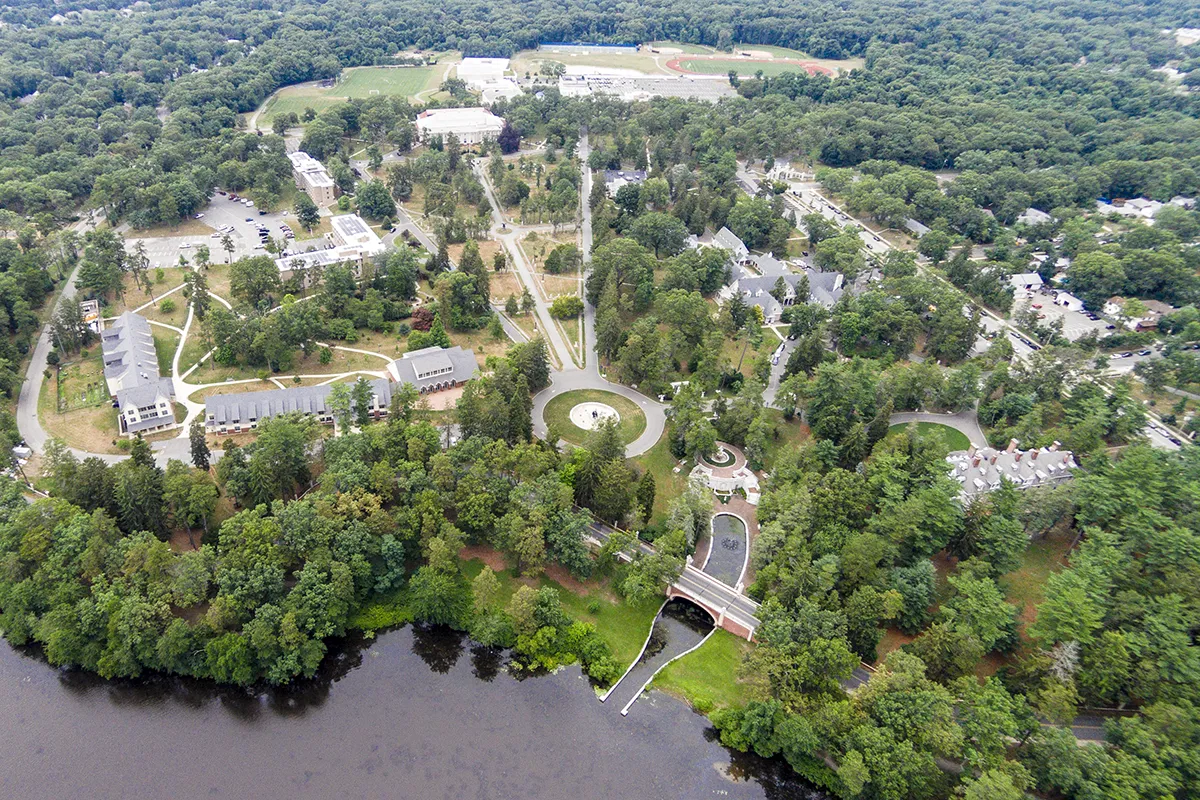
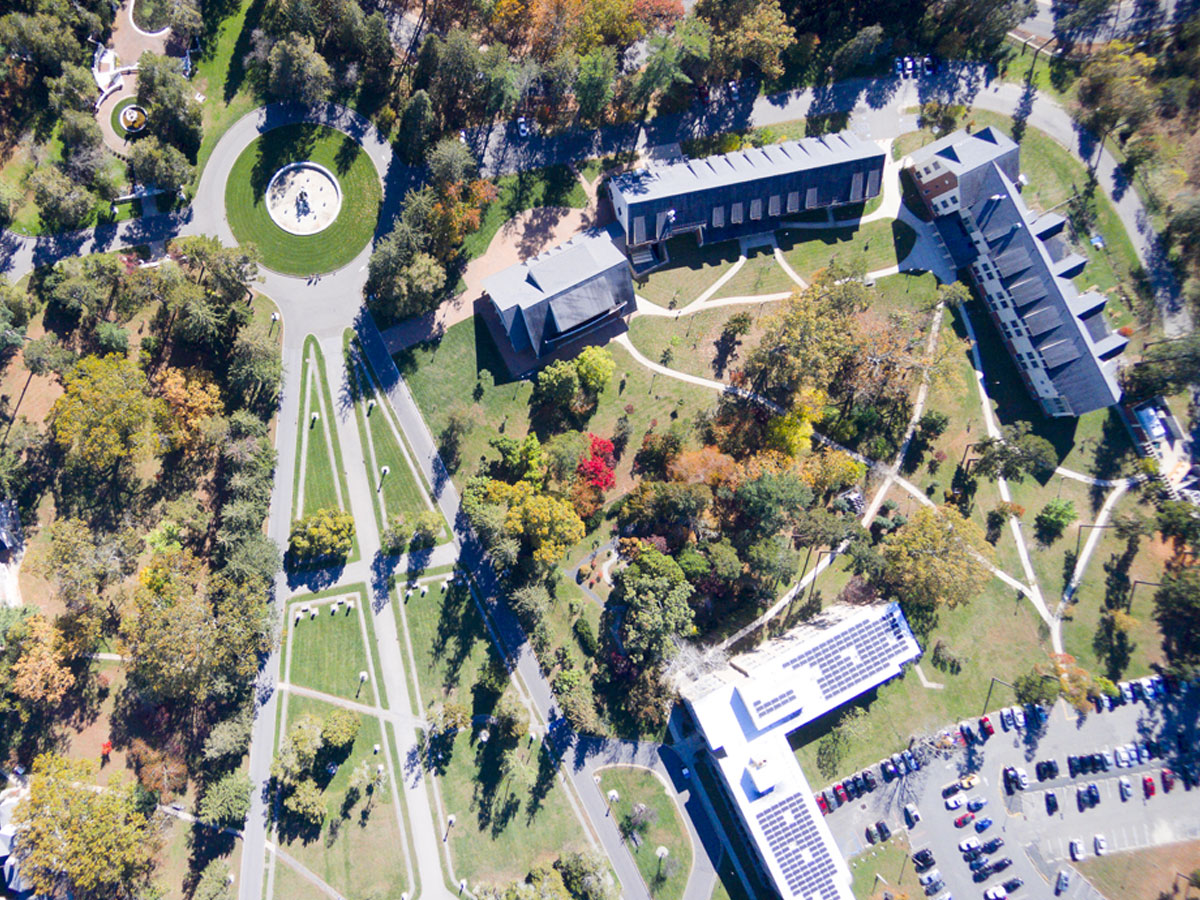
Georgian Court University, anchored on a historic 156-acre estate in Lakewood, New Jersey, operates as a small, Catholic liberal arts institution with a distinctly personal touch. Its identity is shaped by a close-knit, majority-female community, a focus on high-demand professional programs like nursing and business, and a mission-driven approach that emphasizes social mobility for its students. This isn't a place of cutthroat competition, but of accessible, supportive pathways to a degree.
Admission requirements
Test-optional — scores considered if submitted
Required
High school transcript
Grade point average
Letters of recommendation
College-prep program
TOEFL (non-native English)
Considered (not required)
Class rank
Test scores (SAT/ACT)
Demonstrated competencies
Source: IPEDS Admissions survey (2022) via Urban Institute. Covers formal factors only — it does not reflect essays, extracurriculars, or other holistic criteria.
More details
Undergrad enrollment
1,195
In-state tuition
$37,260
Out-of-state tuition
$37,260
Campus Housing
31% live on campus
Popular Majors
Nursing, Business Administration
Graduation Rate
54%
Median Earnings (10yr)
$53,096
Merit Scholarship Range
Up to $19,000
Student-to-Faculty Ratio
13:1
Outcomes & value
Outcomes & value
Median earnings (10 yr)
$53,096
Value (earnings ÷ net price)
2.8×
Median debt at graduation
$21,816
Graduation rate
54%
First-year retention
76%
Reducing loan balance (3 yr)
58%
Pell (lower-income) share
33%
First-gen share (among federal-aid recipients)
42%
Financial health
2.2 / 3.0Meets the federal financial-responsibility standard
U.S. Dept. of Education Financial Responsibility Composite Score (FY2022-23). Scale −1.0 to 3.0; ≥1.5 meets the standard. Reported for private nonprofit & for-profit institutions only — public universities are state-backed and not scored, so this is a stability signal, not a ranking.
Top-earning majors
Median earnings by field of study (highest credential), ~2 years after completion.
Registered Nursing, Nursing Administration, Nursing Research and Clinical Nursing$71,015
English Language and Literature, General$39,369
Business Administration, Management and Operations$37,568
History$37,568
Sports, Kinesiology, and Physical Education/Fitness$33,993
Biology, General
Campus & location
Campus safety
On-campus violent crimes (2024)
4
Per 1,000 students
2.51
On-campus criminal offenses classed as violent (murder/non-negligent manslaughter, rape, robbery, aggravated assault) for the most recent reported year. Source: U.S. Dept. of Education Campus Safety and Security (Clery Act). Counts reflect what’s reported to the school, and urban campuses often report more partly due to non-student incidents nearby — read alongside campus size and setting, not as a standalone safety verdict.
Climate
Pleasant days / yr
89
Summer high
84°F
Winter low
30°F
Annual rain
51.9"
Annual snow
13"
Natural-hazard risk
Relatively High
Pleasant days counts days per year with a mean temperature of 55–75°F, a high at or below 90°F, a low at or above 45°F, and little precipitation — a transparent comfort measure, not a weighting we invented. Computed from Open-Meteo ERA5 daily history (2019–2023). Natural-hazard risk is the county’s composite rating from the FEMA National Risk Index.
Deep dive — research, future-scholar output & economic mobility▾
Research output
Institutional h-index
46
Scholarly works
620
Institutional research volume and impact from OpenAlex. The h-index reflects large research universities and will be low for teaching-focused liberal-arts colleges — not a measure of undergraduate quality.
Economic mobility
Mobility rate
2.1%
Bottom → top quintile
22%
From bottom quintile
9%
Mobility rate = the share of students who both start in the bottom household-income quintile and reach the top quintile; bottom → top is that chance conditional on starting at the bottom. Source: Opportunity Insights Mobility Report Cards (Chetty, Friedman, Saez, Turner & Yagan). Reflects 1980–82 birth cohorts, so it’s directional, not current.
Quick answers
What is the acceptance rate at Georgian Court University?
Georgian Court University's acceptance rate is approximately 79% (Lakewood, NJ), based on the most recent figures we compiled from public and primary sources.
How much does Georgian Court University cost?
At Georgian Court University, the average net price (after aid) is about $19,285 per year. Actual cost varies with financial aid and residency.
How many undergraduates attend Georgian Court University?
Georgian Court University enrolls approximately 1,195 undergraduate students.
Where is Georgian Court University located?
Georgian Court University is located in Lakewood, NJ.
Admissions
Georgian Court's admissions process is characterized by accessibility rather than exclusivity. The university reports receiving thousands of applications annually, with an that reflects its less-selective posture. Applicants can use the Common Application, and the regular decision deadline extends into August, offering flexibility. While standardized test scores (SAT and ACT) are considered, the process appears holistic, with high school GPA being a noted factor. The incoming class demographics show a significant gender imbalance, with women comprising a large majority of admitted students. The university does not offer Early Action, and while sources discuss Early Decision programs in general, no specific Early Decision policy or acceptance rate for Georgian Court is detailed in the provided materials.
Key Application Details:
Application Platform: Accepts the Common Application.
Regular Decision Deadline: August 15.
Selectivity: Less selective; the process is accessible to a broad range of applicants.
Class Profile: The admitted student body is overwhelmingly female.
Earnings = median of students working ~10 years after entry; debt = median of graduates. Value divides 10-yr earnings by one year’s net price — read it as earnings per dollar of annual cost, not a full lifetime ROI; it favors lower-cost schools. Source: U.S. Dept. of Education College Scorecard. Figures lag ~2 years and reflect all students, not your intended major.
$32,925
Social Work$32,382
Psychology, General$32,213
Source: U.S. Dept. of Education College Scorecard (field-of-study earnings). Figures cover graduates who received federal aid and lag ~2 years; not all programs report data.
Academics at Georgian Court are defined by an intimate scale and a practical orientation. The student-to-faculty ratio of 13:1 and the guarantee of zero classes with more than 50 students create an environment where personalized attention is the norm, not the exception. The curriculum is built around coherent majors requiring at least 30 credits within a discipline. The university has recently earned its highest placement in over five years in the U.S. News & World Report rankings, a point of institutional pride. While offering a range of programs, student demand heavily skews toward direct-career pathways: the most popular undergraduate majors are in high-demand fields like Nursing and Business Administration. Other notable areas of study include Multi/Interdisciplinary Studies, English, and Visual and Performing Arts. This focus suggests a student body pragmatically oriented toward securing professional credentials upon graduation.
Life on GCU's sprawling, park-like campus revolves around a deliberately cultivated sense of community. Described by students as close-knit, diverse, and friendly, the atmosphere is actively fostered through a roster of over 40 clubs and organizations focused on common interests, causes, volunteerism, and hobbies. Residential life is a component of this community, with about a third of students living in college-owned, -operated, or -affiliated housing; the majority live off-campus. The university promotes on-campus living as a way to be part of a "vibrant community," enjoying short walks to classes and facilities while engaging fully in student life. This setup suggests a commuter-influenced culture where campus buzz is concentrated but not all-encompassing, placing a premium on organized activities to build connections.
Georgian Court's outcomes narrative is one of upward mobility and steady returns. A key point of pride is its performance in social mobility rankings, having recently achieved its highest placement in over five years in U.S. News & World Report's rankings for Top Performers on Social Mobility. This indicates success in graduating students from lower-income backgrounds. Improvements in student retention and graduation rates have been cited as drivers behind recent ranking increases. While specific long-term salary data varies, the institution's focus on nursing, business, and healthcare suggests alignment with stable career fields. The graduation rate itself is a central metric of the university's effectiveness in shepherding students to degree completion.
Georgian Court employs significant institutional aid to make attendance feasible. The university invests a substantial annual budget into financial aid, awarding merit-based scholarships up to $19,000 per student. First-year merit awards are tiered, with named scholarships like the Trustee ($18,000), Presidential ($17,000), and Dean's ($14,000) scholarships. Need-based grants are also part of the package. The result is that virtually all full-time beginning undergraduates receive grant or scholarship aid, with a high percentage of students benefiting from federal Pell grants. The —the cost after scholarships and grants—is a central figure for families. While the university details federal loan programs for graduate and undergraduate students, the provided sources do not specify a institutional "no-loan" policy that meets full need without loans for qualifying students.
Georgian Court carves out its niche by being unapologetically specific. It is not a large research university nor a hyper-competitive liberal arts college. Instead, it stands out for its singular environment—a vast, estate-like campus fostering a tight community—combined with a practical academic mission. Its 13:1 student-faculty ratio and class-size guarantee deliver on the promise of a small, personalized education, a claim many institutions make but few can so concretely quantify. Its recent rise in social mobility rankings isn't just a data point; it's evidence of a core institutional ethos: providing accessible, supportive pathways to degrees in fields like nursing and business that directly translate to economic stability for its students. This is a university that knows what it is: a vehicle for upward mobility, wrapped in the supportive traditions of a Catholic liberal arts education and delivered on a scale where students are seen as individuals, not numbers.
Georgian Court University seal · sourceGeorgian Court University | Lakewood, New Jersey · sourceAerial View of GCU | Georgian Court University | Lakewood, New Jersey · sourceGeorgian Court University Sells 42 Acres to Beth Medrash Govoha to Expedite the Launch and Expansion of GCU's Master Plan | Georgian Court University | Lakewood, New Jersey · source