Loading…
← All schools
GoodFellas Barber College
Little Rock, ARprivate forprofitwww.gfbc.edu/
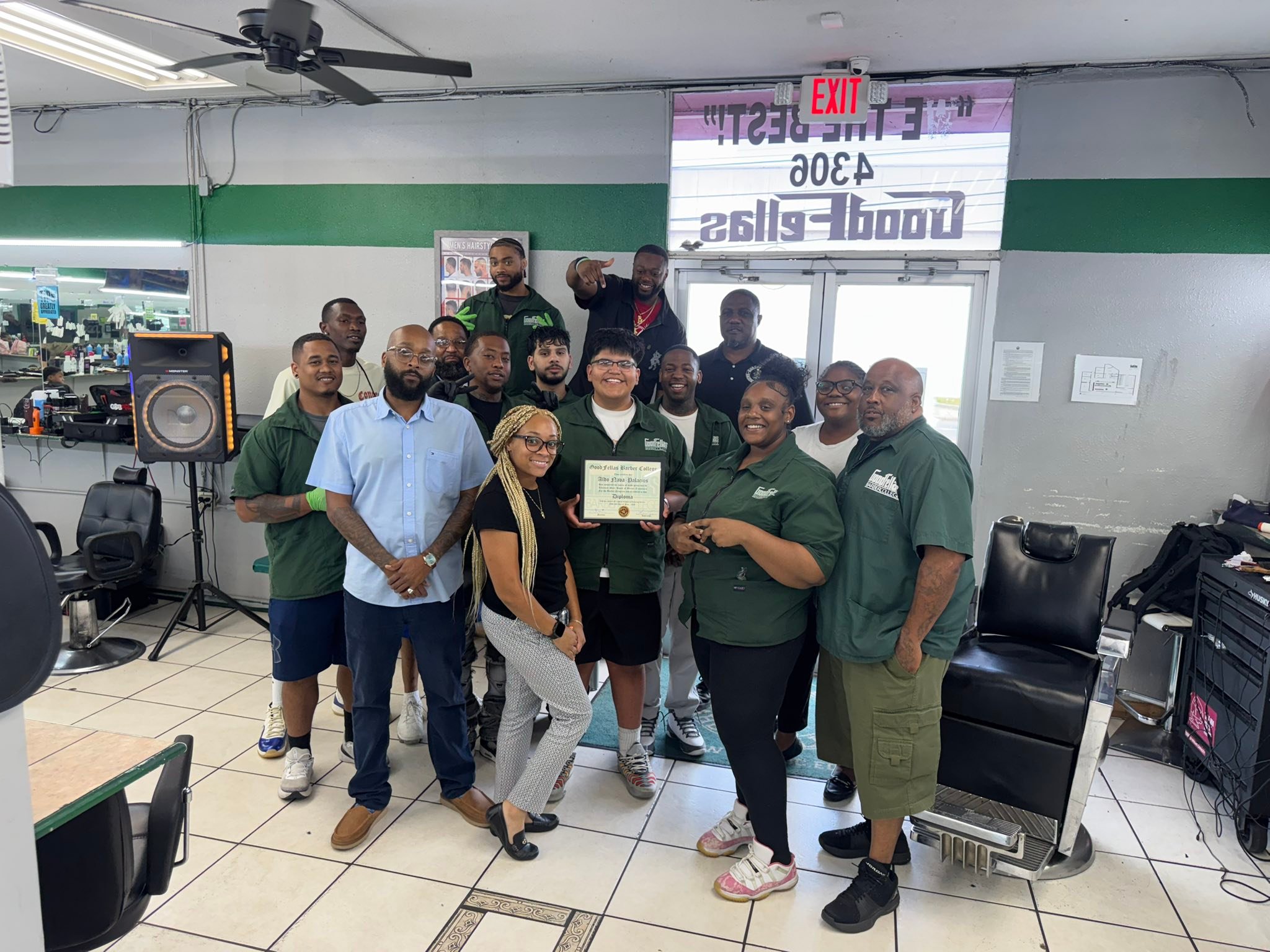
GoodFellas Barber College is a hyper-specialized, for-profit trade school in Little Rock, Arkansas, with a singular, unapologetic focus: turning out skilled barbers. With a tiny, urban campus of just 34 undergraduates and a graduation rate hovering around 30%, it’s a no-frills, high-stakes environment where success is measured not by a GPA but by a steady hand and a sharp blade. Its character is defined by its intensity and its direct pipeline to a hands-on trade.
More details
- Undergrad enrollment
- 32
- Setting
- Urban
- Sole Major
- Barbering/Barber
- Program Type
- Certificate
- Graduation Rate
- 28-30%
- % Receiving Grant Aid
- 71-74%
- Average Federal Grant
- $6,594
- Full-Time / Part-Time
- 73% / 27%
- Average Annual Graduates
- ~11
- First-Year Retention Rate
- 86%
- Average Debt at Graduation
- $16,500
Outcomes & value
Outcomes & value
- Median debt at graduation
- $16,500
- Pell (lower-income) share
- 74%
Earnings = median of students working ~10 years after entry; debt = median of graduates. Value divides 10-yr earnings by one year’s net price — read it as earnings per dollar of annual cost, not a full lifetime ROI; it favors lower-cost schools. Source: U.S. Dept. of Education College Scorecard. Figures lag ~2 years and reflect all students, not your intended major.
Financial health
2.8 / 3.0Meets the federal financial-responsibility standard
U.S. Dept. of Education Financial Responsibility Composite Score (FY2022-23). Scale −1.0 to 3.0; ≥1.5 meets the standard. Reported for private nonprofit & for-profit institutions only — public universities are state-backed and not scored, so this is a stability signal, not a ranking.
Campus & location
Campus safety
- On-campus violent crimes (2024)
- 0
On-campus criminal offenses classed as violent (murder/non-negligent manslaughter, rape, robbery, aggravated assault) for the most recent reported year. Source: U.S. Dept. of Education Campus Safety and Security (Clery Act). Counts reflect what’s reported to the school, and urban campuses often report more partly due to non-student incidents nearby — read alongside campus size and setting, not as a standalone safety verdict.
Climate
- Pleasant days / yr
- 82
- Summer high
- 91°F
- Winter low
- 37°F
- Annual rain
- 52"
- Annual snow
- 3.1"
- Natural-hazard risk
- Relatively High
Pleasant days counts days per year with a mean temperature of 55–75°F, a high at or below 90°F, a low at or above 45°F, and little precipitation — a transparent comfort measure, not a weighting we invented. Computed from Open-Meteo ERA5 daily history (2019–2023). Natural-hazard risk is the county’s composite rating from the FEMA National Risk Index.
Quick answers
- How much does GoodFellas Barber College cost?
- At GoodFellas Barber College, the average net price (after aid) is about $12,225 per year. Actual cost varies with financial aid and residency.
- How many undergraduates attend GoodFellas Barber College?
- GoodFellas Barber College enrolls approximately 32 undergraduate students.
- Where is GoodFellas Barber College located?
- GoodFellas Barber College is located in Little Rock, AR.
Admissions
Admissions at GoodFellas Barber College is a straightforward, vocational process, distinct from the of traditional liberal arts colleges. The college's official admissions page states its primary requirement: applicants must have identification, such as a current driver's license or state-issued photo ID. Published information is consistently listed as "Not Available" or "N/A" across multiple sources, suggesting the college does not publicly disclose or perhaps even calculate a traditional selectivity rate in the way four-year universities do. There is no available data on SAT or ACT score ranges for admitted students, nor is there information regarding early decision or early action programs—this is not an institution that operates on that calendar. The admissions factors common to undergraduate colleges, such as class rank, GPA, or standardized test scores, are not discussed in the context of this trade school. The process appears geared toward verifying an applicant's eligibility and commitment to enter a specific, licensed trade program.
Academics
The academic offering is laser-focused. GoodFellas Barber College offers just one major: Barbering/Barber. It is a certificate program, not a degree-granting one. On average, about 11 students are awarded this certificate each year. The program's stated goal is to "produce skilled barbers who are well-prepared for the industry and ready to serve their communities." The college participates in federal financial aid programs, including Title IV and Veterans Assistance, indicating it is accredited for such purposes. There is no available data on student-faculty ratio, but the small cohort size of 34 total undergraduates suggests a potentially hands-on, workshop-style learning environment. The student body is split between full-time (73%) and part-time (27%) enrollment, accommodating those who may be working while training.
Compare GoodFellas Barber College
vs Livingstone Collegevs University of Science and Arts of Oklahomavs West Virginia University Institute of Technologyvs Maryville College
See colleges similar to GoodFellas Barber College →Sources
- Decoding the Common Data Set What You Need to Know for ...
- Common Data Set 2025-2026
- Common Data Set Explorer 2026: Compare 100 Colleges
- Common Data Set: Home
- How To Use a Common Data Set
- The Common Data Set: What It Is & How to Use It In ...
- Goodfellas Barber College Acceptance Rate, SAT, GPA & ...
- GoodFellas Barber College Admissions - BigFuture
- Class Profile and Acceptance Rate
- GoodFellas Barber College - Tuition, Fees, Aid and Costs
- ADMISSIONS | GFBC.EDU