Loading…
← All schools
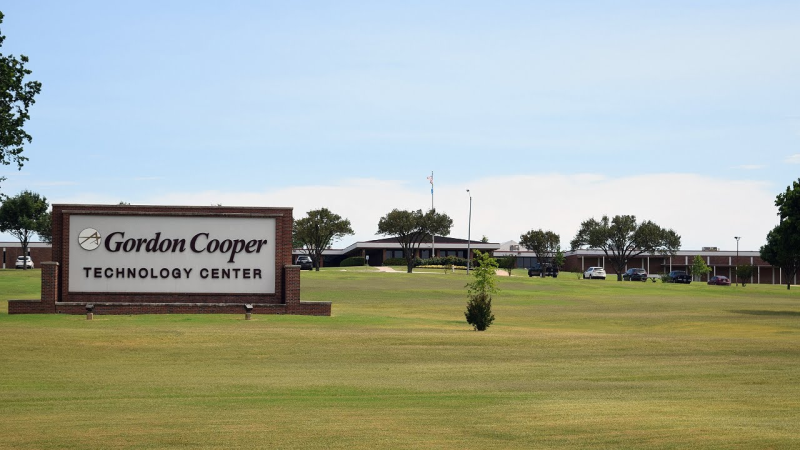
Gordon Cooper Technology Center
Shawnee, OKpublicwww.gctech.edu/
Avg net price
$1,680
Earnings (10 yr)
$42,021
Acceptance & SAT from Common Data Set / IPEDS; net price, earnings & graduation from the U.S. Dept. of Education College Scorecard. Figures lag ~1–2 years — verify with the school.
Gordon Cooper Technology Center is not a traditional college; it's a public career and technical education hub in Shawnee, Oklahoma, built for speed, practicality, and immediate workforce entry. Its singular mission is to be the 'premier provider of training and services' that leads to 'empowered citizens, thriving families, vibrant communities, and economic' growth, bypassing the liberal arts model entirely for hands-on, industry-aligned skill development. With an open-access admissions philosophy and a focus on outcomes, GCTC represents a direct, low-cost pipeline into skilled trades and technical careers.
More details
- Undergrad enrollment
- 173
- Graduation Rate
- 89.58%
- Student-Faculty Ratio
- 15:1
- Median Earnings (10yr)
- $42,021
Outcomes & value
Outcomes & value
- Median earnings (10 yr)
- $42,021
- Value (earnings ÷ net price)
- 25.0×
- Pell (lower-income) share
- 9%
- First-gen share (among federal-aid recipients)
- 54%
Earnings = median of students working ~10 years after entry; debt = median of graduates. Value divides 10-yr earnings by one year’s net price — read it as earnings per dollar of annual cost, not a full lifetime ROI; it favors lower-cost schools. Source: U.S. Dept. of Education College Scorecard. Figures lag ~2 years and reflect all students, not your intended major.
Campus & location
Campus safety
- On-campus violent crimes (2024)
- 0
On-campus criminal offenses classed as violent (murder/non-negligent manslaughter, rape, robbery, aggravated assault) for the most recent reported year. Source: U.S. Dept. of Education Campus Safety and Security (Clery Act). Counts reflect what’s reported to the school, and urban campuses often report more partly due to non-student incidents nearby — read alongside campus size and setting, not as a standalone safety verdict.
Climate
- Pleasant days / yr
- 82
- Summer high
- 91°F
- Winter low
- 34°F
- Annual rain
- 41.3"
- Annual snow
- 7.4"
- Natural-hazard risk
- Relatively Moderate
Pleasant days counts days per year with a mean temperature of 55–75°F, a high at or below 90°F, a low at or above 45°F, and little precipitation — a transparent comfort measure, not a weighting we invented. Computed from Open-Meteo ERA5 daily history (2019–2023). Natural-hazard risk is the county’s composite rating from the FEMA National Risk Index.
Quick answers
- How much does Gordon Cooper Technology Center cost?
- At Gordon Cooper Technology Center, the average net price (after aid) is about $1,680 per year. Actual cost varies with financial aid and residency.
- How many undergraduates attend Gordon Cooper Technology Center?
- Gordon Cooper Technology Center enrolls approximately 173 undergraduate students.
- Where is Gordon Cooper Technology Center located?
- Gordon Cooper Technology Center is located in Shawnee, OK.
Admissions
Admission at Gordon Cooper Technology Center is defined by open access, not selectivity. Unlike traditional colleges with competitive admissions, GCTC operates on a model of universal acceptance for qualified applicants into its career-focused programs. Sources indicate an of 100%, reflecting its mission to provide training broadly. The process is procedural rather than competitive; prospective students engage with Student Services, and admission is contingent on meeting basic program requirements rather than academic pedigree. There is no indication of an Early Decision or Early Action process, nor is there evidence that standardized test scores like the SAT or ACT are required for admission. The center's admissions factors are not detailed in a in the provided sources, and demonstrated interest does not appear to be a formal consideration in this open-enrollment context.
Academics
Academics at GCTC are purely vocational and technical, delivered through short-term certificates and training programs rather than degrees. It is one of 29 institutions within Oklahoma's 'globally recognized Career Tech System.' The curriculum is laser-focused on equipping students with marketable skills for immediate employment. While a specific list of majors isn't provided in the sources, one top major is identified as Vehicle Maintenance and Repair Technologies. Instruction is intensely hands-on, with instructors praised for being 'very respectful and nice' and for teaching 'everything.' Beyond technical proficiency, the faculty explicitly aims to build 'confidence, professionalism, teamwork, responsibility, and a strong work ethic.' The student-faculty ratio is reported as 15:1, suggesting a focus on direct instruction and supervision in lab and workshop settings. The academic model is defined by competency-based progression toward industry credentials.
Compare Gordon Cooper Technology Center
vs University of Science and Arts of Oklahomavs University of Virginia's College at Wisevs Northwestern Oklahoma State Universityvs Florida Polytechnic University
See colleges similar to Gordon Cooper Technology Center →Sources
- Common Data Set: Home
- Common Data Set
- Where to find Common Data Set (CDS) for college admission statistics
- Common Data Set Explorer 2026: Compare 100 Colleges
- Common Data Set 2025-2026
- Common Data Set Repository
- Gordon Cooper Technology Center - Oklahoma
- First-Year Profile | cooperedu - Cooper Union
- Gordon Cooper Technology Center | Class of 2030 Community
- Consumer Information - Miscellaneous
- Gordon Cooper Technology Center Acceptance Rate, SAT, GPA & ACT ...