Admit rate has ranged 73%–82% over the last 5 years — notably volatile. Source: IPEDS via Urban Institute.
Acceptance & SAT from Common Data Set / IPEDS; net price, earnings & graduation from the U.S. Dept. of Education College Scorecard. Figures lag ~1–2 years — verify with the school.
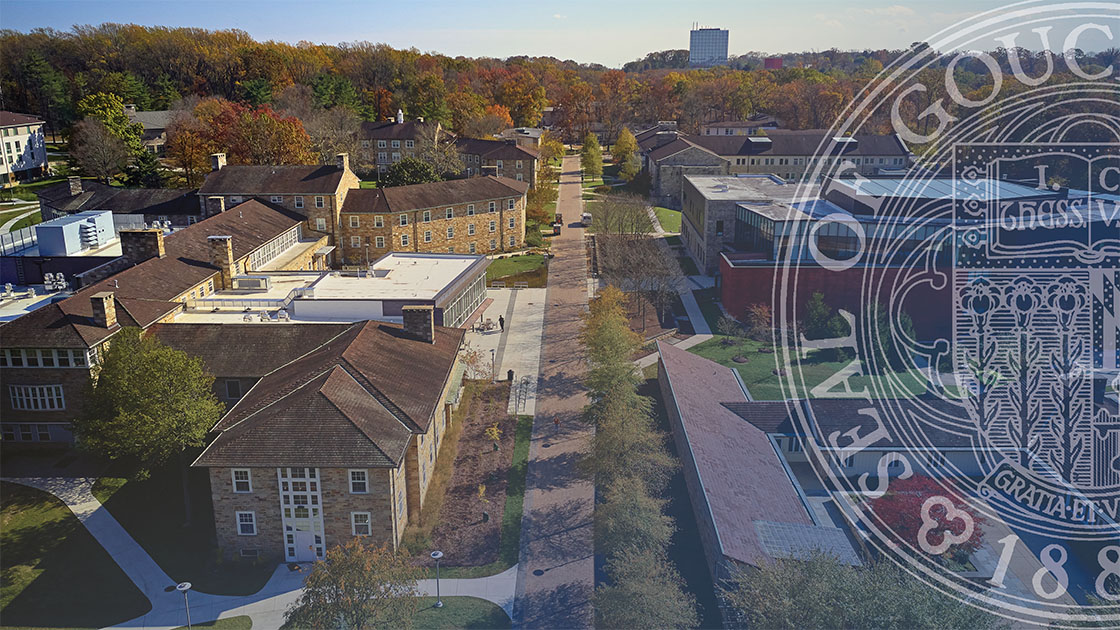
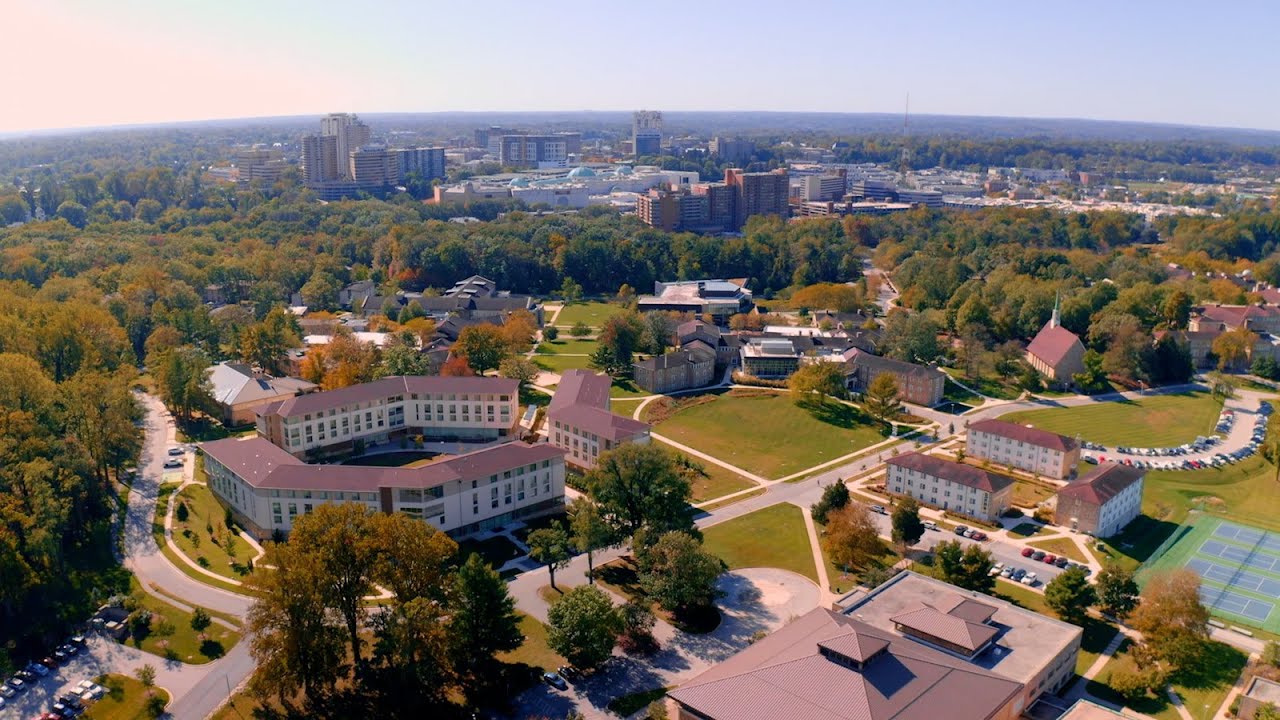
Goucher College is a small, progressive liberal arts school on a wooded campus just outside Baltimore, defined by its signature 100% study-abroad requirement and a collaborative, low-key campus culture. It's a place for independent, globally-minded students who want a rigorous education without cutthroat competition, though its graduation rates and post-graduate earnings reflect the challenges of its open admissions model. The college is test-optional and offers accelerated three-year degree tracks, appealing to students eager to engage with the world beyond the traditional campus.
Admission requirements
Test-optional — scores considered if submitted
Required
High school transcript
Grade point average
Letters of recommendation
TOEFL (non-native English)
Considered (not required)
Class rank
Test scores (SAT/ACT)
College-prep program
Demonstrated competencies
Source: IPEDS Admissions survey (2022) via Urban Institute. Covers formal factors only — it does not reflect essays, extracurriculars, or other holistic criteria.
More details
Undergrad enrollment
964
In-state tuition
$53,350
Out-of-state tuition
$53,350
Graduation Rate
57%
On-Campus Housing
84%
Demonstrated Interest
Considered
Median Earnings (10yr)
$53,023
Study Abroad Requirement
100%
Three-Year Degree Tracks
Available
First-Year Retention Rate
79%
Outcomes & value
Outcomes & value
Median earnings (10 yr)
$53,023
Value (earnings ÷ net price)
2.4×
Median debt at graduation
$26,000
Graduation rate
57%
First-year retention
79%
Reducing loan balance (3 yr)
73%
Pell (lower-income) share
35%
First-gen share (among federal-aid recipients)
18%
Financial health
2.2 / 3.0Meets the federal financial-responsibility standard
U.S. Dept. of Education Financial Responsibility Composite Score (FY2022-23). Scale −1.0 to 3.0; ≥1.5 meets the standard. Reported for private nonprofit & for-profit institutions only — public universities are state-backed and not scored, so this is a stability signal, not a ranking.
Top-earning majors
Median earnings by field of study (highest credential), ~2 years after completion.
Economics$46,087
Dance$32,925
Political Science and Government$29,685
Psychology, General$28,816
Romance Languages, Literatures, and Linguistics$26,896
Natural Resources Conservation and Research$25,194
Campus & location
Campus safety
On-campus violent crimes (2024)
0
Per 1,000 students
0.00
On-campus criminal offenses classed as violent (murder/non-negligent manslaughter, rape, robbery, aggravated assault) for the most recent reported year. Source: U.S. Dept. of Education Campus Safety and Security (Clery Act). Counts reflect what’s reported to the school, and urban campuses often report more partly due to non-student incidents nearby — read alongside campus size and setting, not as a standalone safety verdict.
Climate
Pleasant days / yr
91
Summer high
84°F
Winter low
30°F
Annual rain
60.7"
Annual snow
14.3"
Natural-hazard risk
Relatively Moderate
Pleasant days counts days per year with a mean temperature of 55–75°F, a high at or below 90°F, a low at or above 45°F, and little precipitation — a transparent comfort measure, not a weighting we invented. Computed from Open-Meteo ERA5 daily history (2019–2023). Natural-hazard risk is the county’s composite rating from the FEMA National Risk Index.
Deep dive — research, future-scholar output & economic mobility▾
Research output
Institutional h-index
90
Scholarly works
1,983
Institutional research volume and impact from OpenAlex. The h-index reflects large research universities and will be low for teaching-focused liberal-arts colleges — not a measure of undergraduate quality.
Economic mobility
Mobility rate
2.2%
Bottom → top quintile
35%
From bottom quintile
6%
Mobility rate = the share of students who both start in the bottom household-income quintile and reach the top quintile; bottom → top is that chance conditional on starting at the bottom. Source: Opportunity Insights Mobility Report Cards (Chetty, Friedman, Saez, Turner & Yagan). Reflects 1980–82 birth cohorts, so it’s directional, not current.
Quick answers
What is the acceptance rate at Goucher College?
Goucher College's acceptance rate is approximately 78% (Baltimore, MD), based on the most recent figures we compiled from public and primary sources.
What SAT score do you need for Goucher College?
Admitted students at Goucher College typically score 1090–1325 on the SAT (the middle-50% range). Scores outside this band are still admitted, especially with strong applications.
How much does Goucher College cost?
At Goucher College, the average net price (after aid) is about $22,470 per year. Actual cost varies with financial aid and residency.
How many undergraduates attend Goucher College?
Goucher College enrolls approximately 964 undergraduate students.
Where is Goucher College located?
Goucher College is located in Baltimore, MD.
Admissions
Goucher's admissions process is notably accessible, with an of 78%. The college has been since 2006, meaning SAT or ACT scores are not required for admission or merit scholarship consideration. For those who do submit scores, the middle 50% SAT range is 1090–1325. The early decision acceptance rate is significantly higher than the regular rate, reported at 86.8%. However, the college's rate—the percentage of admitted students who enroll—is low, at just 11%. Demonstrated interest is a factor Goucher considers in its admissions decisions, as indicated in the . The process is selective for out-of-state students and for some specific programs.
Earnings = median of students working ~10 years after entry; debt = median of graduates. Value divides 10-yr earnings by one year’s net price — read it as earnings per dollar of annual cost, not a full lifetime ROI; it favors lower-cost schools. Source: U.S. Dept. of Education College Scorecard. Figures lag ~2 years and reflect all students, not your intended major.
Sociology
$25,194
English Language and Literature, General$20,596
Source: U.S. Dept. of Education College Scorecard (field-of-study earnings). Figures cover graduates who received federal aid and lag ~2 years; not all programs report data.
Goucher offers over 40 undergraduate majors, minors, and professional studies programs. The curriculum is a rigorous liberal arts education delivered in a collaborative, welcoming environment. Its most distinctive feature is a 100% study abroad rate, a requirement that underscores its global focus. For students eager to accelerate their path, Goucher offers three-year degree tracks for numerous majors. The most popular fields of study are in the social sciences (18% of 2024 graduates), psychology (15%), and business, management, and marketing (10%). Psychology is consistently the single most popular major, with around 25 degrees granted annually in that field. Classes are described as deep-dive explorations designed to spark passions.
Life on Goucher's 287-acre wooded campus outside Baltimore is described as open, friendly, and quiet. The social scene is low-key, with few large parties; most gatherings are smaller and more intimate. A significant majority of students—84%—live in college-owned, -operated, or -affiliated housing, fostering a residential community. The campus features expansive dining options and a packed events calendar. The college's master plan aims to cultivate a welcoming student experience by creating student life hubs throughout the campus. The overall vibe is peaceful and collaborative, centered on study and socialization in a supportive environment.
Goucher's six-year graduation rate is 57%. The first-year retention rate is 79%. Post-graduation earnings show growth over time: median earnings one year after graduation are reported at $34,937, which grows to $54,736 five years after graduation. The median earnings ten years after entry are $53,023. These figures indicate that while initial earnings may be modest, Goucher graduates experience significant salary growth in the years following graduation.
The average after aid is $22,470. A significant majority of undergraduates—69.34%—receive financial aid, with an average aid package of $51,113. Goucher uses a net price calculator to provide families with estimates of costs and aid eligibility. The college states it meets, on average, 86% of demonstrated financial need. Financial aid packages can include Goucher need-based grants, but the college does not appear to have a universal no-loan policy; federal and private loans are listed as options for financing education.
Goucher College carves out a singular niche with two bold, defining commitments. First, its 100% study abroad requirement is virtually unique in American higher education, embedding a global perspective into the DNA of every student's experience—this isn't an option, it's a graduation requirement. Second, it offers a collaborative, non-competitive academic culture on a peaceful, wooded campus, a stark contrast to the pressure-cooker environments of many liberal arts colleges. It's a school for self-starters: the three-year degree tracks reward focus and ambition, while the , high-acceptance admissions policy opens doors to a diverse range of learners. The trade-off is visible in the outcomes: graduation rates and early-career earnings are modest, reflecting the challenges of its mission. But for the right student—one who is independent, globally curious, and seeks a rigorous education without cutthroat peers—Goucher offers a genuinely distinctive path that prioritizes experience in the world as much as knowledge in the classroom.
Goucher College seal · sourceGoucher College – Colleges That Change Lives · sourceGoucher College: Maryland's Innovative Liberal Arts College · sourceCollege Tour Hero Video · source