Loading…
← All schools
Grady Health System Professional Schools
Atlanta, GApublicwww.gradyhealth.org/
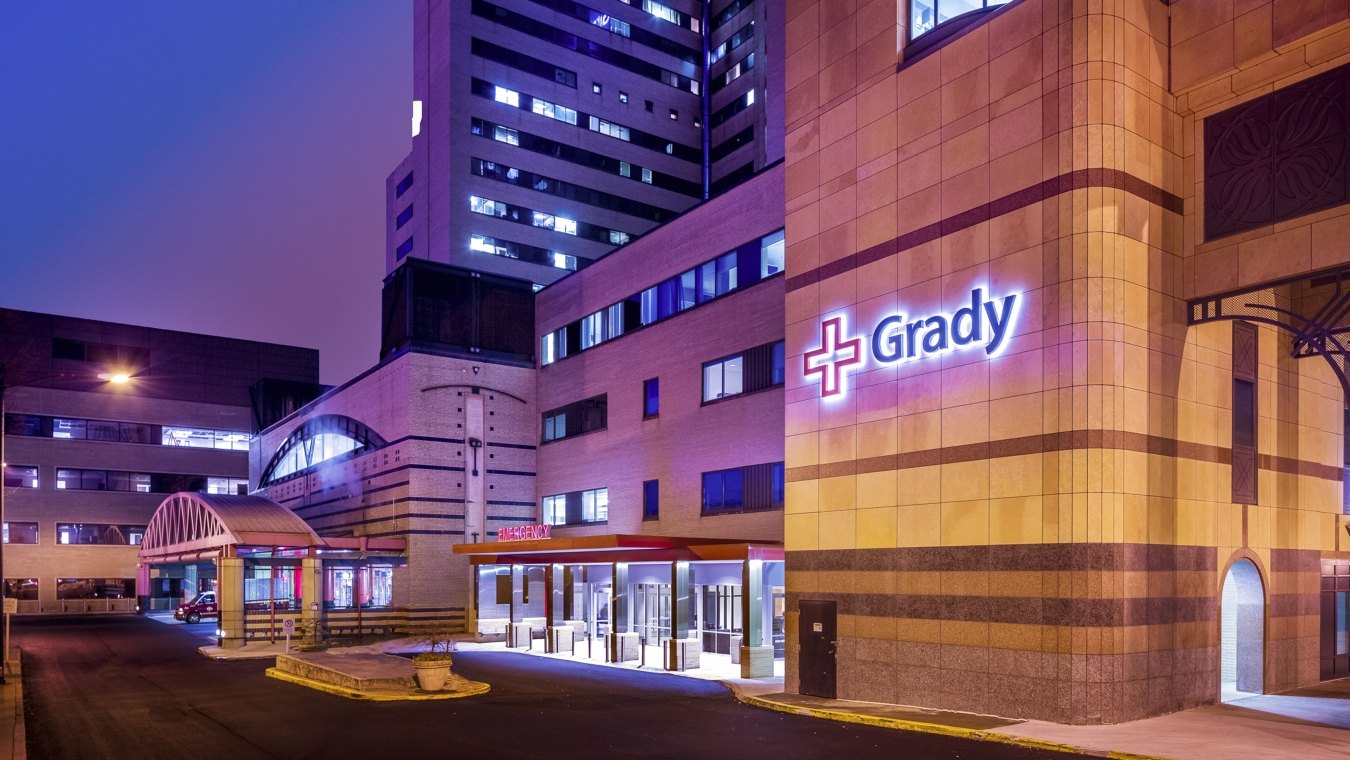
Grady Health System Professional Schools is not a traditional university but a tightly focused, hospital-based vocational institute embedded within one of Atlanta's largest and most historic public hospitals. With a total enrollment of just 60 students, it operates as a hyper-specialized pipeline into high-demand medical imaging careers, offering a single, intensive major in Radiologic Technology. Its identity is inseparable from the hands-on, mission-driven culture of Grady Hospital itself, where training happens directly inside a 'world's preeminent teaching hospital.'
More details
- Undergrad enrollment
- 61
- Sole Major Offered
- Radiologic Technology/Science - Radiographer
- Gender Binary Split
- 27% male, 73% female
- Highest Degree Offered
- At least 2, but less than 4 academic years
Outcomes & value
Outcomes & value
- Median earnings (10 yr)
- $60,726
- Reducing loan balance (3 yr)
- 70%
- Pell (lower-income) share
- 38%
Earnings = median of students working ~10 years after entry; debt = median of graduates. Value divides 10-yr earnings by one year’s net price — read it as earnings per dollar of annual cost, not a full lifetime ROI; it favors lower-cost schools. Source: U.S. Dept. of Education College Scorecard. Figures lag ~2 years and reflect all students, not your intended major.
Campus & location
Campus safety
- On-campus violent crimes (2024)
- 0
On-campus criminal offenses classed as violent (murder/non-negligent manslaughter, rape, robbery, aggravated assault) for the most recent reported year. Source: U.S. Dept. of Education Campus Safety and Security (Clery Act). Counts reflect what’s reported to the school, and urban campuses often report more partly due to non-student incidents nearby — read alongside campus size and setting, not as a standalone safety verdict.
Climate
- Pleasant days / yr
- 113
- Summer high
- 86°F
- Winter low
- 39°F
- Annual rain
- 48.8"
- Annual snow
- 0.7"
- Natural-hazard risk
- Relatively High
Pleasant days counts days per year with a mean temperature of 55–75°F, a high at or below 90°F, a low at or above 45°F, and little precipitation — a transparent comfort measure, not a weighting we invented. Computed from Open-Meteo ERA5 daily history (2019–2023). Natural-hazard risk is the county’s composite rating from the FEMA National Risk Index.
Quick answers
- How many undergraduates attend Grady Health System Professional Schools?
- Grady Health System Professional Schools enrolls approximately 61 undergraduate students.
- Where is Grady Health System Professional Schools located?
- Grady Health System Professional Schools is located in Atlanta, GA.
Admissions
Admissions at Grady Health System Professional Schools is a focused, criteria-driven process for a highly specialized audience. The school is tiny, with a total enrollment of just 60 students, and its student body is predominantly female, with a gender-binary split of 27% male and 73% female. The admissions process is not governed by the undergraduate-focused , which is a collaborative effort among data providers in the higher education community and publishers, but rather by program-specific requirements. For its Sonography Program, the Admissions Committee selects applicants who meet criteria and can complete the Program to become diagnostic medical sonographers. Similarly, for Vascular Sonography, all qualified applicants are considered for admission without regard to age, race, ethnicity, religion, culture, language, disability, socioeconomic status, or sex. Publicly reported data is inconsistent; one source notes the average national acceptance rate is around 68% but states 'No data' for Grady, while another lists an 'Acceptance Rate' of 61 alongside a 'Total Students' count of $0, suggesting data may be incomplete or misreported. The admissions team encourages students to highlight academic strengths through transcripts, essays, and recommendations.
Compare Grady Health System Professional Schools
vs West Virginia University Institute of Technologyvs Florida Polytechnic Universityvs United States Coast Guard Academyvs University of Virginia's College at Wise
See colleges similar to Grady Health System Professional Schools →Sources
- Grady Health System Professional Schools - Sallie
- Grady Health System Professional Schools - Data USA
- Is there a common data set for graduate schools? - Facebook
- Common Data Set: Home
- [PDF] Common Data Set 2024-2025 - Institutional Data @ Lehigh
- Common Data Set Ultimate Guide: Use It to Find the Right College
- Sonography Program Admission Requirements | Grady Health
- Grady Health System Professional Schools - Niche
- Grady Health System Professional Schools - College Decoded
- Vascular Sonography Admission Requirements - Grady Health