Loading…
← All schools
Grand River Technical School
Chillicothe, MOpublicwww.grts.org/
Acceptance
88%
Avg net price
$11,831
Earnings (10 yr)
$40,665
Admit rate has ranged 75%–100% over the last 5 years — notably volatile. Source: IPEDS via Urban Institute.
Acceptance & SAT from Common Data Set / IPEDS; net price, earnings & graduation from the U.S. Dept. of Education College Scorecard. Figures lag ~1–2 years — verify with the school.
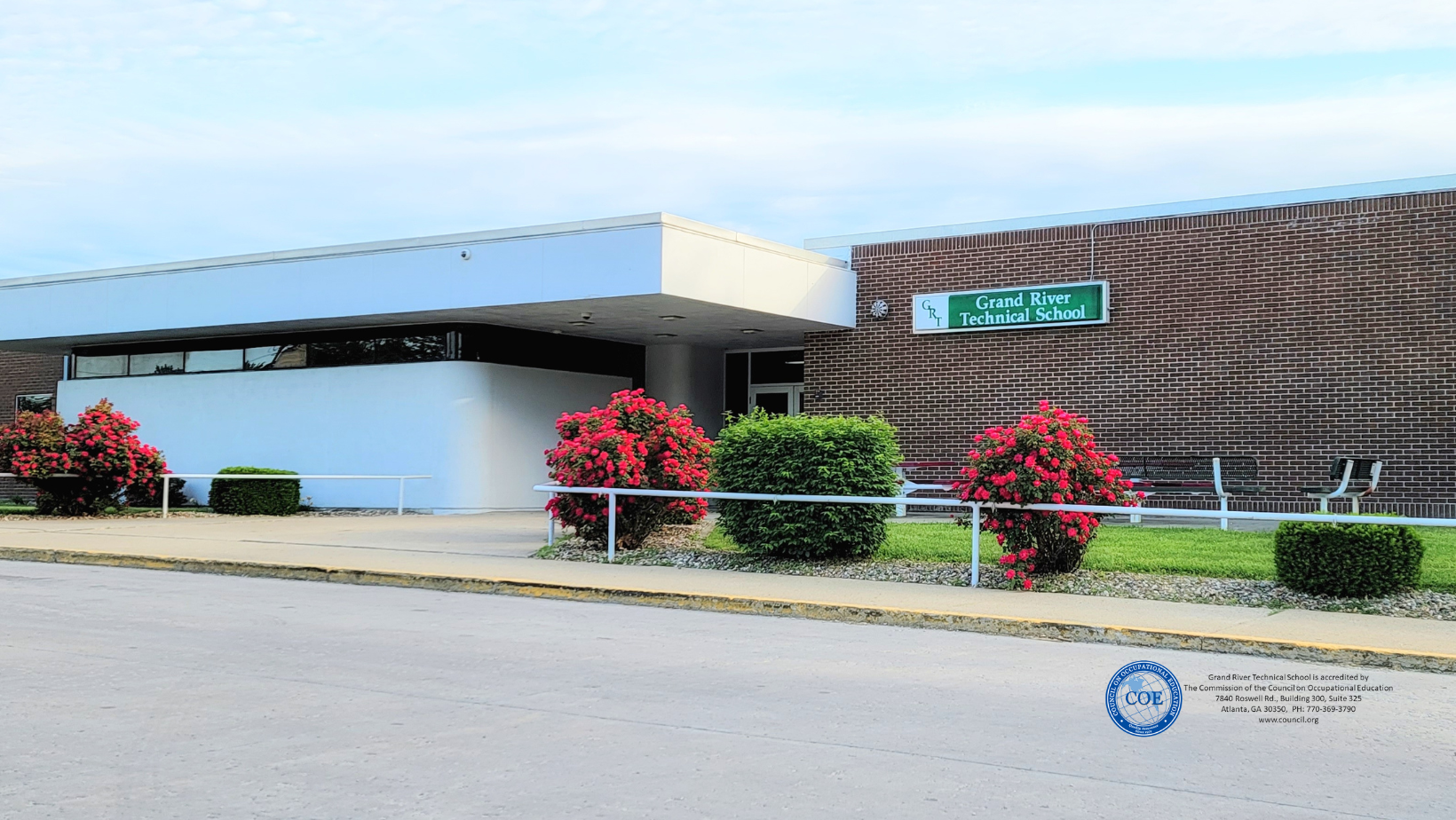
Grand River Technical School in Chillicothe, Missouri, is a no-nonsense, open-access institution built for one purpose: to deliver practical, hands-on skills that translate directly to a paycheck. Forget lecture halls and theory; here, students are immersed in the gritty reality of skilled trades like Diesel Mechanics, Heavy Equipment operation, and Emergency Medical Technology. It’s a small, focused environment where the measure of success isn't a diploma on the wall, but a job offer in hand.
Admission requirements
Test-optional — scores considered if submitted
Required
- High school transcript
- Demonstrated competencies
Considered (not required)
- Test scores (SAT/ACT)
Source: IPEDS Admissions survey (2022) via Urban Institute. Covers formal factors only — it does not reflect essays, extracurriculars, or other holistic criteria.
More details
- Undergrad enrollment
- 65
- Popular Majors
- EMT/Paramedic, Diesel Mechanics, Heavy Equipment
- Application Fee
- $50
- Median Earnings (10yr)
- $40,665
- Financial Aid Recipients
- 100% of beginning undergrads
Outcomes & value
Outcomes & value
- Median earnings (10 yr)
- $40,665
- Value (earnings ÷ net price)
- 3.4×
- Pell (lower-income) share
- 45%
Earnings = median of students working ~10 years after entry; debt = median of graduates. Value divides 10-yr earnings by one year’s net price — read it as earnings per dollar of annual cost, not a full lifetime ROI; it favors lower-cost schools. Source: U.S. Dept. of Education College Scorecard. Figures lag ~2 years and reflect all students, not your intended major.
Campus & location
Campus safety
- On-campus violent crimes (2024)
- 0
On-campus criminal offenses classed as violent (murder/non-negligent manslaughter, rape, robbery, aggravated assault) for the most recent reported year. Source: U.S. Dept. of Education Campus Safety and Security (Clery Act). Counts reflect what’s reported to the school, and urban campuses often report more partly due to non-student incidents nearby — read alongside campus size and setting, not as a standalone safety verdict.
Climate
- Pleasant days / yr
- 79
- Summer high
- 86°F
- Winter low
- 23°F
- Annual rain
- 43.1"
- Annual snow
- 21.5"
- Natural-hazard risk
- Very Low
Pleasant days counts days per year with a mean temperature of 55–75°F, a high at or below 90°F, a low at or above 45°F, and little precipitation — a transparent comfort measure, not a weighting we invented. Computed from Open-Meteo ERA5 daily history (2019–2023). Natural-hazard risk is the county’s composite rating from the FEMA National Risk Index.
Quick answers
- What is the acceptance rate at Grand River Technical School?
- Grand River Technical School's acceptance rate is approximately 88% (Chillicothe, MO), based on the most recent figures we compiled from public and primary sources.
- How much does Grand River Technical School cost?
- At Grand River Technical School, the average net price (after aid) is about $11,831 per year. Actual cost varies with financial aid and residency.
- How many undergraduates attend Grand River Technical School?
- Grand River Technical School enrolls approximately 65 undergraduate students.
- Where is Grand River Technical School located?
- Grand River Technical School is located in Chillicothe, MO.
Admissions
Grand River Tech operates with an open-access philosophy, prioritizing accessibility over selectivity. The school's admissions process is straightforward and designed to welcome students seeking a direct path to a trade. The is high, reflecting this mission of broad access. While some sources note a 100% acceptance rate, the canonical and most frequently cited figure is 88%. The process does not appear to hinge on standardized test scores in a decisive way; one source suggests that admitted students typically present ACT scores between 15 and 19 or SAT scores between 850 and 1010, but these are presented as a range for context rather than a strict cutoff. There is a $50 application fee. The school's small size is evident in its enrollment numbers, with recent data showing 38 admissions from 43 applications in one cycle. There is no available information in the provided sources to indicate that demonstrated interest is a formal factor in admissions decisions.
Compare Grand River Technical School
vs University of Minnesota-Morrisvs Indiana University-Northwestvs University of Science and Arts of Oklahomavs University of Wisconsin-Parkside
See colleges similar to Grand River Technical School →Sources
- [PDF] Common Data Set 2024-2025 - Swarthmore College
- Is there a common data set for graduate schools? - Facebook
- Grand River Technical School - IPEDS - Department of Education
- Common Data Set: Home
- How To Use a Common Data Set - The College Solution
- Demystifying the Common Data Set - Top Tier Admissions
- Grand River Technical School Admissions - BigFuture College Search
- Grand River Technical School Acceptance Rate - College Raptor
- Grand River Technical School - Admissions - MeetYourClass
- Grand River Technical School - Niche