Admit rate has ranged 37%–57% over the last 5 years — notably volatile. Source: IPEDS via Urban Institute.
Acceptance & SAT from Common Data Set / IPEDS; net price, earnings & graduation from the U.S. Dept. of Education College Scorecard. Figures lag ~1–2 years — verify with the school.
Hampden-Sydney College is one of the last all-male liberal arts holdouts, offering a fiercely traditional brotherhood defined by its rigorous 'Code of the Gentleman' on a sprawling Virginia campus. With a 41% acceptance rate and a graduation rate of 62%, it delivers an intense, Socratic-style education focused on rhetoric and leadership, not lecture halls. The close-knit network punches above its weight, propelling graduates to median earnings of $67,640 a decade out, though the experience comes at an average net price of $22,400.
Admission requirements
Test-optional — scores considered if submitted
Required
High school transcript
Grade point average
Letters of recommendation
TOEFL (non-native English)
Considered (not required)
Class rank
Test scores (SAT/ACT)
College-prep program
Source: IPEDS Admissions survey (2022) via Urban Institute. Covers formal factors only — it does not reflect essays, extracurriculars, or other holistic criteria.
More details
Undergrad enrollment
946
In-state tuition
$54,550
Out-of-state tuition
$54,550
Founded
1775
Location
Hampden-Sydney, VA
Campus Size
1,300 acres
Avg Class Size
14
Notable Alumni
U.S. Senators, CEOs, Pulitzer winners
Graduation Rate
65-68%
Student-Faculty Ratio
10:1
Greek Life Participation
60%
Avg Financial Aid Package
$44,061
Outcomes & value
Outcomes & value
Median earnings (10 yr)
$67,640
Value (earnings ÷ net price)
3.0×
Median debt at graduation
$26,000
Graduation rate
62%
First-year retention
84%
Reducing loan balance (3 yr)
79%
Pell (lower-income) share
23%
Earnings = median of students working ~10 years after entry; debt = median of graduates. Value divides 10-yr earnings by one year’s net price — read it as earnings per dollar of annual cost, not a full lifetime ROI; it favors lower-cost schools. Source: U.S. Dept. of Education College Scorecard. Figures lag ~2 years and reflect all students, not your intended major.
Financial health
3.0 / 3.0Meets the federal financial-responsibility standard
U.S. Dept. of Education Financial Responsibility Composite Score (FY2022-23). Scale −1.0 to 3.0; ≥1.5 meets the standard. Reported for private nonprofit & for-profit institutions only — public universities are state-backed and not scored, so this is a stability signal, not a ranking.
Top-earning majors
Median earnings by field of study (highest credential), ~2 years after completion.
Business/Managerial Economics$47,260
Economics$39,153
Source: U.S. Dept. of Education College Scorecard (field-of-study earnings). Figures cover graduates who received federal aid and lag ~2 years; not all programs report data.
On-campus criminal offenses classed as violent (murder/non-negligent manslaughter, rape, robbery, aggravated assault) for the most recent reported year. Source: U.S. Dept. of Education Campus Safety and Security (Clery Act). Counts reflect what’s reported to the school, and urban campuses often report more partly due to non-student incidents nearby — read alongside campus size and setting, not as a standalone safety verdict.
Climate
Pleasant days / yr
96
Summer high
88°F
Winter low
34°F
Annual rain
42.1"
Annual snow
5.5"
Natural-hazard risk
Very Low
Pleasant days counts days per year with a mean temperature of 55–75°F, a high at or below 90°F, a low at or above 45°F, and little precipitation — a transparent comfort measure, not a weighting we invented. Computed from Open-Meteo ERA5 daily history (2019–2023). Natural-hazard risk is the county’s composite rating from the FEMA National Risk Index.
Deep dive — research, future-scholar output & economic mobility▾
Research output
Institutional h-index
73
Scholarly works
1,896
Institutional research volume and impact from OpenAlex. The h-index reflects large research universities and will be low for teaching-focused liberal-arts colleges — not a measure of undergraduate quality.
Economic mobility
Mobility rate
0.6%
Bottom → top quintile
39%
From bottom quintile
2%
Mobility rate = the share of students who both start in the bottom household-income quintile and reach the top quintile; bottom → top is that chance conditional on starting at the bottom. Source: Opportunity Insights Mobility Report Cards (Chetty, Friedman, Saez, Turner & Yagan). Reflects 1980–82 birth cohorts, so it’s directional, not current.
Quick answers
What is the acceptance rate at Hampden-Sydney College?
Hampden-Sydney College's acceptance rate is approximately 41% (Hampden-Sydney, VA), based on the most recent figures we compiled from public and primary sources.
What SAT score do you need for Hampden-Sydney College?
Admitted students at Hampden-Sydney College typically score 1030–1250 on the SAT (the middle-50% range). Scores outside this band are still admitted, especially with strong applications.
How much does Hampden-Sydney College cost?
At Hampden-Sydney College, the average net price (after aid) is about $22,400 per year. Actual cost varies with financial aid and residency.
How many undergraduates attend Hampden-Sydney College?
Hampden-Sydney College enrolls approximately 946 undergraduate students.
Where is Hampden-Sydney College located?
Hampden-Sydney College is located in Hampden-Sydney, VA.
Admissions
Hampden-Sydney maintains a selective but accessible 41% , with admitted students typically posting SAT scores between 1030-1250 or ACT scores of 21-27. The average GPA hovers around 3.4, and the college is for fall 2026 applicants. Notably, 64% of first-year students receive , with average packages totaling $44,061—making the sticker price more negotiable than it appears. Applications are accepted through the Common App, with no early decision program mentioned in recent data.
The college offers a classic liberal arts curriculum with 27 majors and 26 minors—from business economics to classical studies—all delivered through small, discussion-heavy classes. Popular majors cluster in social sciences (especially government and economics), business, and history, reflecting the school's reputation for producing lawyers and entrepreneurs. The academic vibe is intensely participatory: expect to defend your ideas in Socratic-style seminars, with a 10:1 student-faculty ratio ensuring professors know your name. Unique among Virginia schools, Hampden-Sydney requires all students to pass a rigorous rhetoric exam to graduate.
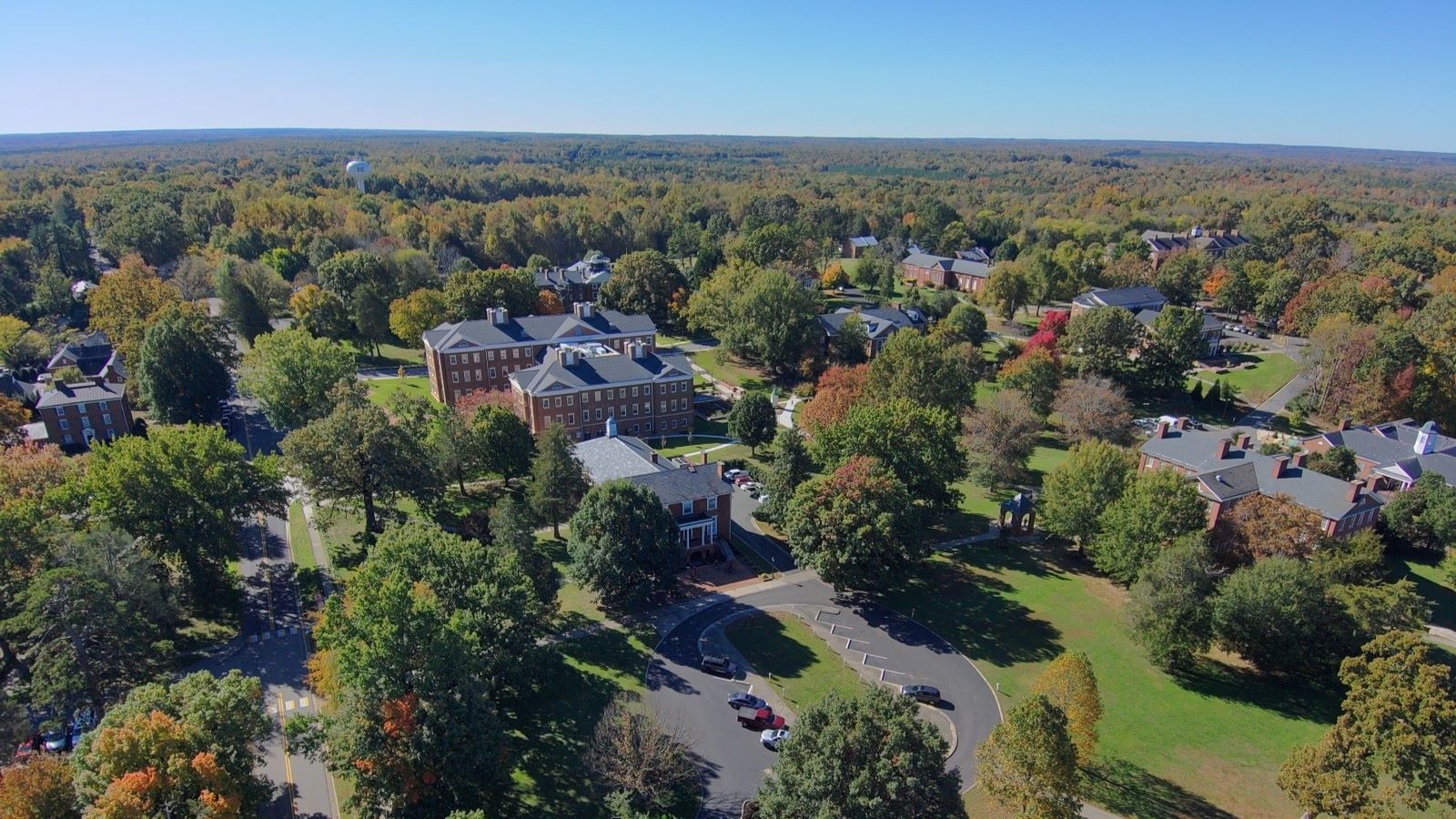
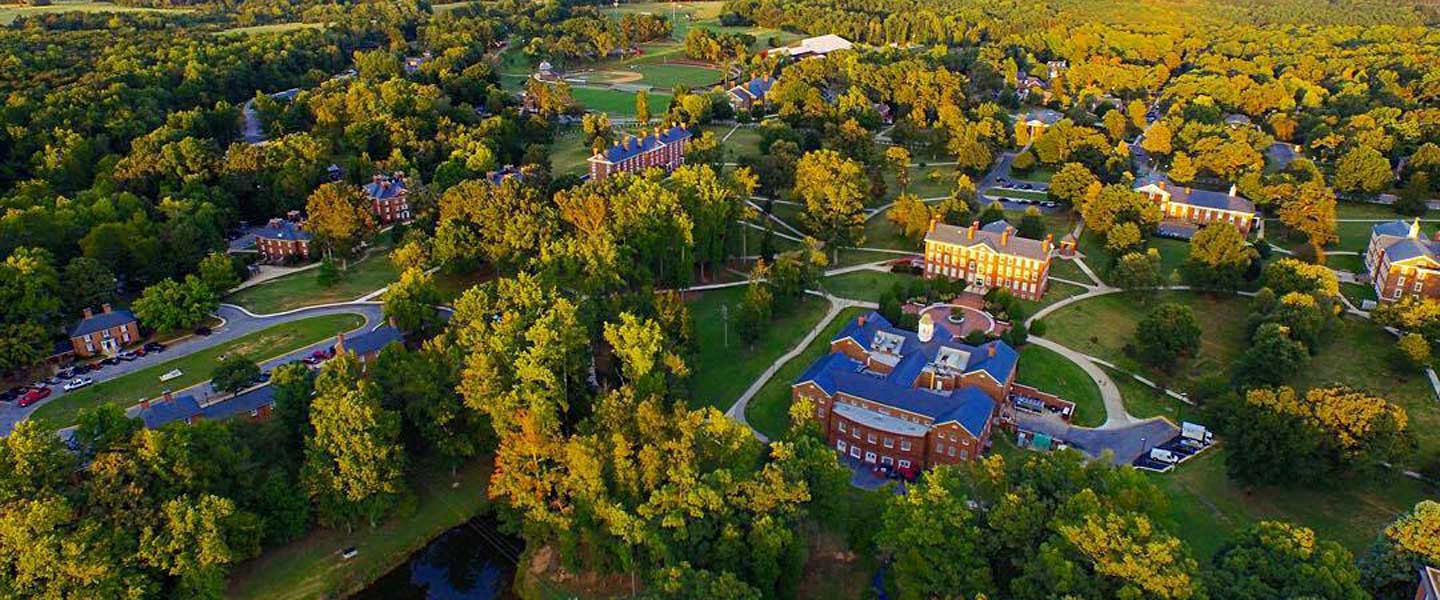
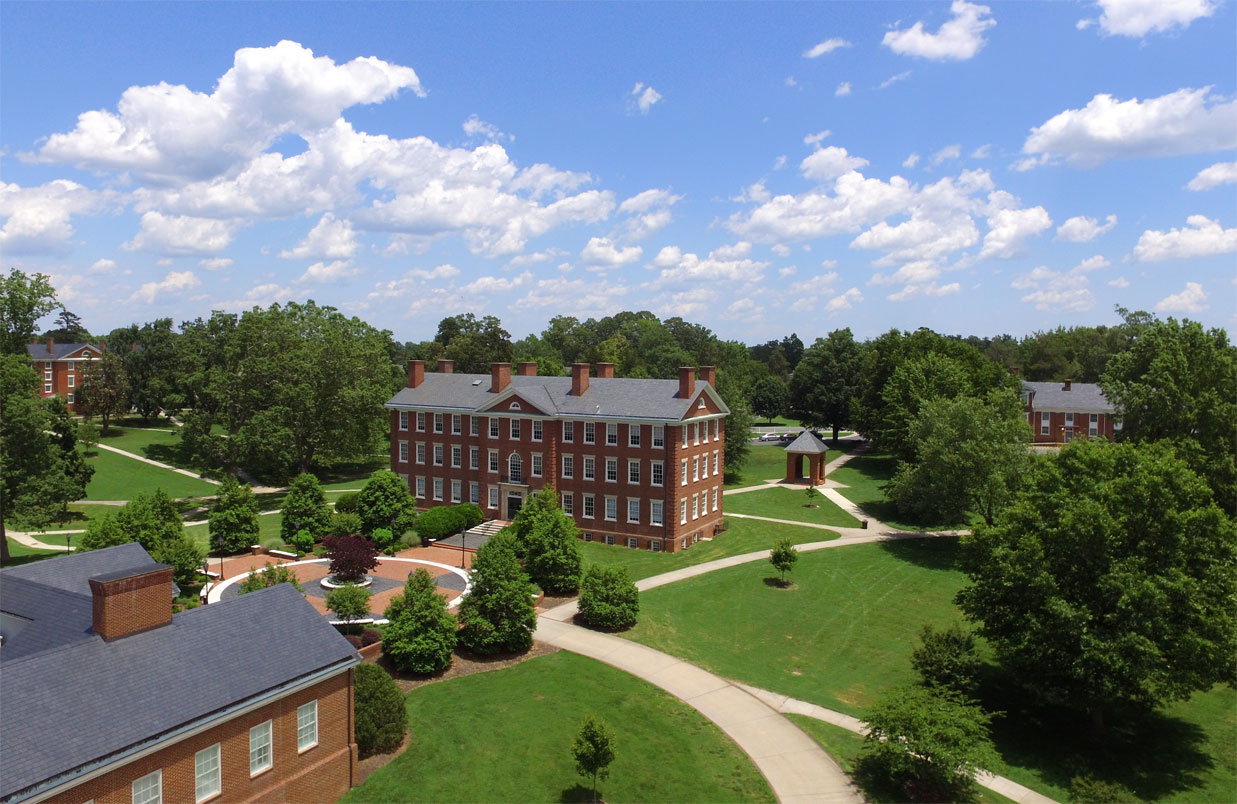
Life revolves around traditions: the freshman straw hat ceremony, the ringing of the bell tower after athletic victories, and the infamous 'G.I. Party' where entire dorms compete in military-style cleaning inspections. The 1,300-acre campus—more wilderness than quad—hosts over 50 student clubs, from debate societies to a thriving outdoors program. The Brown Student Center serves as the social hub, complete with pool tables and big-screen TVs, while Greek life (60% participation) dominates weekends. Despite its rural location, students report feeling 'extremely safe,' and the honor code means laptops go unattended in the library.
The six-year graduation rate sits at 65-68%, outperforming the national average for four-year colleges (59%). Early career earnings average $44,000—slightly below peer benchmarks, though alumni networks excel in law and finance. The college aims for an 80% graduation rate but considers 63% its minimum acceptable threshold. Notably, Pell Grant recipients graduate at rates comparable to the general student body, suggesting strong support systems. About 20% of graduates immediately pursue advanced degrees, often at Virginia's flagship public universities.
The sticker price is steep, but the average after aid drops to $29,578—with 64% of freshmen receiving need-based scholarships averaging $44,061. The financial aid office aggressively matches competitor offers, and international students report especially generous packages (averaging $61,577). The Net Price Calculator on the school's website provides customized estimates, though students should note that work-study opportunities are limited at this rural campus.
Hampden-Sydney is a time capsule of deliberate anachronisms—a place where students still wear coats and ties to exams, debate ethics over bourbon tastings, and address professors as 'sir.' Its distinction as one of only three all-male colleges in America (alongside Morehouse and Wabash) fosters a culture of intense camaraderie, with alumni famously hiring fellow 'H-SC men.' The rhetoric-intensive curriculum produces unusually polished communicators, while the 1,300-acre campus offers unparalleled space for hunting, fishing, and contemplation. This isn't just a college; it's a 250-year-old finishing school for Southern gentlemen with Wi-Fi.
Hampden-Sydney College logo · sourceHampden-Sydney College · sourcePlan Your Stay at Hampden-Sydney College · sourceA Visit to Hampden-Sydney College | College Expert · source