Admit rate has ranged 60%–96% over the last 5 years — notably volatile. Source: IPEDS via Urban Institute.
Acceptance & SAT from Common Data Set / IPEDS; net price, earnings & graduation from the U.S. Dept. of Education College Scorecard. Figures lag ~1–2 years — verify with the school.
Hartwick College is a small, private liberal arts school perched on Oyaron Hill in Oneonta, New York, that sells itself on 'life balance.' With an acceptance rate around 70%, it's an accessible option for students seeking a traditional residential experience with a flexible curriculum. The vibe is community-focused and hands-on, anchored by popular nursing and business programs, 21 NCAA Division III teams, and a campus culture that blends its own traditions with the offerings of a classic upstate New York college town.
Admission requirements
Test-optional — scores considered if submitted
Required
High school transcript
Grade point average
TOEFL (non-native English)
Considered (not required)
Class rank
Letters of recommendation
Test scores (SAT/ACT)
College-prep program
Source: IPEDS Admissions survey (2022) via Urban Institute. Covers formal factors only — it does not reflect essays, extracurriculars, or other holistic criteria.
More details
Undergrad enrollment
1,087
In-state tuition
$54,962
Out-of-state tuition
$54,962
Athletics
21 NCAA DIII Teams
Early Action
Non-binding
Location Vibe
Hilltop campus + downtown Oneonta
Popular Majors
Nursing, Business
Graduation Rate
53%
Median Earnings (10yr)
$61,107
First-Year Retention Rate
78%
Outcomes & value
Outcomes & value
Median earnings (10 yr)
$61,107
Value (earnings ÷ net price)
2.0×
Median debt at graduation
$27,000
Graduation rate
53%
First-year retention
74%
Reducing loan balance (3 yr)
70%
Pell (lower-income) share
36%
First-gen share (among federal-aid recipients)
27%
Earnings = median of students working ~10 years after entry; debt = median of graduates. divides 10-yr earnings by net price — read it as earnings per dollar of annual cost, not a full lifetime ROI; it favors lower-cost schools. Source: U.S. Dept. of Education College Scorecard. Figures lag ~2 years and reflect all students, not your intended major.
Financial health
1.9 / 3.0Meets the federal financial-responsibility standard
U.S. Dept. of Education Financial Responsibility Composite Score (FY2022-23). Scale −1.0 to 3.0; ≥1.5 meets the standard. Reported for private nonprofit & for-profit institutions only — public universities are state-backed and not scored, so this is a stability signal, not a ranking.
Top-earning majors
Median earnings by field of study (highest credential), ~2 years after completion.
Registered Nursing, Nursing Administration, Nursing Research and Clinical Nursing$60,410
Business Administration, Management and Operations$32,213
Sociology$30,409
Biology, General$28,960
Psychology, General$28,960
English Language and Literature, General
Campus & location
Campus safety
On-campus violent crimes (2024)
3
On-campus criminal offenses classed as violent (murder/non-negligent manslaughter, rape, robbery, aggravated assault) for the most recent reported year. Source: U.S. Dept. of Education Campus Safety and Security (Clery Act). Counts reflect what’s reported to the school, and urban campuses often report more partly due to non-student incidents nearby — read alongside campus size and setting, not as a standalone safety verdict.
Climate
Pleasant days / yr
88
Summer high
76°F
Winter low
19°F
Annual rain
50.1"
Annual snow
58"
Natural-hazard risk
Relatively Low
Pleasant days counts days per year with a mean temperature of 55–75°F, a high at or below 90°F, a low at or above 45°F, and little precipitation — a transparent comfort measure, not a weighting we invented. Computed from Open-Meteo ERA5 daily history (2019–2023). Natural-hazard risk is the county’s composite rating from the FEMA National Risk Index.
Deep dive — research, future-scholar output & economic mobility▾
Research output
Institutional h-index
83
Scholarly works
1,890
Institutional research volume and impact from OpenAlex. The h-index reflects large research universities and will be low for teaching-focused liberal-arts colleges — not a measure of undergraduate quality.
Economic mobility
Mobility rate
1.7%
Bottom → top quintile
29%
From bottom quintile
6%
Mobility rate = the share of students who both start in the bottom household-income quintile and reach the top quintile; bottom → top is that chance conditional on starting at the bottom. Source: Opportunity Insights Mobility Report Cards (Chetty, Friedman, Saez, Turner & Yagan). Reflects 1980–82 birth cohorts, so it’s directional, not current.
Quick answers
What is the acceptance rate at Hartwick College?
Hartwick College's acceptance rate is approximately 70% (Oneonta, NY), based on the most recent figures we compiled from public and primary sources.
What SAT score do you need for Hartwick College?
Admitted students at Hartwick College typically score 1070–1290 on the SAT (the middle-50% range). Scores outside this band are still admitted, especially with strong applications.
How much does Hartwick College cost?
At Hartwick College, the average net price (after aid) is about $31,320 per year. Actual cost varies with financial aid and residency.
How many undergraduates attend Hartwick College?
Hartwick College enrolls approximately 1,087 undergraduate students.
Where is Hartwick College located?
Hartwick College is located in Oneonta, NY.
Admissions
Hartwick's admissions process is best described as accessible and student-centered, prioritizing fit over cutthroat selectivity. The college admits about 70% of its applicants, positioning it as a realistic target for a broad range of students. Admitted students typically present SAT scores in the 1070–1290 range. The process appears to be holistic, with the college considering a student's full profile. Hartwick offers an Early Action program, which is non-binding, allowing interested students to receive an earlier decision without the commitment of Early Decision. There is no indication from the provided sources that Hartwick employs a binding Early Decision plan or that demonstrated interest is a formal, rated factor in their admissions decisions—the focus seems to be on academic preparation and personal fit for their community.
Hartwick's academic identity is built on a flexible, interdisciplinary liberal arts foundation it calls 'FlightPath,' designed to connect a student's interests and goals with career planning. The college offers over 60 majors and programs. The most popular majors consistently cluster in health professions (notably Nursing) and business, management, and marketing. This creates a distinct character: a liberal arts college with strong, direct pipelines into professional fields. The curriculum is delivered through a 4-1-4 academic calendar, which includes a focused January term for immersive study. While the freshman retention rate is reported at 78%, suggesting a majority of students are satisfied enough to return, the six-year graduation rate of 53% indicates academic persistence can be a challenge for a significant portion of the student body. The intimate scale of a liberal arts college means students likely have good access to faculty and research opportunities compared to larger universities.
Source: U.S. Dept. of Education College Scorecard (field-of-study earnings). Figures cover graduates who received federal aid and lag ~2 years; not all programs report data.
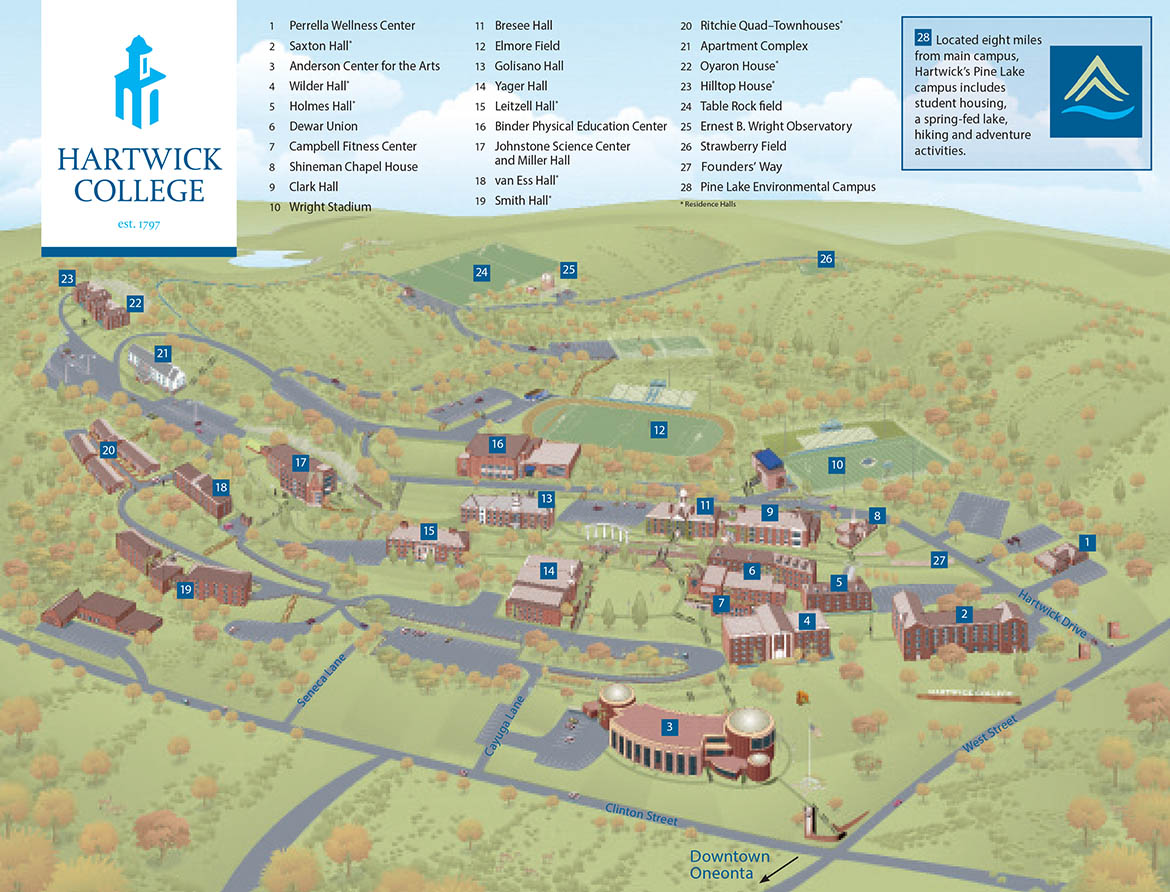
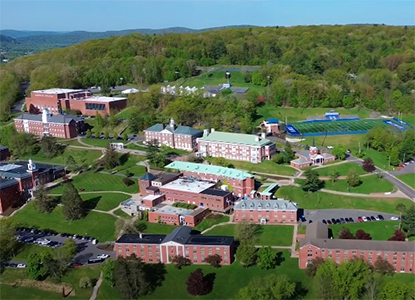
Life at Hartwick is deliberately engineered around the concept of balance, blending robust on-campus engagement with the resources of downtown Oneonta. The college fosters a tight-knit community on its hilltop campus, supported by a Division III athletic program with 21 teams—a major source of school spirit and activity. Student life is managed through the Office of Student Affairs, which oversees everything from campus engagement and diversity initiatives to wellness resources. The college encourages civic engagement through service, research, and advocacy. The relationship with the town of Oneonta is a key feature; students frequently explore the 'lively culture' downtown, making the college experience a hybrid of campus traditions and small-city amenities. This setup is ideal for students who want the classic, self-contained residential college feel but with the escape valve of a walkable town just off the hill.
Hartwick's outcomes present a mixed picture that underscores the importance of degree completion. The college reports strong satisfaction from its graduates, with 94% of the 2023 class saying their education prepared them for fulfilling careers, and nearly 90% employed or in graduate school shortly after graduation. The median earnings ten years after entry are $61,107. However, these positive signals are tempered by the college's graduation rate. Only 53% of students complete their degrees within six years, which is below the national average for private four-year colleges. This gap between the positive experiences of those who graduate and the challenges faced by those who do not persist is a critical consideration. For those who do cross the finish line, the college appears to provide effective career preparation, particularly in its flagship nursing and business programs.
Hartwick is a tuition-driven private college with a high sticker price but a commensurate commitment to institutional aid. For the 2026-27 academic year, tuition and fees are set at $23,500, with room and board adding another $16,500, bringing the total comprehensive cost to around $66,000. The college mitigates this cost aggressively. It advertises annual scholarships of up to $10,000 and reports that the average need-based scholarship or grant awarded to first-year students is over $36,900. Approximately 74-80% of first-year students receive some form of financial aid. The result is an average after aid of $31,320. It's important to note that Hartwick's financial aid packages include loans; the college does not advertise a 'no-loan' policy that replaces loans with grants for low-income students. Need-based grants are offered, but they exist alongside the standard federal and private loan options.
Hartwick carves out a distinctive niche as 'The Life Balance College.' It's not trying to be an ultra-selective ivory tower; instead, it offers a pragmatic, community-oriented liberal arts education with clear professional pathways. Its standout features are its juxtapositions: a liberal arts core with dominant nursing and business programs, a secluded hilltop campus intimately connected to a lively college town, and a high-touch, supportive community that still wrestles with graduation rate challenges. For the student who thrives in a close-knit environment, wants the faculty access of a small college, seeks a direct route to a health professions or business career, and values the classic New York state 'college on a hill' aesthetic, Hartwick presents a compelling and accessible option. Its identity is rooted in providing a balanced, integrated experience—academically, socially, and geographically—which makes it singular among regional liberal arts colleges.
Hartwick College seal · sourceCampus Map | Hartwick College · sourceBegin where you belong | Hartwick College · sourceWays to Visit | Hartwick College · source